In the course of a child’s growth and development, vision is critical, which they will also apply to what they learn as they go along. From birth through their time in the school system, clear and healthful vision supports such things as face recognition, reading, writing, and participation in class activities. In the field of pediatric optometry, trained professionals see to it that present issues with a child’s vision are identified, that visual skills are improved, and also that the health of the eyes is supported for the long term. Also very much a key to that is early and regular eye exams.
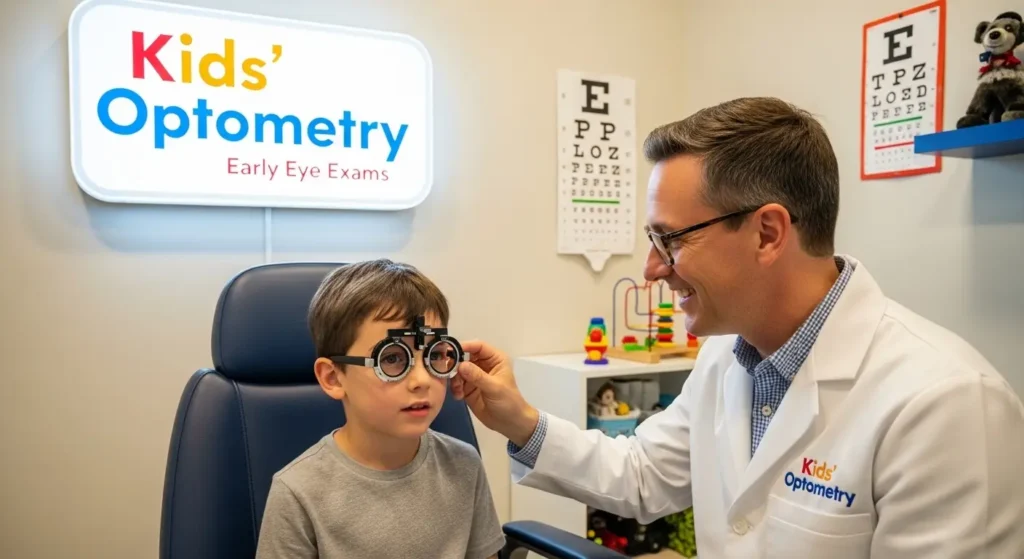
Parents tend to think that should a child not speak of a problem, they also don’t have an issue with their eyesight. Also, it is known that at times many eye conditions present very subtly as they grow gradually, which in fact may not present at all. But that which is not known is — that which trained professionals in the community see to, which is that children are taken for early eye checkups, which are done by trained professionals, which in turn can spot these issues, which may later interfere with a child’s growth or academic performance.
Why Children’s Eye Health Matters
Vision is a primary sense that children use to learn. It is reported by experts that a great deal of what is presented in school to children is visual. If a child has an issue with their vision, they may have trouble with reading, writing, paying attention to the board, and with their homework.
Undiagnosed eye issues may cause issues with focus, poor performance in the academic setting, and also reduced self-confidence. Also, it is not uncommon for trained professionals to diagnose a learning disability in a child that in fact is a result of an undiagnosed vision issue. Early take-up of eye care services will help to avoid these issues by making sure that children have the visual skills they need for the classroom and day-to-day activities.
According to health care experts, trained professionals see that early detection of vision issues greatly improves the chance of successful treatment. Also, many childhood eye conditions do best when treated at an early age.
At What Age Should Children Have Their First Eye Exam?
Many people are surprised to know that eye exams for babies are recommended. Eye care groups report that it is best for children to have their first full eye exam at 12 months of age. Also at key stages of development after that, more eye exams are recommended.
A commonly recommended schedule includes:
- First exam: Between 18 and 24 months of age.
- Second exam: At age 3.5 years old, which is around 3 years old.
- Third exam: At age 5-6, which is when school starts for many.
- Ongoing exams: Each year as a school age or as recommended by an optometrist.
These early exams are to see that a child’s vision is developing as it should and also to identify at-risk issues before they progress into more serious health concerns.
What to Expect at a Pediatric Eye Exam
Many parents wonder why trained professionals see infants or young children to read a chart of letters. What trained professionals do is use special tools and techniques for kids.
During a full eye exam, the optometrist may assess:
- Eye alignment and coordination
- Visual acuity (clarity of vision)
- Eye movement and tracking
- Depth perception and color vision
- Overall eye health and development
Even at a very young age, trained professionals see very well to put a baby through an eye exam, which healthcare providers do by which they see how the baby’s eyes react to light and objects. Also, these tests, which are done at very young ages, allow for issues to be identified that the child may not even know they are having.
Common Vision Problems in Children
Children are affected by a wide range of eye conditions that may in turn impair their vision or visual development. For example:
Refractive Errors
These include myopia, hyperopia, and astigmatism. These conditions present with blurred vision, which may be improved via the use of glasses.
Amblyopia (Lazy Eye)
This happens when one eye doesn’t develop properly. If left untreated, it may cause permanent vision impairment. Through early intervention, which is usually in the form of eyeglasses or eye patching, better results are reported.
Strabismus (Crossed Eyes)
This issue presents when the eyes do not align properly. Also, without treatment, it may affect depth perception and the overall visual development.
Focusing or Eye Coordination Problems
Some children have trouble with attention to objects or with using both eyes as a team, which in turn may cause issues with reading.
Early diagnosis is key, as trained professionals see many of these conditions present before the age of seven, and they tend to progress if left untreated.
Signs a Child May Have Vision Problems
While in some cases of vision problems there are no clear symptoms, certain signs may indicate that a child is having issues with their eyesight. Parents and teachers should note in the child:
- Frequent eye rubbing or blinking
- Squinting when looking at distant objects
- Complaints of headaches or eye strain
- Holding books or screens very close
- Difficulty concentrating while reading
- Tilt of the head or covering of one eye
- Losing their place when reading
If any of these symptoms present themselves, children should be taken to an eye care professional.
Role of Primary Eye Care in Learning and Development
Crystal clarity is key to healthy cognitive and social development. When children see well, they are better able to explore their environment, interact with others, and learn new skills.
Early eye exams also support:
- Academic achievement: Students who have good health vision do better in class.
- Confidence and engagement: Also that which good vision provides for kids to get into sports, classroom work, and social settings.
At the first sign of vision issues, trained professionals step in, which in turn puts them ahead of the damage that turns into something permanent.
Research reports that untreated vision issues may have an adverse effect on educational choices and general quality of life. Early diagnosis and treatment can put a stop to these long-term issues.
Why Comprehensive Exams Are Better Than Screening s
In many cases vision screenings are done at schools and by pediatricians, which is great, but they are a far cry from a full-scale eye exam. What they do is check if a child has 20/20 vision at a distance. Also, they may overlook issues like focusing problems, binocular vision disorders, or early signs of eye disease.
A full assessment by an optometrist of a child’s visual system is what is put together in a comprehensive exam, which in turn gives a better picture of a child’s eye health. Also, regular professional exams, which are a must-do at certain intervals, see to it that health issues are identified and managed at the earliest.
Supporting a Child’s Vision Health
Parents play a key role in the health of their child’s eyes. They can promote good vision by reducing the amount of time children spend on screens, increasing playtime outside, and taking the child in for regular eye checkups.
For professional care of a child’s eyes, visit Early Eye Exams for Children – Tonic Eye Care.
Specialized ophthalmic care for kids includes early exams, expert diagnosis, and tailored treatment plans, which in turn aim to help children develop healthy eyesight that will last a lifetime.
Final Thoughts
In the field of vision health, which is very large, children use their eyes to learn, explore, and interact with the world. Also, unfortunately, many vision issues present no symptoms and may go undetected without a professional evaluation. But early eye exams are the most important actions parents can take to protect a child’s visual health.
By taking into account regular eye exams for a child, vision issues are identified at an early stage, treated properly, and do not get in the way of a child’s future success. Health of the eyes supports academic performance and also plays a role in building up a child’s confidence and independence and, in turn, their overall well-being for a lifetime.