Your first ophthalmology appointment works best when you arrive ready to take part. The results depend on more than the equipment in the room. The history you share and the questions you ask matter too.
Know who you are booking with
Many people use eye doctor as a catch-all. That phrasing hides differences in training. An optometrist provides primary eye care and prescribes glasses and contacts. An ophthalmologist is an MD or a DO whose training covers the medical and surgical treatment of eye disease.
Both types of doctors perform full eye exams with vision checks and eye health checks. If you have a new medical eye concern or were told you might need eye surgery, an ophthalmologist is often the right booking. If you mainly need a prescription update and your eyes feel fine, an optometrist can handle that.
Don’t guess about which one you need.
Ask when you call. Tell the scheduler why you want to be seen, mentioning new symptoms and past diagnoses in a sentence or two. The team can usually direct you to the right clinician and tell you whether your plan requires a referral.
In many practices the two work side by side. You might see an optometrist for ongoing vision needs and an ophthalmologist for medical management. Records move between them when the setup allows it.
Ophthalmologists diagnose and treat conditions such as cataract and glaucoma. They also perform eye surgery when needed. Optometrists also diagnose and manage many eye conditions within their licensed scope and refer when more specialized treatment is needed. Describing your reason for the visit helps the practice make an appropriate booking.
Get your history together before the visit
Your eye health is connected to the rest of your body. Conditions such as diabetes, high blood pressure, thyroid disease and autoimmune disorders can affect eye care. Bring a short health summary so the doctor has that context when assessing your eyes.
List every prescription you take and how often you take it. Include eye drops and over-the-counter products. Add vitamins and supplements too, since patients often leave those out. Don’t stop any prescription before the visit unless the prescriber tells you to. The doctor needs the full picture to judge side effects and interactions.
For each medicine, note the name, dose and how long you have taken it. A photo of the label can help if a name is hard to remember. Mention any symptoms that began after a medication change, without assuming the medicine caused them. The doctor can decide whether your treatment history calls for additional monitoring.
Write down prior eye surgeries or injuries with dates if you recall them. Note family history too. Glaucoma and macular degeneration in a parent or sibling often lead to closer monitoring. Retinal detachment in the family is also worth mentioning.
Add when symptoms started and what makes them better or worse. Note if vision shifts through the day or if glare has grown stronger. A one-page medication and history note can save time during the visit. You don’t need a perfect file to be helpful.
What to bring on the day
Pack your bag the night before so you aren’t rushing. Bring your insurance card and a photo ID, along with the glasses and contacts you currently wear. If you have a recent prescription, bring that too.
Bring your medication note and any prior eye records you can get. Include the symptom timeline you wrote at home. Add your questions so you don’t forget them under time pressure.
Coverage varies more than patients expect. Some plans require a referral before they pay for specialist care. Others let you book directly but pay less if the doctor is out of network. Call the number on your card and ask what your plan needs for an ophthalmology visit.
If you can’t get old records, bring the name and phone number of your last eye practice. The front desk can often request them with your signed permission.
Sunglasses help after dilation when light feels harsh. If you wear contacts, bring your case, solution and backup glasses in case you need to remove your lenses. Ask ahead whether you should leave contacts out before the appointment; instructions can differ with the tests planned.
Arrive a little early to handle forms without rushing. You may need to update your health history, discuss consent and confirm contact details. If you need an interpreter or help reading forms, request that support when booking.
What the exam often includes
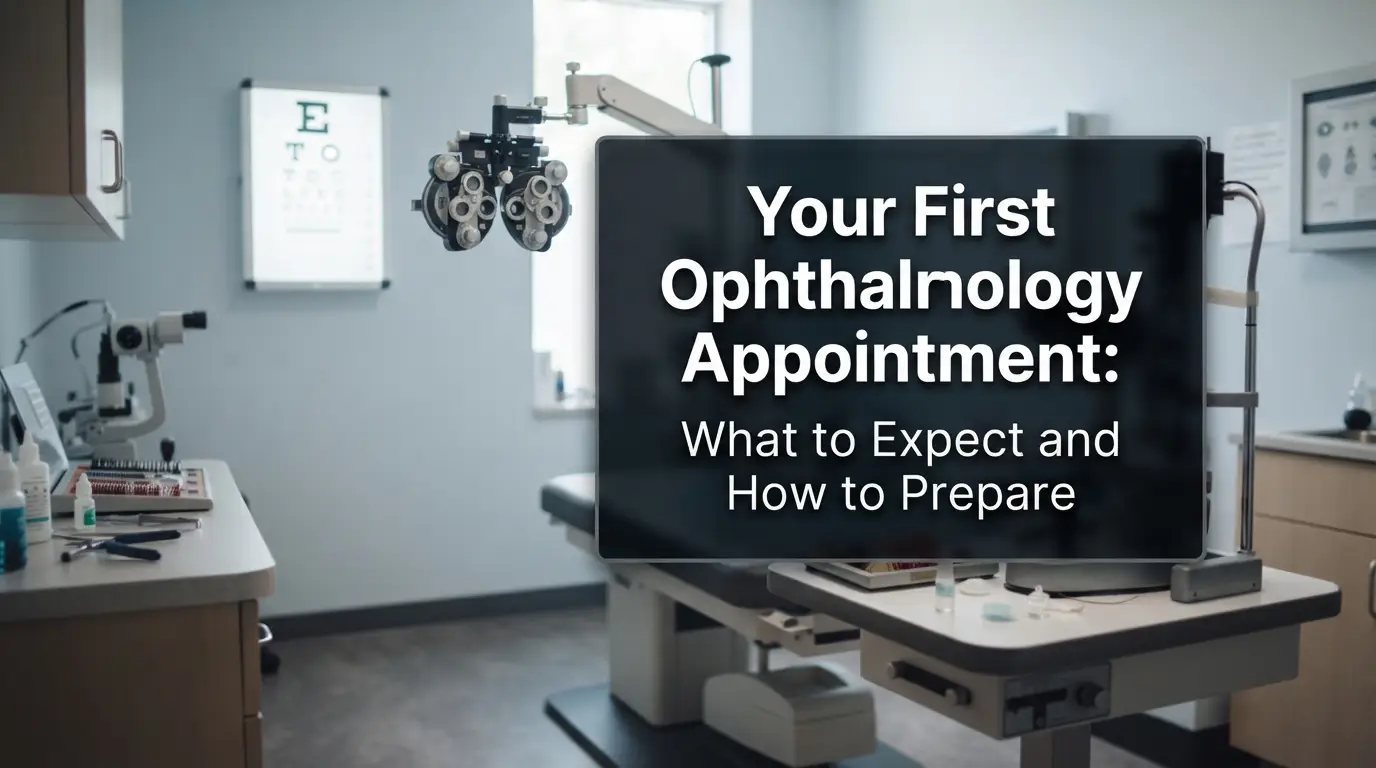
No two practices run the day in quite the same order. Still, most first visits follow a familiar pattern. Intake comes first, followed by vision checks and a closer look at eye structures.
Vision and prescription checks
You’ll read letters or symbols from a chart with each eye covered in turn. That gives a baseline for distance vision. Refraction comes next for many patients. You’ll look through a set of lenses and say which view looks clearer. The doctor uses your answers to fine-tune a prescription.
The team may also check how your pupils react to light and how your eyes move together. A side-vision screening is common too. These quick checks help flag nerve or pathway issues for further review.
Pressure and front and back views
Tonometry measures the fluid pressure inside the eye. Some practices use a brief puff of air. Others use a small probe that lightly touches the surface after numbing drops. Most people feel brief pressure or a light touch, and the sensation fades quickly.
Pressure is only one piece of the picture. Eyes can have nerve damage with readings in the average range, so the doctor also looks at the nerve itself.
A slit lamp is a microscope with a bright light that lets the doctor examine the front of the eye. This includes the lids and cornea. The lens is checked too for early cataract changes.
After dilation, the doctor views the back of the eye with a lens and light. The retina and optic nerve get close attention. The central retina is checked as well for subtle changes.
You may not need advanced scans on day one. An OCT scan that maps retinal layers or a visual field test that checks side vision is added when history or exam findings point that way. Your doctor will explain why if either test is advised.
How to choose a practice you can return to
Skill matters, but fit matters too. Look for board certification and a practice that keeps diagnostic equipment current. Pay attention to how questions are handled. Clear answers and unhurried explanations are a good sign you’ll be heard next time too.
New to Southwest Florida? You might type “visiting ophthalmologist in Naples” into a search bar while comparing options. If you do, confirm the office address and clinician name when you book so you arrive at the right location with the right doctor.
Call to confirm the practice takes your plan and whether a referral must be on file. Ask about parking or transit and typical wait times, since a location you can reach without stress is one you’ll return to.
Ask whether you can receive a printed or digital visit summary and how to send follow-up questions. If unfamiliar terms come up, ask the clinician to explain what they mean for your daily life and future care.
Choose an office you can realistically return to. Travel, accessibility and costs all matter, especially when several follow-up visits may be needed.
You can also ask who will perform each part of the exam. You’ll often meet a technician first and the ophthalmologist after. Knowing the flow eases nerves.
What dilation feels like and how to plan for it
Dilation widens the pupil, giving the doctor a wider view inside. Drops go in and take time to work. As the National Eye Institute explains, vision may be blurry and light sensitivity may last for a few hours afterward.
Dilation is often recommended for a first visit because early signs of some eye diseases can show in the back of the eye. It is not needed for every person at every visit. Some settings use other imaging for part of the view, so ask what your practice advises for you.
Bring dark sunglasses for the trip home. Arrange for a ride or plan on a rideshare. Don’t plan to drive until your vision feels clear and comfortable.
Drops sting briefly for some people, but that sting fades quickly. If you must work after, bring tasks that don’t need fine print. Screens may feel glaring for a while, so larger text helps.
You usually don’t need to sit in a dark room after. Many people return to normal activities once blur eases; ask the staff what to expect.
Keep the day lightly scheduled rather than packed back to back. Ask the office how much time to allow for the visit, including the wait for drops to work. Leave a buffer afterward so delays or lingering blur don’t force you to rush.
How to end with a plan and when to act fast
Questions to ask before you leave
The last few minutes are your chance to clarify what happens next. Use them to turn findings into a plan you can follow.
- What eye disease risk do you see based on today’s findings?
- Are there symptoms to watch for between visits?
- How often do you want to see me again and why is that timing right?
- Are there daily habits that support eye health while I wait for the next check?
Write the answers down or ask if you can take a photo of the summary. Clear questions at the end help you understand and follow the plan.
Signs that should not wait
Some symptoms should not wait for a routine slot. Sudden vision loss or a dark curtain or shadow spreading across vision needs immediate assessment. New flashes, or floaters that suddenly multiply, also need urgent assessment; they do not have to occur together to matter. Severe eye pain needs urgent care too. A chemical splash is also an emergency: get urgent medical guidance straight away.
An injury to the eye from impact also needs urgent review. Don’t try to tough it out or self-treat with drops from home. If you aren’t sure, call and describe what happened, since staff can triage faster than any web search.
A good first visit leaves you with a picture of your eyes today and a clear next step. Keep your notes and keep the follow-up.