

Stress is a rare occurrence no longer — it has now become an aesthetic condition for millions who are trying to navigate through modernity. Nevertheless, most solutions only look at this in a one-dimensional manner with the mind or the body and emerging research and integrative health approaches suggest that: These are not separate systems; they are intimately interconnected systems.
And this understanding about the mind-body connection is not just philosophical but also has concrete implications for more effective management of stress in a sustainable way.
Why the Mind-Body Connection Matters More Than Ever
This also creates a fundamental link from mental health status to physical health. Chronic stress is setting off a biochemical chain-reaction of abnormal cortisol, heart racing, sleep cycles disrupted and the immune system suppressed. With this feedback loop, mental pressure aggravates physical symptoms which only serves to increase psychological distress.
And this is why single-track solutions — academically (or existentially) prescriptive or physically prescriptive — so often fail. Interventions to manage stress must address both sides of the equation at once.
Moving Beyond Conventional Stress Management
Old methods are different methods like exercise, therapy & medication still can be effective. However, there is increasing interest in complementary practices that are more holistic in their engagement of how the nervous system processes experience.
These methods are not alternatives to conventional treatment. Instead, they add to the toolbox—providing alternative pathways to control stress reactions especially for people who respond minimally or not at all to traditional treatments.
The secret here is not something new, but the mechanism — how these practices act on the stress pathways in your body.
Sound-Based Therapies and Nervous System Regulation
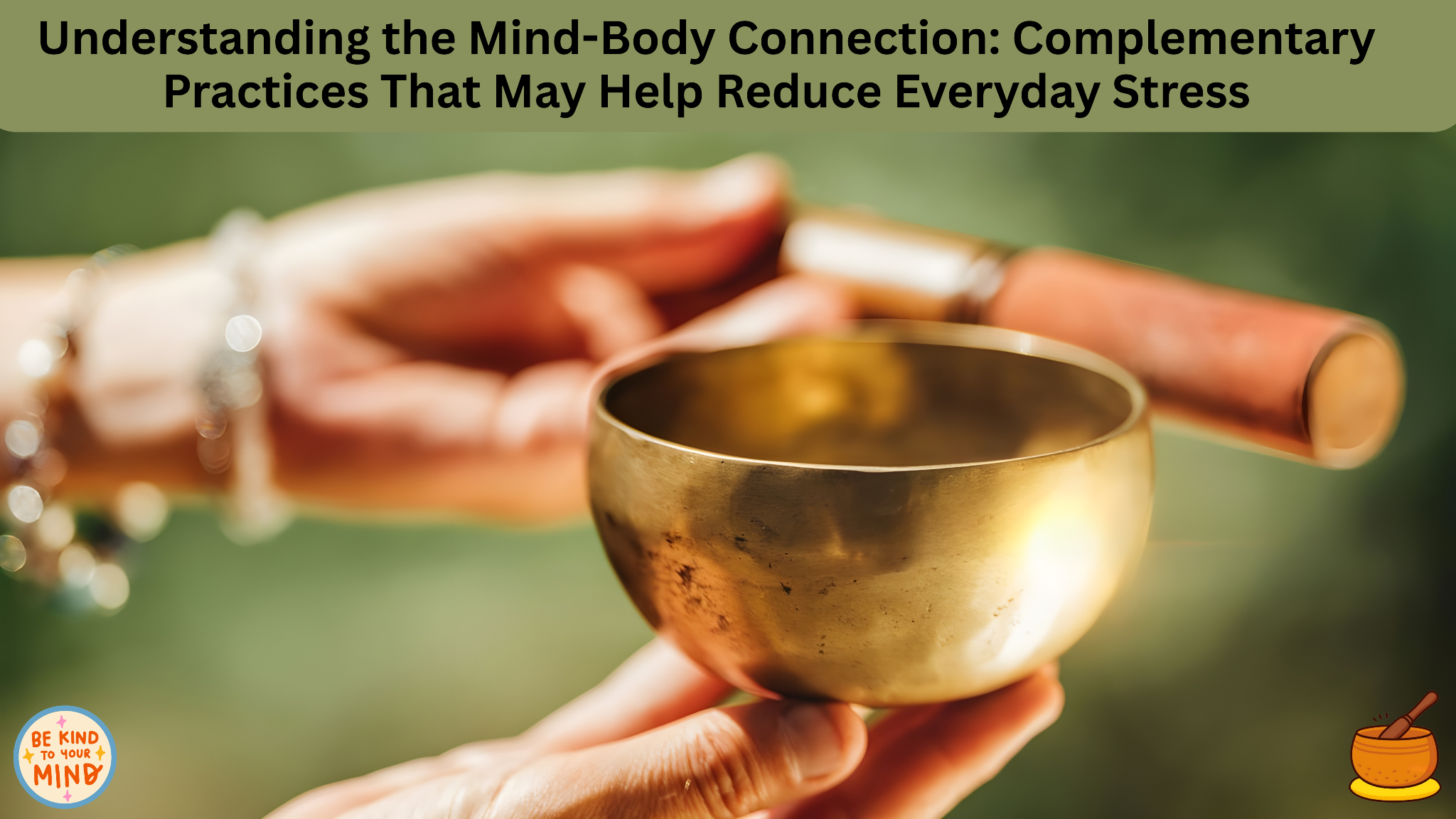
Among these is the growing interest in sound-based therapy, particularly with resonant instruments like singing bowls.] They emit continuous vibrations that may help in moving brainwave activity and facilitating a parasympathetic (rest-and-digest) state.
Researchers are still exploring this field of study, but early evidence implies that sound therapy can decrease stress, elevate your mood and help you relax. Most importantly, it provides a gentle and low-friction way for those who find more demanding practices (such as meditation) challenging.
If this is something that you are considering, there are resources to help teach you about the basics of sound healing and singing bowls which will give a greater framework for how these tools can be used in stress-relief and mindfulness practices.
The Role of Sensory Anchors in Stress Reduction
Sensory engagement is one reason why complementary practices can work. These techniques, using sound, breath or movement, serves as an “anchor” that brings the mind away from the overload and into the present.
Guided sound sessions or personal instruments, such as singing bowls can be used to create consistent rituals. An appropriate singing bowl set for meditation and relaxation routines can assist you integrate such initiatives into an effort-everyday routine without friction.
This is much more important than it looks. You lose the greatest obstacle to stress management: To be not alone, a human being lacks consistency.
Breathwork, Movement and Mindful Awareness
Sound therapy is but a single component of an entire ecosystem of accompanying modalities. Breathwork is one example of a practice that has direct effects on the autonomic nervous system, allowing us to downregulate stress responses in the moment. Similarly, a practice of yoga or tai-chi incorporates body movement with awareness, re-enforcing the mind-brain-body connection through physical activity.
All of these methods have something in common; an emphasis on internal regulation as opposed to external distraction. Instead of fleeing from stress, they condition the body to respond differently to it.
What Actually Works: Consistency Over Complexity
The educator is generally followed by a slight temperature ensuring that the risk of being compensated repeatedly to replayed texts instantaneously causes less suspense. What it really boils down to effectiveness is all about consistency and alignment.
This is simpler than an elaborate routing practiced once a month. Be this via breath-work, movement or sound-based relaxation – the intent here is to create a sequenced way for the body to access a more neutral in-tune state.
A More Integrated Approach to Everyday Stress
The increasing attention to this connection between the mind and body is part of a larger evolution in the understanding of stress. It has been such a move away from the belief that it is purely a psychological problem or somatic disease but rather an interaction between both.
Intentionally applied, complementary practices can help fill that gap. They don’t remove stress completely, but they modify the experience, processing and recovery from it.
That perspective switch, perhaps more than any effort to eliminate stress altogether, might even be the most useful in a world where there is no escaping the reality of stress.


