
Turning 35 tends to bring a lot of opinions about fertility. A fair amount of it is scary to hear. Some folks are told they are already “too late.” Others hear that age does not really matter. The truth is somewhere in the middle. Age does affect fertility and the outcome of IVF treatment, but the change is gradual, it differs from person to person, and many parts of the process stay the same.
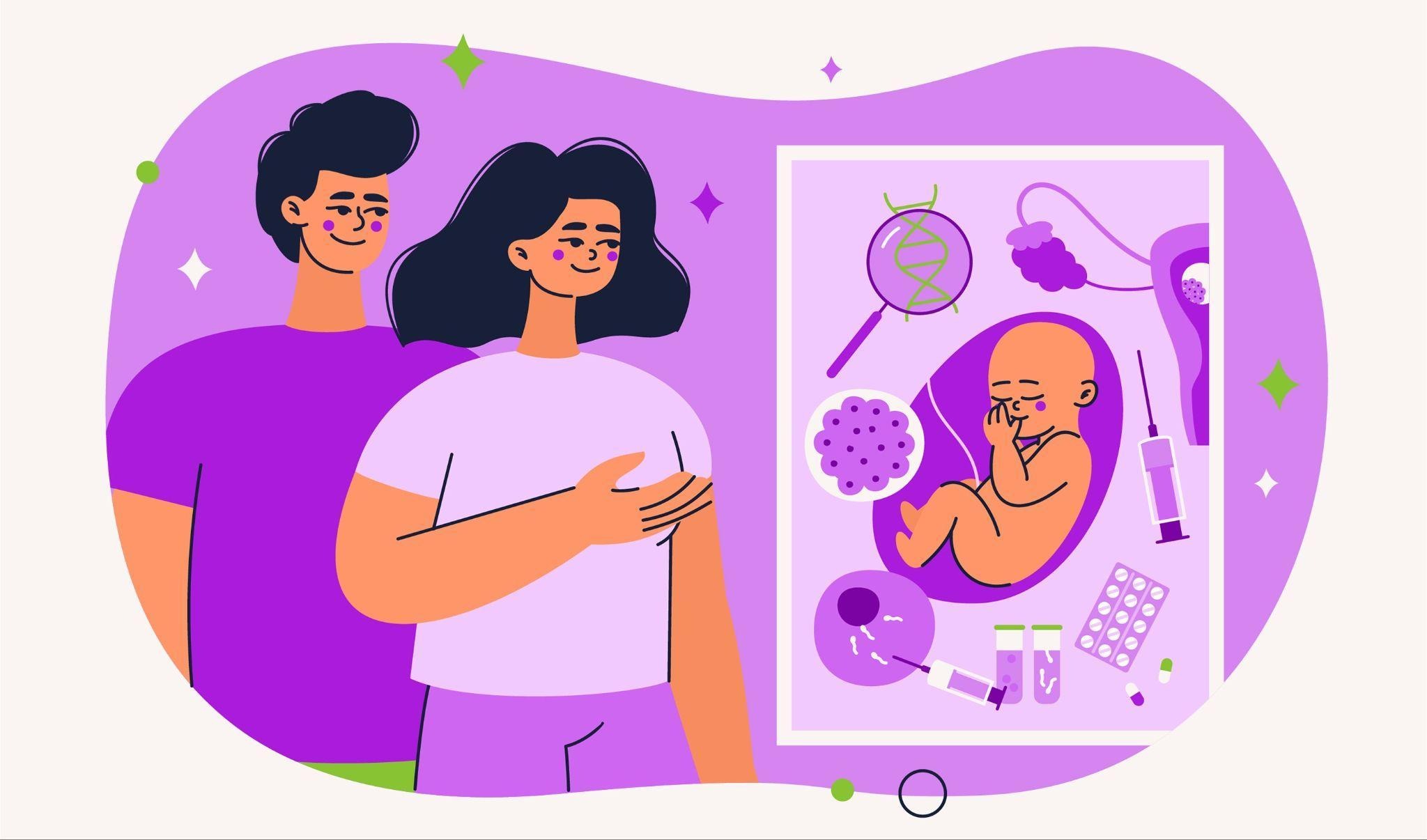
This guide talks about what shifts once you hit 35. It also covers what stays the same.. It shows you how to make a plan with a clear and honest view of things.
What Changes After 35
Egg quantity and egg quality
Age affects fertility through two things: how many eggs remain and how healthy the eggs are. Egg quality starts to decline around Age 35. Then falls faster during the late 30s. The reason is genetic. Chromosomal abnormalities become more frequent in eggs as Age increases. This lowers the success of assisted conception and raises the miscarriage rate.
One national health service notes that the decline in natural fertility speeds up after 35 and assisted conception does not completely offset the decline. In words, IVF can help, but IVF cannot reverse the effect of age on the egg.
It is gradual, not a cliff
Age 35 gets called a cliff sometimes.. Experts do not all agree on that. A doctor at NYU Langone says the drop in egg quality tends to happen over time. It is not a switch that flips on or off. So think of 35 as a moment to start watching things closely. It is not a cutoff.
More eggs may be needed
Because egg quality goes down with age, the number of eggs becomes more important. One fertility center says that as women get older, they need eggs for IVF to work well, since the eggs are not as good. They also say that no matter the age, success rates are very low if than three eggs are collected. That’s why clinics adjust the treatment plan for each patient.
What the Numbers Say
Success rates do drop as you get older.. The exact numbers really depend on how you look at them. There are two sources that people often mention:
US data (SART, 2021), live birth per egg retrieval using own eggs:
UK registry data quoted by the NHS, live birth per embryo transferred:
- 32% under 35, 25% at 35–37, 19% at 38–39, 11% at 40–42, 5% at 43–44 and 4% over 44.
These two sets look different because these sets count things: one is per egg retrieval, the other per embryo transfer. The key point is the trend. Chances decline steadily than collapsing at one age. Also remember that averages do not indicate a chance for any one patient. These sets are a starting point for a conversation with your fertility specialist.
What Doesn’t Change
The process itself
The basic steps of IVF are stimulation, egg retrieval, fertilisation in the lab and embryo transfer. IVF steps work the same whether you are 30 or 38. What changes is the way the doctor adjusts the plan based on your age and test results.
The role of the uterus
How old the egg is matters more than how old the womb’s. Cycles using donor eggs show this clearly. The rate of births in these cycles hardly changes between people in their thirties and people in their late forties. This suggests the issue lies mostly in the egg, not the womb. One clinic says the chance of a birth after a single donor-egg cycle is 54% for recipients under 40. After that age, it drops a little.
The value of personalised care
Age alone is one factor. The way a clinic designs treatment, your hormone profile and your medical history all influence the plan. IVF protocols can be adjusted by age, by status and by medical history to boost success rates.
How IVF May Look Different After 35
Your doctor may adjust the plan in a few ways:
- Closer testing. Tests of ovarian reserve and a full fertility workup help set realistic expectations before starting.
- ICSI. In this technique a single high-quality sperm is injected directly into the egg, and it is often recommended after 35 when egg numbers may be limited, to maximise fertilisation of each egg retrieved.
- Embryo screening. Preimplantation genetic testing and similar screening can identify embryos with normal chromosomes, which may improve the chance of successful implantation. Whether it suits you is a decision to make with your doctor.
- More than one cycle. Success is not assured, so some patients need more than one IVF procedure to achieve pregnancy.
When to See a Fertility Specialist

Waiting long can cost time that matters at this stage. A shared guideline is that if you are 35 or older and trying to conceive, you should make an appointment after six months, rather than the usual twelve. If you already know about a condition that affects fertility or you have had miscarriages, there is no reason to wait.
One doctor also says you should be patient but not wait long. If you have an embryo and a good uterine lining, there is no need to delay.
What You Can Do to Prepare
Not everything is out of your hands, even though age is. Practical steps include:
- Avoid smoking. Smoking decreases the success rate of IVF, and some clinics require both partners to stop.
- Ask clinics for their data. A clinic that cannot provide data about its outcomes may not have been providing fertility services long enough to report success rates.
- Ask what the price includes. Check what is in the quoted price and what is charged separately, since medication costs in particular can vary.
- Consider fertility preservation early. If you are not ready now, experts suggest freezing eggs before 35, when egg quality is still high. Vitrification, a rapid flash-freezing process, has dramatically improved egg survival rates.
- Plan for the emotional load. IVF takes time and energy, so build support around you through partners, friends or counselling.
The Bottom Line
IVF past 35 is not a lost cause. It is not a sure thing either. Egg quality and supply go down bit by bit. The chance of miscarriage goes up. You may need than one try. Still, the steps are the same. The womb is not the roadblock.. A plan built around you can truly change things. Age is only one of the many factors affecting IVF success rate, alongside the cause of infertility, embryo quality, sperm health, lifestyle and the clinic itself. Know your numbers by testing your numbers. Ask questions. Talk to a specialist instead of waiting until the last moment.