

Finishing cancer treatment is a huge milestone but it’s not the end of the journey. For many survivors, the transition into post-treatment life can bring new questions: How do I stay healthy? What symptoms should I watch for? How do I rebuild strength, balance, and confidence?
That’s where a cancer survivorship program makes all the difference. These programs are designed to guide you through life after treatment with a comprehensive, personalized roadmap to healing—physically, mentally, and emotionally.
What Is a Cancer Survivorship Program?
A cancer survivorship program is a structured plan of post-treatment care that helps survivors manage side effects, monitor their health, and build long-term resilience. It usually begins right after active treatment ends and continues as a long-term health strategy.
Unlike routine follow-ups, survivorship programs take a whole-person approach, focusing on immune function, hormone balance, emotional well-being, and sustainable lifestyle habits; all of which play a role in preventing recurrence and promoting quality of life.
At various care survivor program providers, survivorship programs combine medical expertise with holistic tools like nutrition, movement therapy, immune support, and integrative therapies to help patients not just survive but truly thrive.
Why You Need a Plan (Even if You Feel Fine Now)
Cancer treatments can leave lingering effects that don’t always show up right away. Fatigue, hormone changes, weight fluctuations, weakened immunity, and emotional distress are common. Survivorship care plans do exactly that. They bridge the gap between treatment and thriving.
Who’s On Your Survivorship Team?
A robust survivorship team can include:
- Primary care physician: For overall health monitoring and referrals
- Oncologist: To track any recurrence or related symptoms
- Nutritionist: Especially one trained in integrative or oncology nutrition
- Mental health professional: For trauma, anxiety, or fear of recurrence
- Physical therapist: To help regain strength,mobility, or manage neuropathy
- Integrative practitioners: to guide on remedies for side-effect relief
Even if you’re not part of a formal program, pulling together your “recovery circle” makes a world of difference.
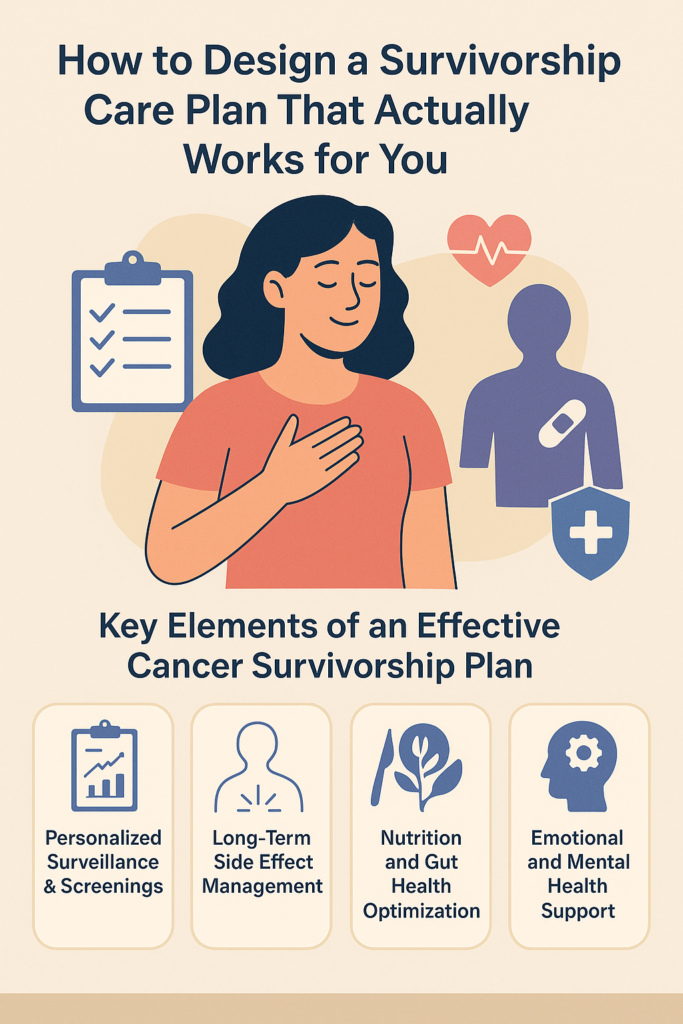
Key Elements of an Effective Cancer Survivorship Plan
1. Personalized Surveillance & Screenings
Survivorship care includes tailored monitoring and diagnostics based on your individual treatment history and cancer type. This may involve:
- Periodic imaging (such as MRIs or CT scans)
- Blood tests for tumor markers or inflammation
- Genetic risk evaluations for future cancer risks
These screenings are spaced out strategically to catch early signs of recurrence or new concerns—offering peace of mind and a proactive plan for intervention if needed.
2. Long-Term Side Effect Management
Even after treatment ends, side effects can linger or appear months later. These might include:
- Cognitive challenges (“chemo brain”)
- Bone or cardiovascular issues
- Hormonal shifts
- Peripheral neuropathy or fatigue
A strong cancer survivorship program helps track these symptoms and offers individualized strategies to reduce their impact, whether that means introducing physical therapy, anti-inflammatory protocols, or integrative therapies like acupuncture.
3. Nutrition and Gut Health Optimization
Many survivors experience digestive changes or nutrient deficiencies. This is why programs must focus on personalized nutrition plans that:
- Reduce inflammation with whole, nutrient-dense foods
- Rebuild gut flora through microbiome-focused interventions
- Support immune resilience and hormonal balance
- Address specific needs like appetite loss, taste changes, or food intolerances
Nutrition is foundational to healing. The right foods and supplements can accelerate recovery and reduce recurrence risk.
4. Immune and Hormonal Rebalancing
Cancer treatments can disrupt immune and endocrine systems. Survivorship care includes:
- Immune testing to identify deficiencies or imbalances
- Protocols to support immune function using nutrition, herbs, or targeted supplements
- Hormonal assessments to identify imbalances post-treatment
- Guidance on sleep, stress, and exercise to support hormone regulation
This systems-based approach helps survivors regain energy, reduce vulnerability to infections, and support longevity.
5. Emotional and Mental Health Support
Survivorship isn’t just about physical health. It also involves processing emotional challenges like anxiety, trauma, or fear of recurrence.
Structured support may include:
- One-on-one counseling or psychotherapy
- Group support sessions with other survivors
- Guided practices like mindfulness, breathwork, or meditation
These tools offer space for healing, connection, and a renewed sense of control in daily life.
6. Weight Management and Metabolic Support
Post-treatment, many survivors struggle with weight gain, insulin resistance, or low energy. Programs like those at Thrive Integrative Cancer Care incorporate:
- Metabolic and hormone testing
- Personalized fitness and movement plans
- Nutrition strategies for sustainable weight balance
- Medication guidance when necessary
Sustaining a healthy weight is more than cosmetic, it’s critical for lowering recurrence risk and improving overall health.
7. Organized Health Records and Clear Communication
Keep a binder or digital folder with:
- Treatment summaries
- Test results
- Medication lists (including supplements)
- Contact info for your care team
Bring it to every appointment. It saves time, avoids mix-ups, and helps you ask better questions.
Questions to Ask Your Care Team
- What long-term effects should I watch for?
- How often should I get screened now?
- Should I see a specialist (e.g., cardiologist, endocrinologist)?
- How can I improve my energy levels or sleep?
- What lifestyle changes matter most for my type of cancer?
8. Supportive Community & Coaching
Ongoing education, accountability, and community support are key pillars of effective recovery. Many cancer survivorship programs now include:
- Group workshops and educational webinars
- Access to online and in-person support communities
- Regular coaching calls to assess progress and motivation
Being surrounded by people who “get it” can make all the difference in maintaining long-term habits and mindset.
Embracing a New Identity After Cancer
One of the most overlooked aspects of survivorship is the emotional shift in identity. Life after cancer often brings a new sense of purpose, but also uncertainty—who am I now, and what does health look like for me? Survivorship programs help bridge this gap by offering structure, support, and self-awareness tools that allow you to reimagine your future with clarity.
At Thrive Integrative Cancer Care, survivors are encouraged to explore not just physical healing, but personal growth whether it’s through expressive therapies, mindful movement, or simply having the space to reflect and reconnect with life beyond illness.
Conclusion: Survivorship Is a New Beginning
Cancer doesn’t define you and survivorship is about more than just “not being sick.” It’s about reclaiming your life with strength, confidence, and a toolkit built for the long haul.
A well-structured cancer survivorship program can help you navigate this next chapter with clarity and support. Because healing doesn’t stop at remission, it evolves, just like you.