

In the clinical world, emergency room physicians and trauma nurses see the direct results of bystander intervention—or the tragic lack thereof—every single day. Discover why leading medical experts in Los Angeles are urging local businesses to move beyond basic compliance and embrace clinical-grade emergency readiness in the workplace.
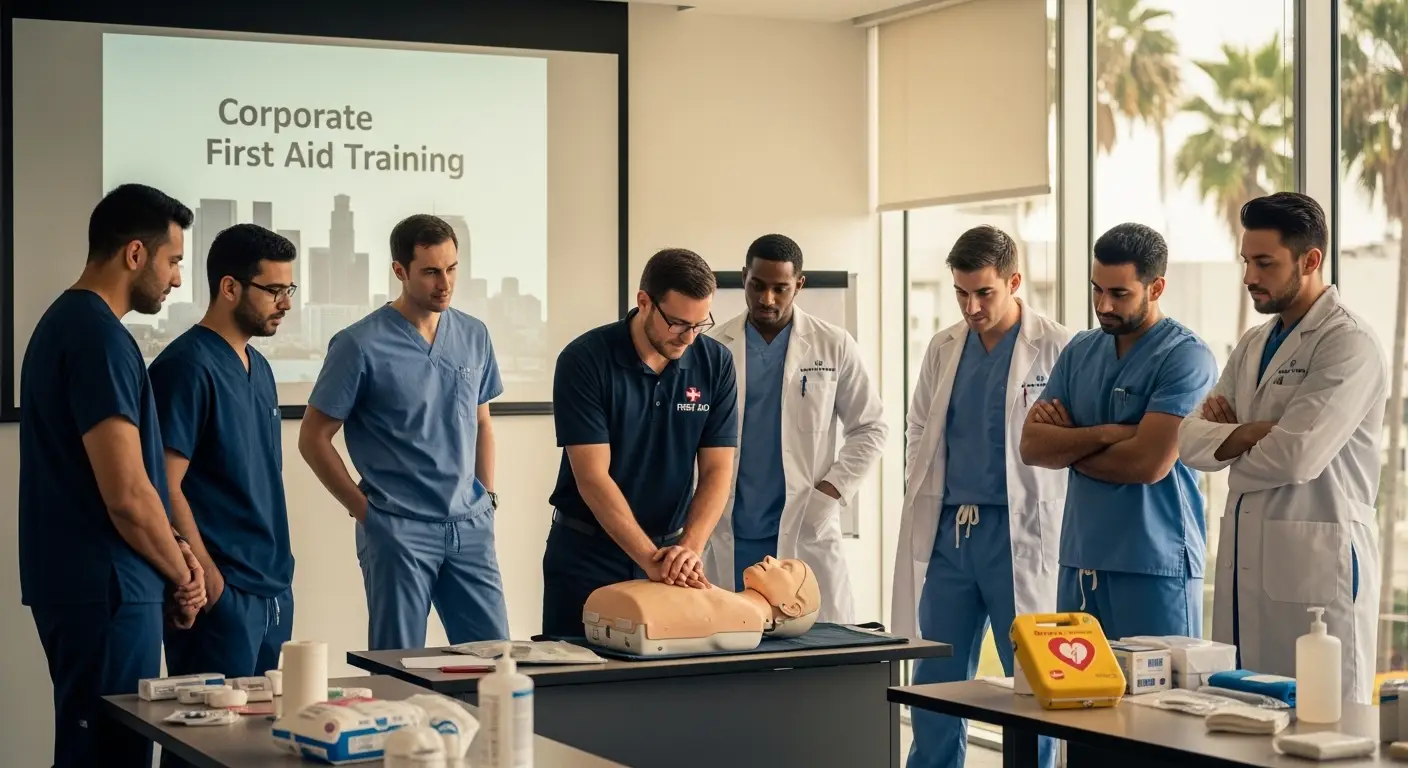
When a patient arrives at a Los Angeles trauma center following a sudden workplace medical emergency, the medical staff works frantically to stabilize them. But the harsh, unspoken reality in the ER is that the patient’s long-term neurological outcome was likely decided before the ambulance even turned its sirens on.
The gap between a 911 call and the arrival of professional paramedics is the most critical window in emergency medicine. If a corporate employee suffers a sudden cardiac arrest in a Century City high-rise, and their coworkers simply stand by waiting for help, the brain is deprived of oxygen for too long.
Because of this brutal biological timeline, healthcare professionals are shifting their focus from purely reactive hospital care to proactive community defense. Leading physicians and clinical advocates are strongly recommending comprehensive corporate first aid training for businesses across Los Angeles. Let’s look at the medical data behind this push, and why your office needs a clinically trained response team.
The LA Traffic Factor and the “Golden Minutes”
Emergency Medical Services (EMS) in Los Angeles are among the best in the world, but they are fighting an unwinnable war against geography and gridlock.
In a sprawling metropolis choked by traffic on the 405 and the 10, an ambulance simply cannot teleport to your office. If an emergency occurs on the 30th floor of a downtown corporate tower, paramedics must navigate traffic, secure building access, wait for freight elevators, and navigate complex floor plans.
In the case of sudden cardiac arrest, brain cells begin to die after just four minutes without oxygen. By the time EMS physically reaches the patient, ten to fifteen minutes may have easily passed. The only way to artificially sustain the patient’s brain tissue during that delay is through immediate, high-quality chest compressions performed by the people already standing in the room.
The Clinical Reality of Workplace Trauma
Many corporate managers assume their environments are perfectly safe because they don’t operate heavy machinery. Medical professionals know otherwise. Sedentary, high-stress corporate environments are breeding grounds for severe cardiovascular events, including heart attacks and strokes.
Furthermore, medical emergencies in modern offices often include severe allergic reactions (anaphylaxis) from catered boardroom lunches, or traumatic injuries from severe trip-and-falls.
When a company invests in accredited training, they are installing a clinical algorithm into their workforce. Employees are taught to move past the panic response and initiate a step-by-step triage process. They learn exactly how to use an Automated External Defibrillator (AED) to deliver a life-saving electrical shock, and how to properly utilize heavy trauma dressings to control severe bleeding before the patient goes into hypovolemic shock.
Bridging the Gap Between Laypeople and Clinicians
Historically, workplace first aid was viewed as a generic administrative checkbox. Today, healthcare professionals expect corporate teams to act as the true first link in the “Chain of Survival.”
When paramedics finally arrive on the scene, walking into an office where trained staff have already initiated CPR, deployed the AED, and cleared the airway drastically changes the clinical trajectory of the patient. The transition of care is seamless, and the patient’s chances of survival exponentially increase.
To achieve this level of readiness, LA businesses are moving away from cheap, online-only video courses. They are partnering with established, clinical-grade training agencies like Coast2Coast First Aid & Aquatics to bring highly realistic, hands-on medical training directly into their boardrooms. When your staff builds actual physical muscle memory under the guidance of professional instructors, they become a highly effective extension of the city’s medical infrastructure.
Frequently Asked Questions
1. Why do doctors emphasize the first four minutes of cardiac arrest?
The brain is highly sensitive to hypoxia (lack of oxygen). After roughly four minutes without oxygenated blood flow, brain cells begin to die rapidly. Even if the heart is eventually restarted by paramedics later, the delay can result in permanent, severe neurological damage.
2. Is an AED safe for untrained employees to use?
Yes, though formal training is highly recommended. Modern AEDs are foolproof medical devices designed for public use. They utilize advanced algorithms to analyze the patient’s heart rhythm and will physically refuse to deliver a shock unless a fatal arrhythmia (like ventricular fibrillation) is actively detected.
3. Does California’s Good Samaritan law protect my employees?
Yes. California Health and Safety Code protects individuals who voluntarily provide emergency medical or nonmedical care at the scene of an emergency from civil liability, provided they act in good faith and not with gross negligence.
4. Can CPR training help prevent workplace strokes?
CPR itself does not prevent strokes, but first aid training teaches employees the clinical signs of a stroke (using the FAST acronym: Face drooping, Arm weakness, Speech difficulty, Time to call 911). Early recognition is critical because neurologists have a very narrow window to administer clot-busting drugs at the hospital.
5. Why are chest compressions more important than rescue breaths?
For adults experiencing sudden cardiac arrest, the blood is typically already oxygenated at the moment the heart stops. The immediate clinical priority is manually pumping that existing oxygenated blood to the brain through deep, uninterrupted chest compressions.
6. Do corporate first aid kits need specific medical supplies?
Yes. Beyond standard bandages, doctors recommend that corporate trauma kits include heavy ABD pressure dressings to control massive bleeding, specialized CPR pocket masks with one-way valves, and medical trauma shears to cut away clothing for AED placement.
7. How long is an American Red Cross certification valid in California?
A standard First Aid and CPR/AED certification issued by recognized organizations like the American Red Cross is legally valid for exactly two years. Employees must take a recertification course to keep their clinical skills sharp.
8. Do first aid courses teach employees how to use EpiPens?
Yes. Anaphylaxis is a severe, life-threatening allergic reaction that can close the airway in minutes. Modern training teaches employees how to rapidly recognize the symptoms and safely assist a coworker in administering their prescribed epinephrine auto-injector.
9. Can we train our LA staff completely online?
No. While the theoretical medical reading can be done digitally, regulatory bodies and medical professionals universally agree that physical skills (like determining compression depth) must be practiced on a training mannequin and evaluated by a live instructor.
10. How does corporate stress contribute to workplace medical emergencies?
Chronic stress elevates blood pressure and cortisol levels, which significantly increases the risk of acute cardiovascular events. While wellness programs help reduce stress, first aid training is the necessary failsafe for when those biological systems suddenly fail.


