

In the last decade, artificial intelligence (AI) has made its mark across industries. Healthcare is one area where it’s proving transformative.
The global AI in healthcare market, as of 2024, was valued at $26.57 billion. From streamlining diagnostics to creating more effective medications, AI is becoming a trusted partner in medicine.
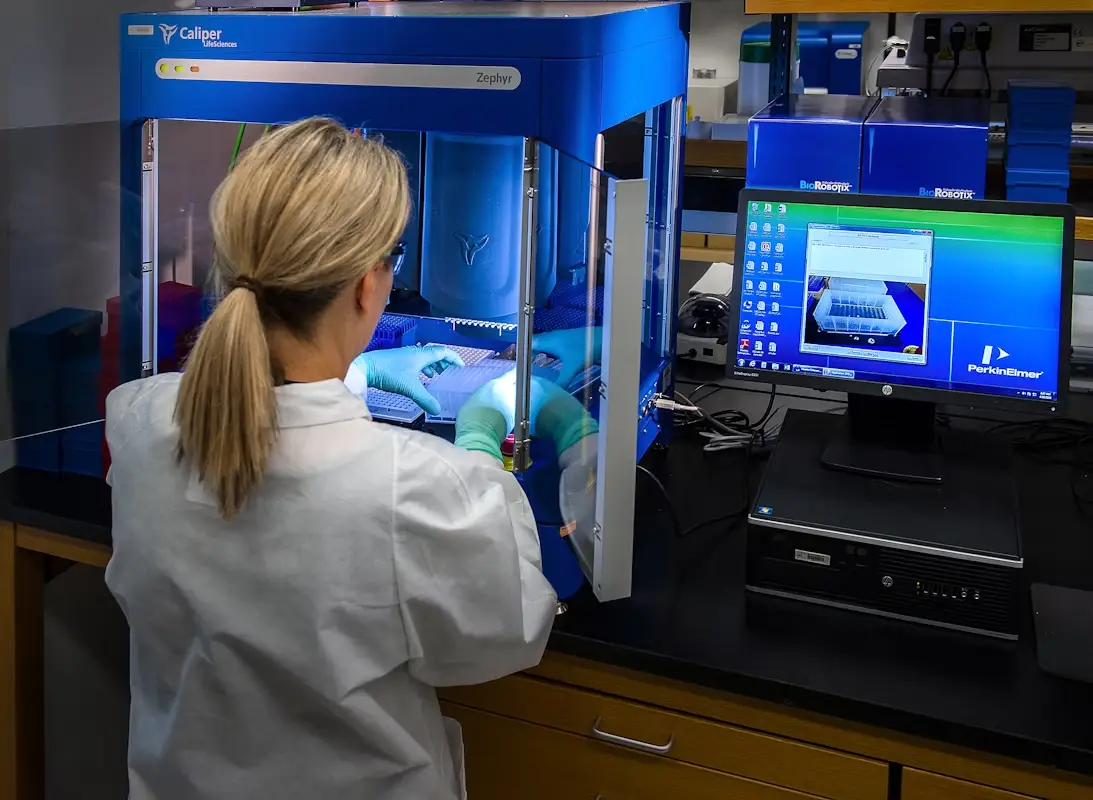
This article explores how AI is reshaping both patient care and the creation of new therapies. It also sheds light on one of the most promising areas of AI innovation: medication development.
AI’s Evolving Role in Personalized Patient Care
Gone are the days when treatment decisions relied solely on a doctor’s memory and training. Today, AI tools can process thousands of medical records within seconds. They analyze lab reports, scan results, and doctors’ notes to offer recommendations based on real-time data.
This has been especially useful in oncology and chronic disease management. AI can detect subtle changes in a patient’s condition and flag issues earlier than traditional systems. This makes treatments more proactive and helps clinicians avoid medical emergencies.
Patients now benefit from AI-driven platforms that send medication reminders, monitor heart rate, or even predict blood sugar levels. These tools don’t replace healthcare workers but support their work by keeping patients informed and engaged.
Virtual Nurses and AI Chat Assistants for Support
Another area where AI has been beneficial is basic patient support. Virtual nurses, often powered by AI, can answer routine questions, monitor patient progress, and send timely alerts to doctors.
These systems are not just glorified chatbots. They learn from patient interactions and improve their responses over time.
A person recovering from surgery, for example, might receive daily check-ins from a virtual assistant trained to detect early signs of infection or relapse.
Doctors, nurses, and support staff now have more time to focus on complex tasks. AI takes care of the repetitive but important jobs that once took hours of manual effort.
Revolutionizing Medication and Antibody Discovery
Traditional drug development can take up to a decade and cost billions. R&D costs for developing a new medicine can cost between $314 million and $4.46 billion, to be exact. AI significantly shortens this timeline by identifying promising compounds early.
In antibody discovery, AI models analyze massive datasets to detect patterns in how the body fights illness. It can suggest potential antibodies that might bind to harmful viruses or bacteria. Researchers then test these leads in the lab, saving time and money.
According to Alloy Therapeutics, AI/ML-designed libraries are now integrated with advanced display platforms to quickly identify leads with enhanced affinity, specificity, and developability.
Medication discovery has seen similar improvements. AI algorithms explore the chemical structure of existing drugs and suggest modifications to create better treatments. This speeds up the process of developing new medications for rare or drug-resistant diseases.
In the fight against COVID, AI was used to study thousands of existing compounds. It helped researchers identify those most likely to work as treatments or preventative therapies.
Similar work is ongoing in cancer, autoimmune disorders, and infectious diseases.
Speed and Accuracy in Clinical Trials
Clinical trials are vital for any new medication. Yet they are often slow and expensive. AI is changing that. It helps researchers identify the right candidates based on medical history, genetics, and even lifestyle.
By using AI to filter participants, researchers get more accurate results faster. It also improves patient safety. AI tracks participants in real time and can alert teams if someone shows unexpected reactions.
Another major advantage is how AI helps in analyzing clinical trial data. Instead of reviewing test results manually, AI tools sift through mountains of data for hidden trends.
This leads to faster decisions about whether a trial should continue, be adjusted, or stop altogether.
Remote Monitoring and Home-Based Healthcare
With wearable devices and healthcare mobile app development, patients can now be monitored from home. AI makes sense of this data and flags unusual patterns. A heart patient, for example, may have their heart rate and oxygen levels tracked 24/7.
Doctors receive alerts if something is out of range. This improves patient outcomes and also reduces unnecessary hospital visits. AI makes care continuous rather than episodic.
In rural or underserved areas, where healthcare access is limited, AI-enabled tools provide support and diagnostics. A smartphone app might help a diabetic patient monitor their sugar levels without traveling long distances for check-ups.
Ethical Oversight and Human Involvement
Despite all the promises, AI in healthcare must be used with care. Algorithms are only as good as the data they are trained on. If that data has gaps or bias, outcomes can be flawed.
Doctors and researchers still play a central role. AI can suggest options, but humans must review and confirm them. Ethics boards and government agencies now oversee AI-based decisions in healthcare to ensure safety and fairness.
Patients must also be informed when AI tools are used in their care. Transparency builds trust. And trust is essential when technology and health come together.
Frequently Asked Questions (FAQs)
Why is AI the future of medicine discovery?
AI accelerates medicine discovery by analyzing vast datasets to identify drug targets, predict molecular behavior, and reduce trial-and-error in early stages. It shortens development timelines and lowers costs. With its ability to detect patterns faster than humans, AI is revolutionizing how new treatments are created.
How does AI help improve patient care for chronically ill people?
AI enhances care for chronically ill patients through remote monitoring, predictive analytics, and personalized treatment plans. It tracks vital signs in real time and alerts doctors to potential complications early. This leads to better management of symptoms, fewer hospitalizations, and more consistent, individualized care.
Can AI replace nurses entirely?
AI can assist nurses by handling routine tasks like monitoring vitals or managing records. However, AI cannot replace the human connection, empathy, and critical thinking that nurses provide. Patient care often requires emotional support and real-time judgment, areas where AI still lacks the necessary depth and intuition.
AI is not a replacement for skilled healthcare providers. It’s a tool that makes them better at what they do. From discovering new medications to improving how patients are monitored, AI is changing lives.
What was once imagined in science fiction is now part of daily practice. For patients, this means quicker diagnoses, more personalized treatments, and hope for conditions that once had no solution. The future of medicine will not be human versus machine. It will be humans plus machines, working together to deliver better care to more people.
Source: https://drginasam.net/