If you look at how modern healthcare is evolving, one truth becomes clear fast: access matters more than ever. Families across the globe need healthcare that is personal, proactive, and localized, and they need it now. But here’s the pain point. Primary care shortages aren’t just an American problem. The World Health Organization predicts a shortfall of 10 million health workers by 2030.
This gap is being filled in surprising ways. One of them? Family nurse practitioners (FNPs), trained through online courses, are stepping into the spotlight and are often doing so from their living rooms. These professionals are reshaping what family care looks like in remote towns, busy suburbs, underserved rural communities, and international aid centers.

From Local Clinics to Global Impact
Family nurse practitioners have become the backbone of community-based care in many regions. Their ability to diagnose, treat, educate, and build long-term patient relationships makes them irreplaceable, especially where physicians are stretched thin. FNPs bridge clinical knowledge and human connection. Their work extends far beyond charts and prescriptions. They’re the ones who spot mental health issues during a routine check-up. They notice when a child’s diet signals a larger family problem. They follow up, follow through, and stay available.
But this kind of care doesn’t scale well through traditional educational models. Not everyone can afford to quit a job, move cities, or pay steep tuition to attend brick-and-mortar institutions. But this is what FNP program online courses are for as a smarter, more flexible path to the same high standard of care.
The Rise of Remote Nursing Education
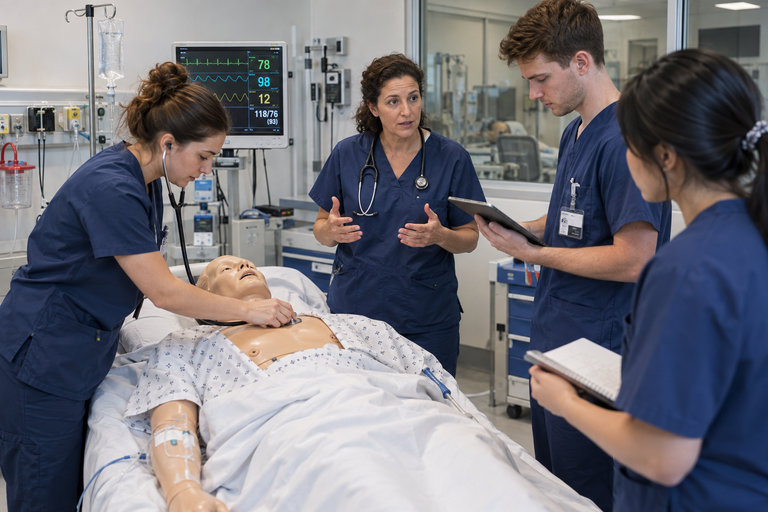
Online nurse practitioner programs have grown in both size and reputation. Asynchronous coursework, virtual simulations, and partnerships with local clinics make the model robust. More importantly, it works for working professionals and parents.
An aspiring nurse in Kenya or Kansas can complete coursework during off-hours, then apply that knowledge in real-time clinical settings nearby. The ripple effect is powerful. More nurses train. More patients get care. Local health ecosystems grow stronger.
The flexibility doesn’t mean sacrificing quality. Programs are accredited, regulated, and often affiliated with top-tier universities. They use real-world case studies and modern telehealth tools to mimic today’s healthcare landscape.
It’s also worth noting that these programs empower diverse candidates. People who bring bilingual skills, cultural fluency, and local knowledge to the table. In global health, these are not nice-to-haves. They are essential.
Tangible Results in Real Communities
The impact isn’t just theoretical. It’s visible in the numbers and on the ground. Consider rural areas in the U.S., where over 80 million Americans live with limited access to primary care. According to the National Rural Health Association, many of these communities are now relying on nurse practitioners as their first (and sometimes only) point of contact with the healthcare system.
Outside the U.S., FNPs trained through online programs are showing up in mission hospitals, refugee camps, and urban clinics in South America, Africa, and Southeast Asia. They treat infectious diseases, manage chronic illness, support maternal care, and train others. They speak the language. They understand the context. And they stay, because many are from those communities themselves.
It’s not only about primary care. These nurses also provide essential mental health support, especially in areas where psychiatrists are nonexistent. A trained FNP can assess, counsel, and create care plans for patients battling anxiety, trauma, or depression.
Here’s what this means in practical terms:
- A family in a rural Albanian village no longer waits four months for a pediatrician. They walk down the road to see their community nurse.
- A working mother in Idaho doesn’t need to take a full day off for a consult. She logs into a secure telehealth session with her FNP.
- A displaced teen in a South African township gets connected to HIV prevention resources through an outreach program led by an FNP who studied online and stayed local.
What Makes Online-Trained FNPs Effective?
There’s a common thread in the success stories. These nurse practitioners aren’t distant experts parachuting into unfamiliar places. They’re embedded in the communities they serve. That gives them a unique advantage in:
- Building trust with families over time
- Navigating cultural sensitivities around health and illness
- Supporting preventive care efforts at the grassroots level
Online training prepares them for precisely this. The flexibility allows them to study while maintaining community ties. They graduate with a clear understanding of where they’re needed most and why.
Many of these nurses also end up wearing multiple hats, including caregiver, educator, translator, and advocate. And because they often work in tight-knit areas, they understand patient context that would be invisible in a hospital setting. They know the family history, the economic limitations, and the emotional dynamics, all of which influence care outcomes.
The Silent Revolution in Healthcare Education
This isn’t a trend. It’s a structural shift in how healthcare workers are being educated and deployed. Online family nurse practitioner programs are becoming a blueprint for what scalable, localized healthcare training looks like.
It’s efficient. It’s equitable. And it’s solving a global problem at scale.
This model isn’t without its challenges. Internet access, clinical placement availability, and regulatory hurdles still slow down expansion in some regions. But those challenges are being addressed as governments and institutions recognize the value. Many are now investing in infrastructure to support remote learning and licensing pathways for advanced nursing roles.
Even healthcare tech companies are catching up. Some online course providers now integrate telehealth platforms, wearable health data, and virtual anatomy tools directly into their training. This prepares students for the modern reality of care delivery, whether that’s via smartphone in Brazil or a community clinic in rural Australia.
Source: Dr Gina Sam MD