

The market for facial rejuvenation has expanded significantly over the past decade. More patients, more practitioners, more options, and more variation in outcome quality than most people realize until they’ve either experienced a result that fell short of expectations or met someone whose results were noticeably, naturally excellent. The procedures themselves — neuromodulator injections, laser resurfacing, filler placements — are not uniformly delivered across practitioner types. The training backgrounds differ. The anatomical depth varies. And nowhere does that depth matter more than around the eyes.
This is a guide for people who are doing this right — researching before they book, understanding the relevant differences between practitioner specialties, and trying to make a genuinely informed decision rather than going with whoever appeared first in a search and had an available appointment.
Why the Periorbital Area Is Different
The skin around the eyes is the thinnest on the face. The underlying anatomy is complex: the orbicularis oculi muscle wraps the eye socket in overlapping layers, the levator muscle controls lid elevation, and multiple nerves and vessels run in close proximity to the target structures for most treatments. This anatomy creates both the precision opportunity that makes treatments in this area so effective and the margin for error that makes practitioner selection particularly important.
Neuromodulator injections around the eyes — for crow’s feet, brow elevation, and upper lid appearance — require an injector who understands how the muscles of the periorbital complex interact. The orbicularis oculi doesn’t function in isolation; changes to its tone affect brow position, the appearance of the lower lid, and the overall balance of the upper face. An injector placing units primarily from a dosing protocol rather than from anatomical understanding of a specific patient’s structure may get technically correct placement but a result that looks off because the functional balance was disrupted.
Laser treatments around the eyes require the same depth of anatomical knowledge plus the technical judgment to modulate energy settings at the margins of the orbital bone, where skin thickness and vascularity change rapidly over a short distance.
What Oculoplastic Training Adds
An oculoplastic surgeon — a physician who has completed ophthalmology residency followed by a fellowship in ophthalmic plastic and reconstructive surgery — has spent years working with the specific anatomy of the eyelid, orbit, and periorbital face in surgical contexts. This means their understanding of the relevant structures is not classroom knowledge or the outcome of brief aesthetic training. It’s built from direct surgical experience with the same tissues that neuromodulators and lasers are affecting.
That background produces a specific kind of precision. When a chicago oculoplastic surgeon evaluates a patient for Jeuveau injections, the assessment includes the functional relationship between brow position, levator function, and lid margin — considerations that are architectural and medical, not just cosmetic. The treatment plan reflects that fuller picture.
This matters in practice because the periorbital area is where the consequences of suboptimal injection placement are most visible and most persistent. Brow asymmetry, ptosis (lid drooping from diffusion of neuromodulator into the levator), and disrupted lower lid tone are outcomes that don’t resolve quickly and affect the patient’s appearance in every interaction until they do. An injector with surgical-level anatomical familiarity is more likely to anticipate these risks and account for them in technique.
Jeuveau: How It Compares and Why It’s Worth Discussing Specifically
Jeuveau is a relatively recent addition to the neuromodulator market — an FDA-approved botulinum toxin type A product that launched in 2019 specifically as a cosmetic neuromodulator, without the mixed cosmetic/therapeutic positioning that Botox carries from its longer history.
The clinical data on Jeuveau shows onset and duration characteristics that are comparable to Botox for most patients in most applications. Some practitioners and patients report a slightly faster onset; others notice no meaningful difference. The formulation differences between neuromodulators do affect behavior in individual patients, and patient-to-patient variation in response to different products is real, not placebo.
For patients considering jeuveau near me as a specific product choice, the relevant questions are whether the practitioner has experience with the product’s dosing and diffusion characteristics and whether the treatment plan accounts for any prior product history. Patients switching from another neuromodulator should mention their history and their typical dose, since that information is directly relevant to getting the unit count right on a different product.
The more important point is that Jeuveau injected with surgical-level precision in the periorbital area produces better outcomes than Botox injected with surface-level anatomical knowledge. The product choice is secondary to the practitioner’s ability to place it correctly.
CO2 Laser Resurfacing: What It Does and What Makes It Demanding
CO2 laser skin resurfacing is among the most effective tools in facial rejuvenation for addressing skin texture, tone irregularities, fine lines, and the appearance of photoaging. The CO2 laser ablates the outermost layers of skin and delivers controlled thermal energy to the dermis, triggering collagen remodeling that produces progressive improvement over several months following the treatment.
The results achievable with CO2 laser resurfacing are genuinely meaningful — in the right hands, on the right patient, with the right post-procedure care, the outcome can reset the apparent skin quality substantially. These are not subtle or gradual changes visible only to the patient. They’re the kind of improvements that others notice without being told what happened.
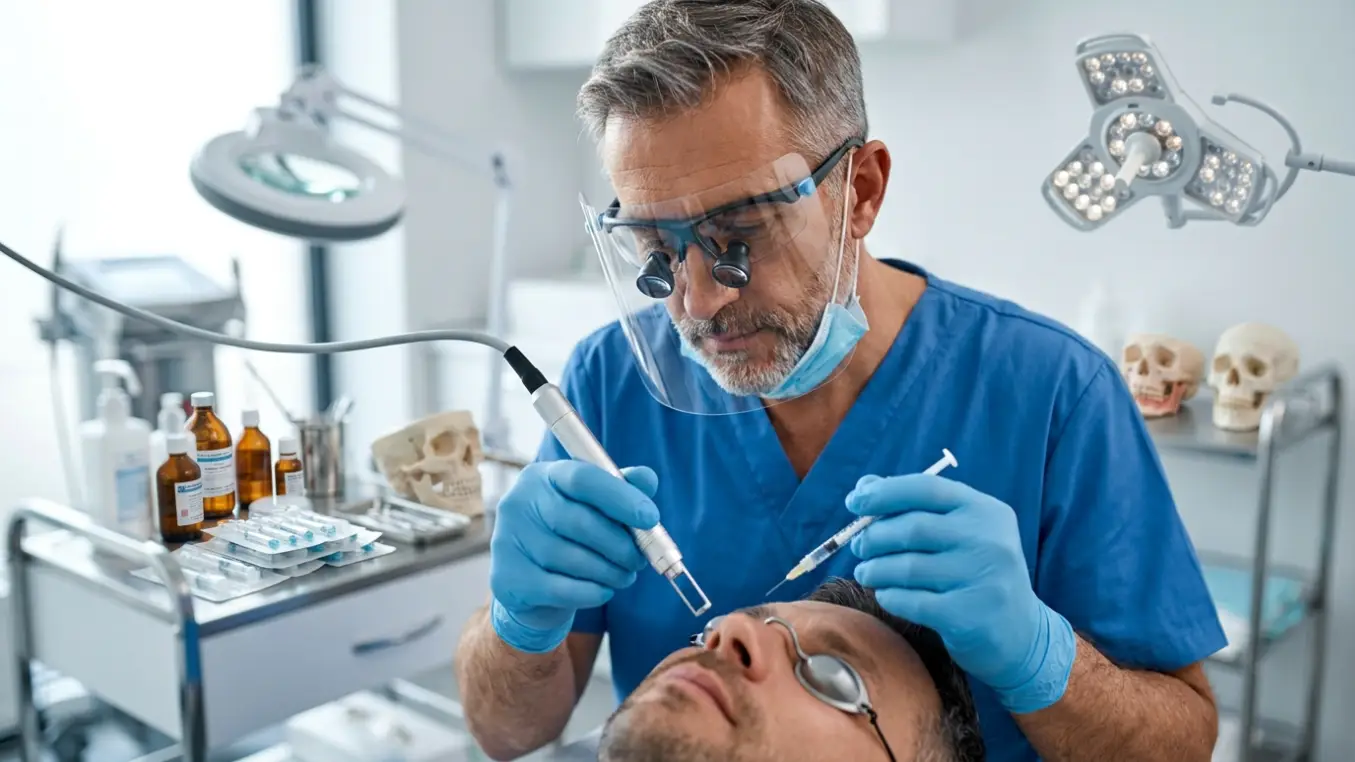
The demanding nature of the treatment comes from the same properties that make it effective. CO2 laser energy delivered incorrectly — at the wrong settings for a patient’s skin type and condition, too aggressively in a high-risk area, without appropriate cooling and endpoint assessment — can produce scarring, pigment changes, and prolonged healing. These complications are not theoretical; they appear in the outcomes data when the procedure is performed by practitioners who lack experience with the specific nuances of fractional and ablative CO2 application.
For laser skin resurfacing chicago, the practitioner’s experience with the specific device being used, their case volume with the relevant patient profiles, and their approach to patient selection and preparation are the primary qualifications to probe.
How to Evaluate a Practitioner
The evaluation process for a practitioner performing periorbital injections and facial laser treatments should involve more than reviewing before-and-after photos and reading testimonials, though both are informative.
The consultation is the most revealing information source. A practitioner with genuine expertise will spend the consultation evaluating your specific anatomy — not just your concerns. They will explain what they’re observing, what they recommend, and why the recommendation fits your situation rather than presenting a menu of options. They will raise things you didn’t ask about if those things are relevant to the treatment you’re considering.
Questions worth asking specifically: How many patients with my skin type and concerns have you treated with this approach? What are the most common reasons treatments in this area fall short, and how do you avoid them? If something doesn’t go as expected, what is your protocol?
A practitioner who answers these questions substantively and specifically has been asked them before and takes them seriously. A practitioner who becomes vague, redirects to promotional content, or answers in generalities is telling you something about how they approach the work.
Patient Selection as a Quality Indicator
Practitioners who are doing this work at a high level turn away some patients. This is actually one of the clearer quality signals available, because it indicates that their recommendations are driven by what’s appropriate for the individual rather than by filling the treatment schedule.
Not every patient requesting aggressive CO2 resurfacing is a good candidate. Patients with certain skin types (Fitzpatrick IV–VI) carry higher risk of post-inflammatory hyperpigmentation and require modified approaches or different treatment modalities. Patients with a history of specific conditions, recent sun exposure, or active skin issues may need to delay treatment. A practitioner who identifies these situations and adjusts accordingly is exercising clinical judgment; one who proceeds without that assessment is not.
The same principle applies to injection treatments. A patient who comes in requesting a specific number of units in a specific location isn’t necessarily right about what will produce the result they want. An injector with genuine expertise will have that conversation rather than simply fulfilling the request — because the conversation, when it leads to a modified approach, is what produces the result the patient actually came for.
The Longer View
Facial rejuvenation at its best is a long-term relationship between a patient and a practitioner who develops genuine familiarity with that patient’s anatomy, aging pattern, and response to treatment over time. The adjustments that become possible when a practitioner knows your history — slightly less here because you tend toward asymmetry, a slightly different brow treatment because last time the medial descended more than expected — are only available in an ongoing relationship.
That relationship starts with the right initial selection. A practitioner with genuine specialty training and depth of experience is the right foundation for building that kind of trust and continuity. The specific treatment modality is important. The person performing it is more so.


