

Eyes are more than our soul’s mirror. They are the sense organs that define our perception of the world and are the primary source of information for our brain. Every day, our eyes are exposed to a huge number of stress factors: reading, watching TV, scrolling through the newsfeed, or working on a PC makes them tired and reddened. Moreover, do you know that even environmental factors affect our eyes’ health? Dust and intensive sun exposure, wind and frost can make eyes dry and itchy.
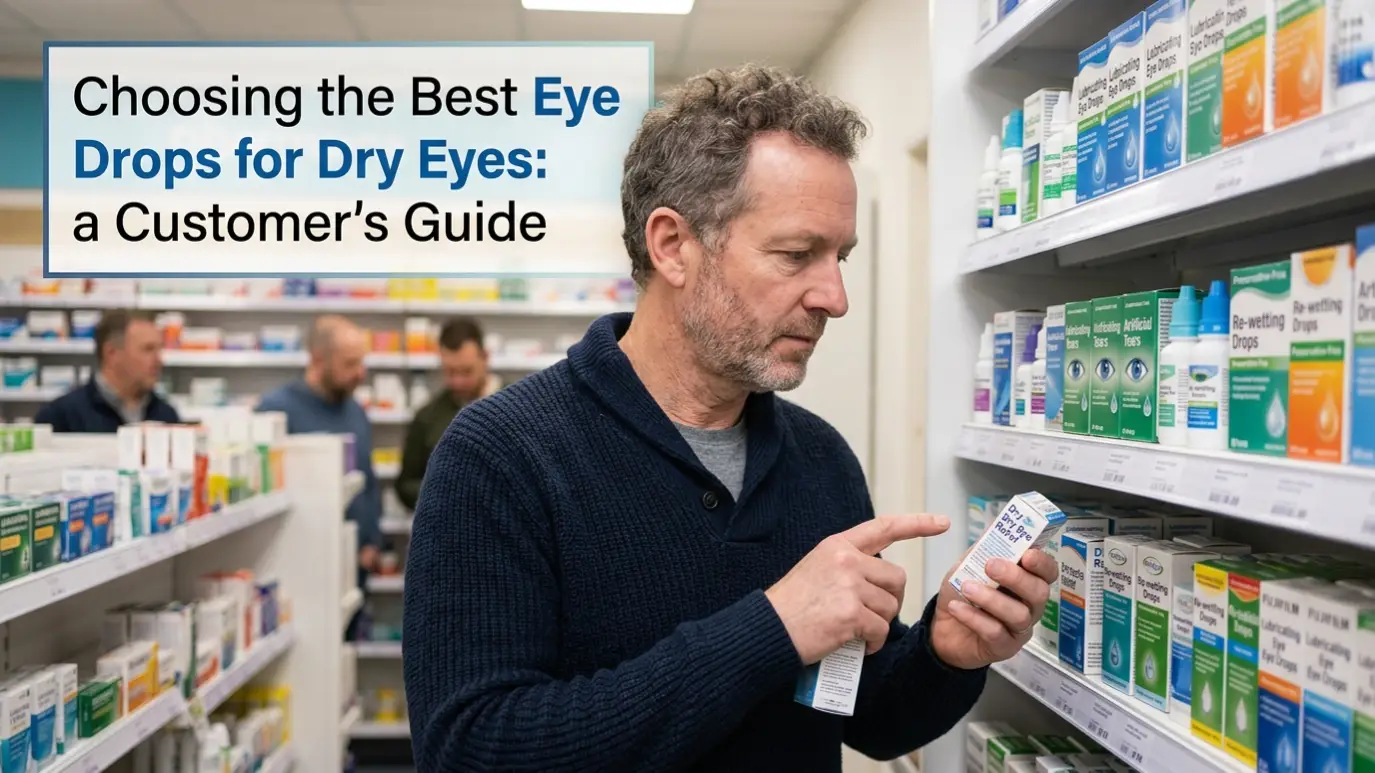
We can bet that almost everyone who reads this article has at least once in their lives experienced this frustrating feeling of dry eyes. How can one cope with this? We offer you a comprehensive guide to the best eye drops for dry eyes: how to select healthcare products of that type, what they are typically made of, and what to consider when you purchase eye drops for dry eye effects removal.
Why Are Eye Drops the Best Solution for Dry Eyes?
The core benefit of using special eye drops for dry eyes is that they provide instant hydration, lubricate the eyeballs and lids, and they can cleanse the fundus from tiny particles that cause itching. The main function of such eye drops is to replenish the missing tear volume, and additionally, several useful ingredients can help substitute natural tear layers.
Which Components Are the Most Effective for a Dry Eye Syndrome Mitigation
Colloquially, eye drops for dry eyes are called ‘false tears’ due to their composition, resembling natural tears. This similarity is based on several components, including:
- Water-retentive polymers, like Hyaluronic acid or Propylene glycol, which help retain water and bond tightly to the eye surface.
- Cellulose derivatives create a tight film resembling mucus and retain moisture for longer.
- Gelling agents like HP-Guar create a protective film over the eye when exposed to natural tears.
- Oily components (for example, mineral oils or castor oil) create an oily layer, which helps to stop tear evaporation.
- Osmoprotectants – erythritol, glycerin, or trehalose protect eyes from dehydration in the case of too salty natural tears.
Some of the dry eye-intended eye drops are single-ingredient, i.e., containing only Propylene glycol or a gelling agent, yet scientific reviews indicate that combination formulas are more effective due to dual-action or triple-action effects.
Besides, the customer should consider that the formula of various eye drops may vary, so it is essential to read the manufacturer’s manual on how to use them properly before you start applying them. It is better to select eye drops according to the most severe symptoms following eye dryness. In the most complicated cases, a consultation with an ophthalmologist is necessary to select the best healing strategy.
What Else Can You Do to Reduce Eye Dryness
Besides proper application of eye drops for dry eyes, it is essential to follow some self-care tips to avoid further dryness:
- Drink enough water. It is better to take no less than 8-10 glasses of water daily to hydrate the body.
- Regular blinking also helps avoid irritation and itching. It is especially important to blink from time to time when you sit at the TV screen, computer, or smartphone.
- Make it a habit to keep your home or your workspace clean. If there is no dust, you won’t experience dryness caused by it.
- Keep your eye drops with you when you are outdoors to get a timely remedy.
Eye drops for dry eyes remain the most effective and quick remedy for such frustrating symptoms as eye itching and dryness. They are mostly OTCs, so you can get them without a prescription. So, if you regularly feel your eyes are overdried and this reduces the quality of your life, do not hesitate even a minute and get them for your relief.


