Variable access to mental health services for communities has stemmed from many issues. Barriers such as insufficient workforce, geography, and resources can hinder the ability of individuals to receive critical mental health services. Due to these challenges, telepsychiatry has offered a viable and effective way to fill in missing services and provide mental health support from any distance because they can communicate directly with a mental health provider from anywhere in the world.
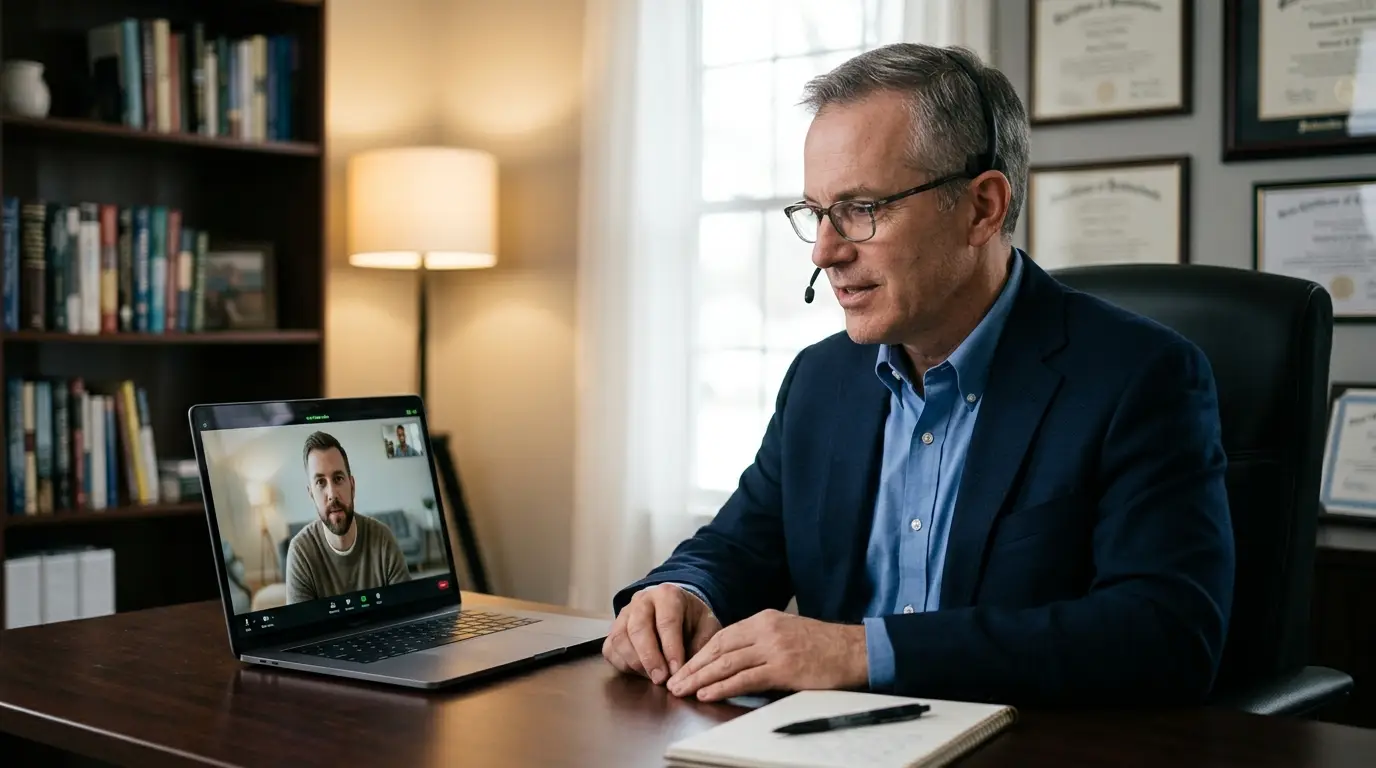
Various organizations that offer telepsychiatry services are improving the way psychiatric care is provided. Because of their services, psychiatric nurse practitioners and psychiatrists are able to offer mental health care to previously unreachable clients.
Defining Telepsychiatry
Telepsychiatry is a part of the broader telemedicine services related to the psychiatric field. It enables the mental health professionals to provide mental health services and care to their patients through digital services. Telepsychiatry allows for the same clinical services as traditional appointments, but avoids all of the challenges and barriers mentioned above.
As a part of telepsychiatry, patients are able to receive psychiatric assessments, therapy, medication and subsequent adjustments, and follow up services without having to physically attend the psychiatric office. This is an especially valuable service for individuals in rural and remote locations with very limited mental health services for them, and where mental health services are extremely needed most.
Barriers to mainstream mental health systems
The capacity to complement traditional health systems that have become overly busy or health systems that have been under-resourced is known to be one of the most notable qualities of Telepsychiatry. Most community-based mental health systems, particularly those partially funded by the government, have little staff and overwhelming patient demand.
Telepsychiatry services include partnerships with:
- Community mental health centers
- Federally qualified health centers (FQHCs)
- Medicaid-supported facilities
- Emergency room intake departments
- College counseling centers
With the incorporation of telepsychiatry services, the systems are able to provide evaluations and manage conditions as patients are given appropriate and timely care without prolonged delays.
Engaging patients in difficult and unconventional environments
Telepsychiatry provides valuable and essential services to difficult, unconventional and underserved environments. Many people who need mental health support are not in reach, while in the presence of people who are providing mental health services.
Telepsychiatry services can be relevant and valuable in
- Jails and prisons
- Residential drug rehabilitation centers
- Native American reservations
- Schools
- Crisis intervention and intake center
For these patients, in every one of the aforementioned environments, there mental health services and there are barriers to services available, telepsychiatry provides valuable and essential services.
Benefits of Telepsychiatry
Telepsychiatry has brought about valuable and notable benefits to patients that have simple to attractive improvements in the areas of access and convenience. Of most notable benefits, is the reduction in travel time. Telepsychiatry eliminates the need to provide long or complex travel to the mental health services.
Other major benefits include:
- Faster availability of psychiatric reviews and therapy
- Increased privacy and security during sessions
- Better ability to accommodate the scheduling of sessions
- Consistent therapy and treatment regardless of location
- Eliminated discomfort caused by the perception of visiting mental health centers
These considerations can allow patients to feel comfortable maintaining a treatment plan.
Support for Healthcare Providers
Telepsych is advantageous to centers and system providers. Outlying firms with an inadequate supply of full-time psychiatric staff can partner with telepsych firms for a needed answer. This can provide patients with needed responses without undue burden on the system staff.
Telepsych is attractive to providers for the following:
- Smart clinical resource management
- Service to more than one place at a time
- Better patient results due to prompt therapy and treatment
- Less system load on the administration of the healthcare
Health service firms can utilize telepsych to increase the system’s overall efficiency within acceptable healthcare service limits.
Quality and Compliance
Quality and ensuring compliance with healthcare standards is a concern for telehealth. Telepsych services are offered on a private and secure patient data and health information protection system (HIPAA).
Their clinical staff (psychiatrists and psychiatric nurses) are ensured to abide by the clinical standards care guidelines as they would in a tangible interaction with the patient ensuring the same comfortable care is offered to patients.
Continuity of care and Follow-ups are ensured with most telepsych firms synchronizing with the referring facilities.
Beyond Computers in the Future of Mental Healthcare
As predictive models develop over time to harness the computer’s full potential, telepsychiatry will play a pivotal role in mental health interfaces. Administration of digital health services, alongside efforts to optimize the pathways of mental health, will undoubtedly expand the offering of services.
Telepsychiatry will never aim to entirely modernize the paternalistic nature of mental health systems, but will work to integrate the remote counseling and supervision systems. This guarantees integration of built systems and the in-person options, to settle the flexible nature of mental health systems.
Conclusion
The telepsychiatry complex enhances the landscape of mental health services by making them more adaptable to the multiple needs of a wider patient population, easier to access, and faster to turn around. By reaching remote areas, mental health care services help fill the historical gaps of larger health care systems. This is achieved by offering services to consumers in remote locations, in-custody situations (corrections), or community health services.
Telepsychiatry will continue to provide care to the people most in need by bridging the gaps in available mental health care. The remote nature of telepsychiatry makes it a perfect service for a population that is ill and geographically remote. Modern health care systems accommodate telepsychiatry to meet the needs of the greatest number of possible consumers.