Back pain is frustrating. Persistent. Distracting.
For many people, it becomes a daily battle – one that leads to posture corrections, new chairs, stretching routines, and physical therapy appointments. Yet sometimes, despite doing everything ‘right,’ the pain doesn’t go away. Scans come back normal. The spine looks fine. And the question remains: Why does my back still hurt?
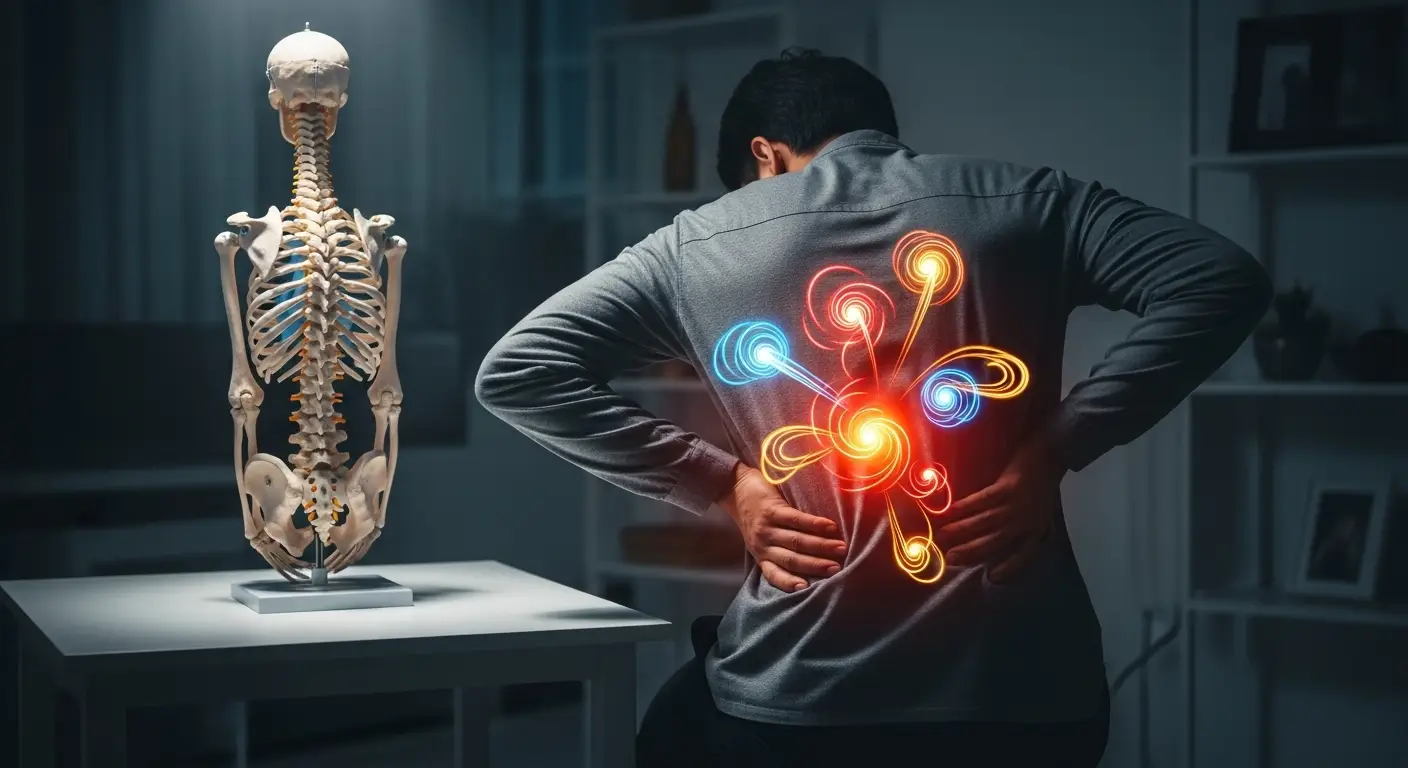
The answer, in many cases, is simple but unexpected. Not all back pain originates from the spine.
When the Pain Isn’t Where the Issue Is
The body doesn’t always communicate clearly. Internal organs and musculoskeletal structures share nerve pathways, meaning pain can be ‘referred’ from one area to another.
A problem in the abdomen or chest may be felt in the back instead. That’s why treating the spine alone often leads nowhere.
Digestive and urinary conditions are particularly known for producing this type of pain.
Hiatal Hernia: A Hidden Trigger for Back Discomfort
A hiatal hernia occurs when a part of the stomach pushes upward through the diaphragm into the chest cavity. Most people misconsider this condition with acid reflux or heartburn. Fewer realize it can also affect the back.
The diaphragm devlops breathing, posture, and core stability. When its normal function breaks, tension spreads. Muscles tighten. Nerves become irritated. This can result in a dull, nagging ache in the mid or upper back that feels mechanical – but actually isn’t.
Recognizing Symptoms
Hiatal hernia symptoms range from mild to disruptive and may feature:
- Chest pressure or discomfort
- Chronic heartburn or acid reflux
- Difficulty swallowing
- Upper abdominal pain
- Back pain after meals, when bending forward, or lying flat
Traditional back treatments offer only permanent relief because the root of the problem lies deeper.
Other Non-Spinal Causes of Back Pain
Hiatal hernias are only one piece of the puzzle.
Kidney stones or infections can cause sharp or radiating pain in the lower back. It often goes hand in hand with urinary symptoms.
Pancreatitis triggers intense abdominal pain that travels straight through to the back. Cramps in the lower back and pelvis typically mean gynecological conditions, like ovarian cysts or endometriosis.
Another condition worth considering is fibromyalgia. It can create widespread pain with no visible structural damage.
In all of these scenarios, the spine is not the primary issue – yet it’s the main hub of painful feelings.
How Doctors Uncover Non-Spinal Pain Sources
When back pain doesn’t respond to standard care, clinicians broaden their focus. They look for patterns. Timing. Triggers.
- Does pain worsen after eating?
- Is it linked to digestion, urination, or hormonal cycles?
- Does posture influence the pain or not at all?
Doctors may perform blood tests, abdominal imaging, endoscopy, or gastrointestinal studies to reveal the true source. A correct diagnosis is everything. It prevents unnecessary treatments and opens the door to effective solutions.
When Surgery Becomes Part of the Solution
Most hiatal hernias are managed without surgery. Lifestyle changes and medication work well for many people. But not always.
When symptoms persist or significantly impact quality of life, surgery is a must. Patients researching hiatal hernia surgery Los Angeles often seek specialized centres. These ones promise minimally invasive procedures designed to restore normal anatomy and relieve pressure on the diaphragm.
For some individuals, repairing the hernia doesn’t just ease reflux – it finally resolves the unexplained back pain that lingered for years.
The Bigger Picture
Back pain isn’t always a back problem.
Sometimes, it’s a clue.
When treatments fail and answers feel incomplete, considering non-spinal causes, especially digestive conditions like hiatal hernias, can bring real relief. The key is listening closely to the body and looking beyond the obvious.
Because sometimes, the path to a pain-free back starts somewhere entirely different.