

Digestion does a lot. Breaks food down. Pulls out nutrients. Gets rid of waste. And when it’s off? Even simple daily stuff gets uncomfortable. Bloating. Constipation. Acid reflux. Diarrhea. Indigestion. All pretty common. Hits people of every age.
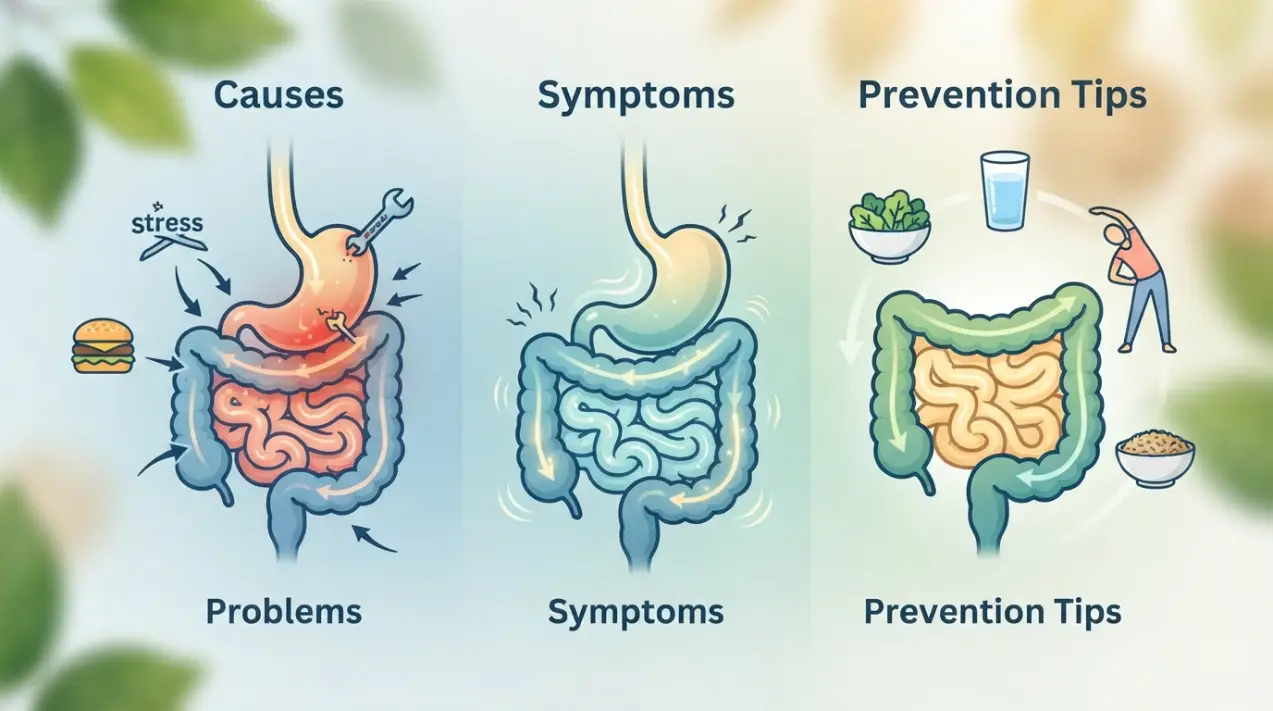
A lot of it’s temporary, honestly. Tweak the diet, change a few habits, things often settle. But symptoms that stick around, or get severe? Sometimes that points to something underneath. Something that needs a doctor. So knowing the common problems, what causes them, how to prevent them, that’s what helps people look after their gut properly.
Indigestion and Bloating
Indigestion. Also called dyspepsia. Brings discomfort or a full feeling in the upper belly. Some people burp. Feel nauseous. Get a burning feeling after eating. Bloating’s a bit different. The belly just feels weirdly full. Swollen, even.
Causes? Eating too fast. Huge meals. Fizzy drinks. Foods that just don’t sit right. Stress plays in too. So can certain medicines.
What helps: smaller meals. Slowing down while eating. Figuring out which foods keep causing trouble. Regular movement helps as well. Keeps digestion working the way it should.
Constipation
One of the most common complaints out there. Fewer bowel movements than usual. Or hard, dry stool that’s tough to pass. Some people strain. Some feel like they never fully emptied out.
Low fiber’s a big one. Not drinking enough. Not moving enough. A shake-up in routine. Certain medicines and health conditions can add to it too.
Fiber helps. Veggies, fruit, whole grains, beans, legumes. Plenty of fluids. Staying active. One catch, though. Go slow with fiber. Pile it on too fast and it can bring extra gas. More bloating.
Diarrhea
Loose or watery stool. Sometimes several times a day. Could be an infection. Bad food or water. A food intolerance. Some medicines. Other gut conditions.
Short bouts usually clear up on their own. The real risk? Losing too much fluid. Dehydration. So drinking enough matters a lot here. Oral rehydration solutions can help too, in some cases. Put back fluids and electrolytes.
But some signs shouldn’t be brushed off. Diarrhea that won’t quit. Blood in the stool. Bad belly pain. High fever. Signs of dehydration. Those might need a proper medical check.
Acid Reflux and Heartburn
Reflux happens when stomach contents creep back up into the esophagus. Result? That burning feeling in the chest. Heartburn. Some people get a sour taste in the mouth too. Or discomfort after meals.
Triggers vary. Big meals. Lying down right after eating. Certain foods. Extra body weight. Smoking. Some medicines.
Moderate portions help some people. So does staying upright after meals. Tracking trigger foods, useful too. Frequent or severe reflux, though? Worth talking to a healthcare professional. Ongoing reflux might need a closer look.
Irritable Bowel Syndrome
IBS. Pretty common condition. Messes with bowel habits. Causes belly discomfort. Could be constipation. Could be diarrhea. Bloating. Shifts in bowel movements.
Looks different for everyone. Certain foods, stress, hormonal changes, changes in how the gut moves. Any of those can play a part.
A food and symptom diary helps spot triggers. Regular meals. Staying active. Good sleep. Managing stress. All can help keep symptoms in check. And when buying food, checking ingredient lists carefully is smart. Whether it’s a local store or an online marketplace like Voghion. Triggers differ a lot from person to person.
Healthy Habits for Better Digestion
Everyday habits count. A balanced diet with fiber, veggies, fruit, whole grains, the right protein sources. Gives the body what it needs. Staying hydrated keeps bowels working normally. Moving around helps digestion along.
Eat at your leisure. Also watching portion sizes. That way less pain. Food hygiene is also important. Wash hands 3. 2. Cook food safely. Store perishables correctly. Avoid contaminated food or water. Reduces the risk of developing some infections of the stomach.
And stress. Don’t overlook it. The gut and the nervous system talk to each other constantly. Stress can shift bowel habits and stir up symptoms in some people. So relaxation, exercise, enough sleep, healthy routines? Can genuinely help.
When to Seek Medical Advice
Stomach trouble is occasional. Normal . Symptoms that don’t go away or get worse should be checked out. Especially unexplained loss of weight. Blood in the feces. Vomiting that won’t stop. Terrible stomach pain. Swallowing difficulties. Persistent change in bowel habit. Dehydration symptoms.
Lots of things can affect digestion. So self-diagnosing isn’t a great idea when symptoms keep going or get in the way of daily life. A healthcare professional can look at the symptoms, medical history, diet, medications, everything else. Then decide if more tests or treatment make sense.
Conclusion
Digestive problems run the range. Quick discomfort on one end. Ongoing conditions needing professional care on the other. Constipation, diarrhea, bloating, indigestion, acid reflux, IBS. All common. Good eating, enough fluids, regular activity, safe food habits, stress management. Those support normal digestion.
Biggest thing, though? Don’t ignore symptoms that keep coming back. Or feel severe. Or just seem off. Spotting warning signs and getting the right medical advice early. That’s what protects gut health long term.