

If you or someone you love is walking the path of recovery, you may have heard the sobering statistic that relapse rates for substance use disorders mirror those of other chronic illnesses like hypertension or asthma—between 40 and 60 percent. Let me be clear from the start: a relapse is not a moral failure. It is not a sign of weakness or a lack of willpower. It is a signal that your treatment plan needs adjustment, and it is a common part of the healing journey. Understanding why relapse happens is the first and most powerful step toward preventing it.
In this post, we’ll explore the most frequent psychological and environmental triggers that lead to relapse, along with actionable, evidence-based strategies to help you stay grounded in your recovery.
Common Causes of Relapse
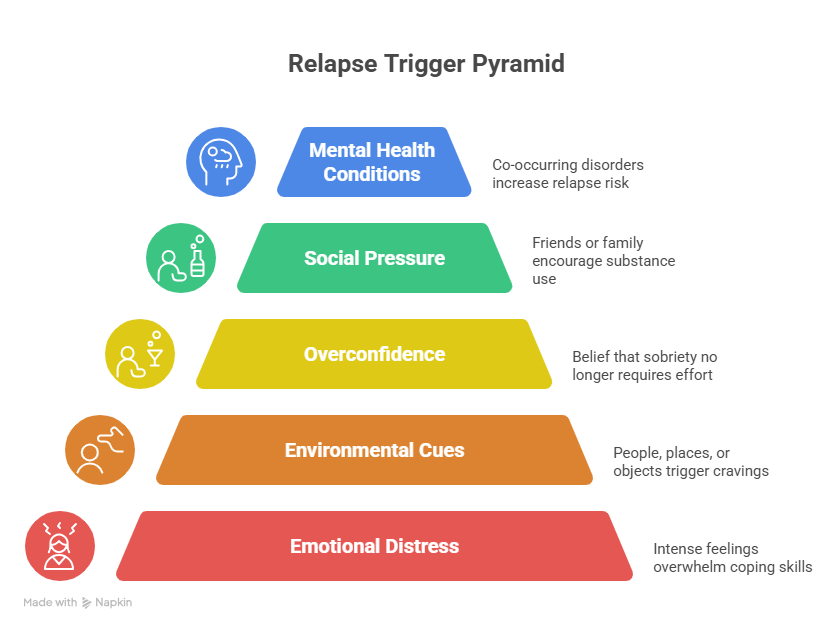
Relapse rarely happens suddenly. It often builds over days or weeks through a series of subtle shifts in thoughts, emotions, and behaviors. The most common triggers include:
- Emotional distress: Intense feelings like loneliness, anger, anxiety, or depression can overwhelm coping skills. Many individuals used substances to numb or manage these emotions, so returning to them without healthy outlets creates high risk.
- Environmental cues: People, places, or objects associated with past use—old hangouts, certain music, even specific times of day—can activate powerful cravings through conditioned memory.
- Overconfidence or complacency: After months of sobriety, it’s easy to believe you no longer need meetings, therapy, or daily routines. This “pink cloud” fading often leads to risky decisions.
- Social pressure: Well-meaning friends or family members who continue to drink or use, or direct pressure to “just one time,” can undermine even strong resolve.
- Untreated mental health conditions: Co-occurring disorders like PTSD, bipolar disorder, or major depression make relapse significantly more likely if not addressed alongside addiction.
How to Prevent Relapse: Practical Strategies
Prevention begins with self-awareness and a proactive plan. Here are evidence-based tools you can start using today.
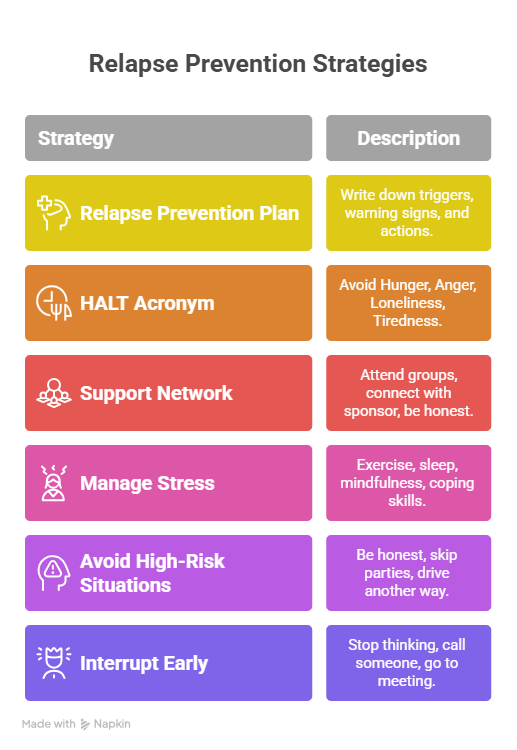
1. Create a Relapse Prevention Plan
Write down your personal triggers, early warning signs (e.g., irritability, isolation, romanticizing past use), and specific actions to take when they appear. Include emergency contacts, a list of distracting activities, and a reminder of why you chose recovery. Keep this plan visible.
2. Use the HALT Acronym
Never let yourself get too Hungry, Angry, Lonely, or Tired. These four states lower your defenses and impair judgment. Check in with yourself several times a day: “Am I HALT?” If yes, address that need first—eat something, call a supportive friend, rest, or use a grounding exercise.
3. Build a Strong Support Network
Recovery is not a solo journey. Attend support groups (12-step, SMART Recovery, or others), stay connected with a sponsor or recovery coach, and be honest with family members you trust. Isolation is a silent trigger; connection is medicine.
For those who have struggled with repeated relapses or feel their current environment is too unsafe, seeking structured professional care can be life-changing. The Best rehab in India offers comprehensive programs that combine detoxification, therapy, and aftercare planning tailored to your unique triggers. Sometimes stepping away from your daily environment into a supportive clinical setting is the most loving choice you can make.
4. Manage Stress and Emotions Proactively
Regular exercise, sufficient sleep, mindfulness meditation, and creative outlets all reduce baseline stress. Work with a therapist to develop coping skills for anger, anxiety, or sadness. Many people in recovery find that journaling or yoga provides an emotional release that substances once falsely promised.
5. Identify and Avoid High-Risk Situations
Be honest with yourself about what isn’t safe yet. If a party will have alcohol, skip it. If a certain neighborhood triggers cravings, drive another way. Practice saying, “No, thank you—I’m focusing on my health,” and have an exit strategy for any gathering. Your recovery is more important than someone else’s comfort.
6. Learn to Interrupt a Relapse Early
The moment you notice yourself thinking, “I could probably use just once,” or planning to revisit an old using location, stop. Call someone immediately. Go to a meeting. Re-read your prevention plan. Early-stage relapse (thinking) is far easier to stop than late-stage (actually using). Have a “rescue script” memorized: “I’m having a craving. I need to talk to someone who understands.”
You Are Never Starting Over—You Are Learning
If relapse does occur, do not let shame keep you from reaching out. Studies show that individuals who return to treatment after a relapse have the same long-term success rates as those who never relapsed. The key is to reach for help immediately. Many people find that engaging with the Best rehab in India provides the structured, compassionate environment needed to reset their foundation and learn advanced relapse prevention skills.
Remember: recovery is not a straight line. It is a spiral where you revisit similar challenges at higher levels of wisdom and strength. You have already survived your worst days. With the right tools, support, and self-compassion, you can navigate triggers, prevent relapse, and build a life of genuine freedom—one day at a time.