

People troubleshooting digestive symptoms tend to focus on food. They track meals, cut out dairy, try eliminating gluten, and experiment with fiber. What often goes unexamined is the glass of wine or beer that accompanies dinner several nights a week. Alcohol affects the digestive tract at nearly every level, and for anyone dealing with reflux, bloating, or irregularity, it is worth understanding how.
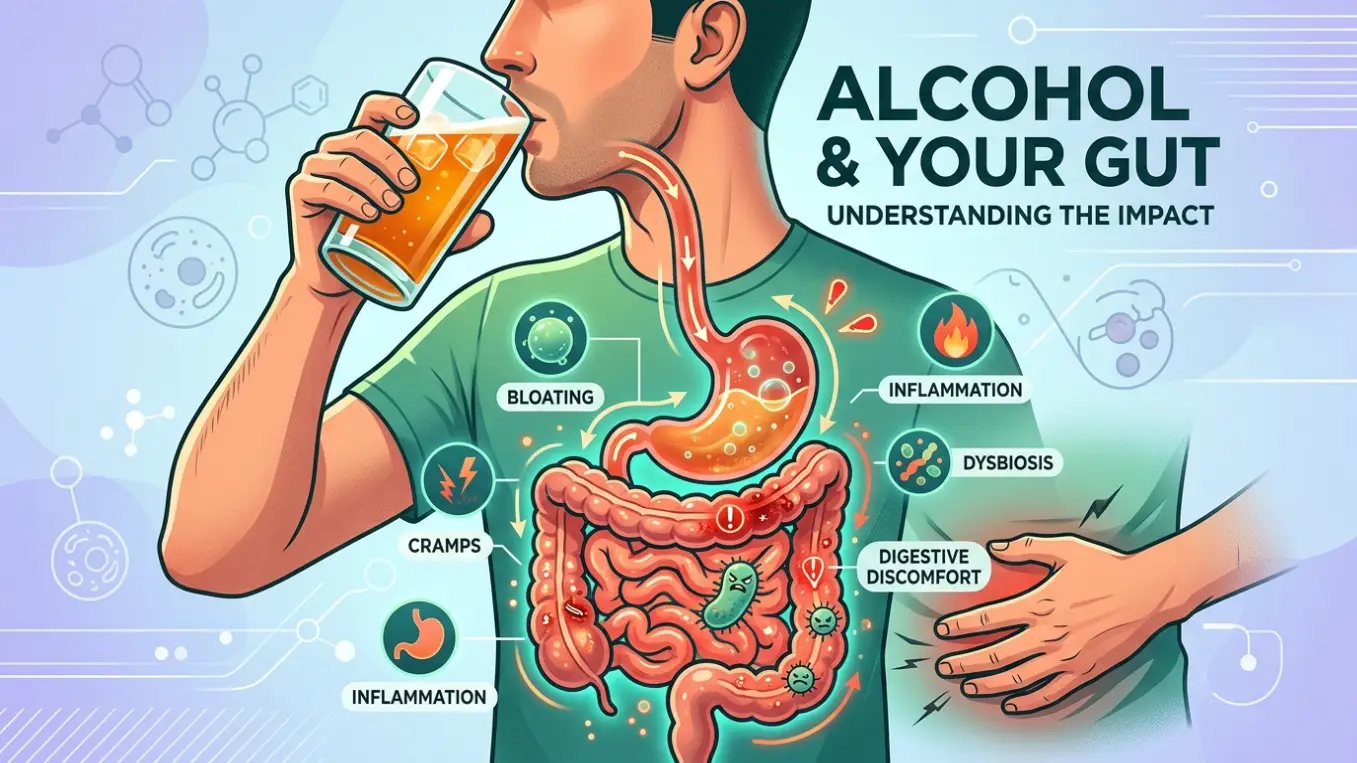
The Reflux Connection
The most direct effect involves the lower esophageal sphincter, the muscular valve that keeps stomach contents where they belong. Alcohol relaxes that valve. When it loosens, acid moves upward more easily, which produces the burning sensation people recognize as heartburn.
Timing compounds the problem. A drink in the evening, followed by lying down a few hours later, removes gravity from the equation at exactly the moment the valve is most relaxed. This is why some people find their reflux is worst overnight and are puzzled by it, having eaten nothing unusual. The meal may not have been the trigger. The drink alongside it, and the hour it was consumed, may have mattered more.
Irritation of the Stomach Lining
Alcohol also stimulates acid production and can irritate the gastric mucosa directly, the protective lining of the stomach. In some people this shows up as a dull ache, nausea, or a sense of discomfort after eating. Combined with certain over the counter pain relievers, which are themselves hard on the stomach lining, the irritation can be more pronounced. That combination is worth raising with your physician if it applies to you.
Motility and Regularity
Alcohol influences how quickly things move through the digestive tract, and the effect is not uniform. Larger amounts can speed transit through the intestine, which is why loose stools often follow a heavy night. At the same time, alcohol acts as a diuretic, suppressing the hormone that helps the body retain water. That fluid loss can leave the colon drawing more water from stool, contributing to constipation in the days that follow.
For people who already experience irregularity or alternating patterns, this push and pull can make symptoms harder to interpret. The picture becomes clearer once alcohol is accounted for as a variable rather than assumed to be neutral.
The Microbiome and the Gut Barrier
Research over the past decade has drawn increasing attention to the gut microbiome, the community of bacteria living in the intestine. Regular alcohol intake appears to shift the balance of that community and can increase intestinal permeability, meaning the gut barrier becomes less selective about what passes through it. Since that barrier plays a role in immune signaling and inflammation, its condition has effects that extend beyond digestion.
There is also a simpler mechanism behind some bloating. Beer and certain wines contain fermentable carbohydrates and other compounds that some people tolerate poorly, which can produce gas and distension independent of anything else in the meal.
Why the Pattern Is Easy to Miss
Part of the reason alcohol escapes scrutiny in symptom tracking is that it rarely feels like a variable. Most drinking habits are routines rather than decisions, triggered by the end of the day and repeated with little conscious attention. Food gets logged because it feels like a choice. The nightly glass often does not get written down at all.
If you are working through digestive symptoms, this makes for a straightforward experiment. Track your intake honestly for two weeks alongside your symptoms, including the size of the pour and the time of night. Many people find a pattern they had not connected before.
Making It a Deliberate Choice
None of this requires eliminating anything permanently. It requires knowing what your own body does, which is the basis of any sensible approach to alcohol moderation. Attention tends to work better here than willpower, since willpower is lowest at the end of a long day when the familiar cue arrives. Pausing before the pour and asking what you are actually reaching for often reveals it has less to do with the drink than with wanting a clear end to the day.
Several tools support this kind of awareness. Some people use a simple journal. Others find value in gentler techniques such as alcohol hypnotherapy, which uses calm, guided sessions to loosen the automatic quality of an established routine. Apps have moved in the same direction, and Unconscious Moderation combines neuroscience, self reflection, and drinking hypnotherapy to help people understand the pattern behind their alcohol habits rather than simply counting drinks.
A Variable Worth Testing
If reflux, bloating, or irregularity has been a persistent problem, alcohol deserves a place on the list of things you examine, alongside food, sleep, and stress. Practicing drinking moderation, whether tracked in a notebook or with an alcohol moderation app, gives you cleaner information about what your gut is actually responding to.
Persistent digestive symptoms always warrant a conversation with a physician, since reflux, pain, and changes in bowel habits can have several causes worth evaluating properly. Bringing accurate information about your intake to that conversation simply makes it a more useful one.