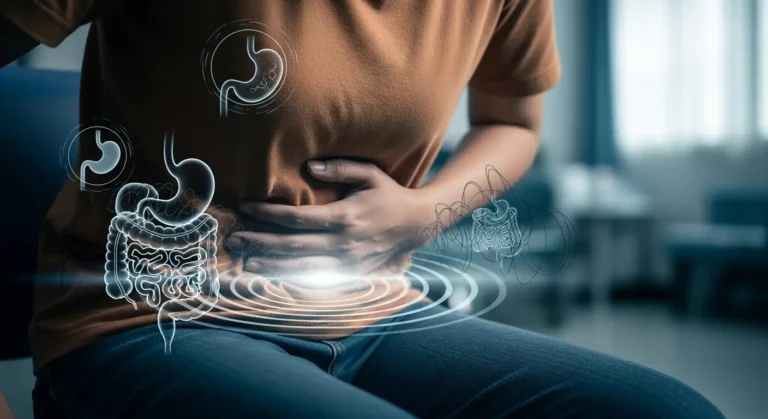
Gut health rarely comes down to a single food or a single supplement. The digestive system is wired into nearly every other part of the body — the brain, the immune system, the skin, the muscles you move, and the trillions of microbes that outnumber your own cells. The state of your gut reflects all of it.
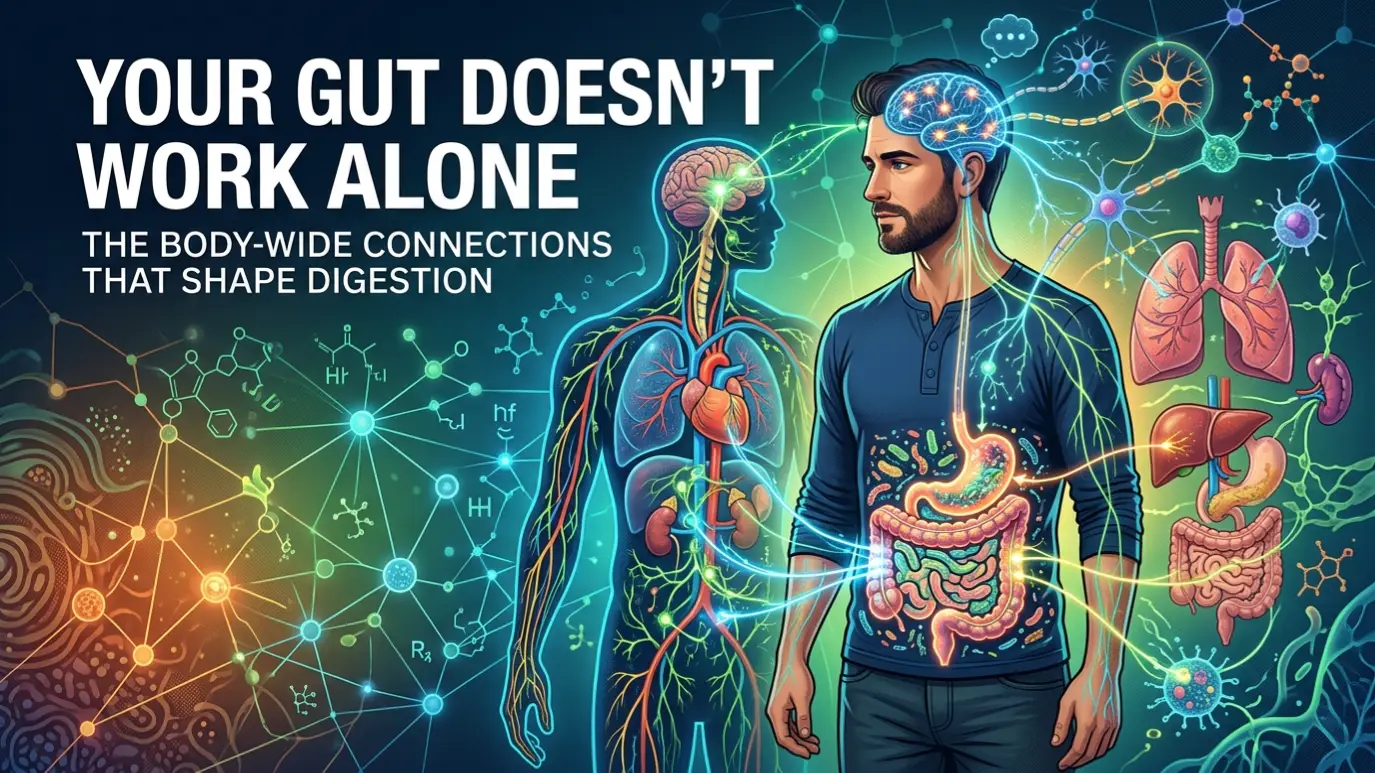
That interconnection is easy to miss. Most people treat digestion as a closed loop — something that starts at the plate and ends in the bathroom. In reality, the gut is in constant conversation with the rest of the body, and when it feels off, the cause is often somewhere upstream: a stressful stretch, a run of short nights, too little movement, or a problem somewhere you would never think to look.
Understanding those connections is what makes everyday habits that support digestion worth the effort. What follows is a tour of the main ones, from the well-known link between the gut and the brain to the quieter influence of sleep, sunlight, exercise, and even the bacteria in your mouth.
The Gut and the Brain Are in Constant Conversation
Start with the connection most people have felt firsthand. The gut and the brain talk to each other all day through a two-way line called the vagus nerve, which carries messages up from the digestive tract and back down again.
Most of that traffic flows upward. Roughly 80 percent of the vagus nerve’s fibers run from the gut toward the brain rather than the other way around, and the gut keeps its own dense web of neurons — often called the second brain — that manages much of digestion without waiting for orders from above. Microbes take part in the exchange too, helping produce and regulate serotonin and other chemicals tied to mood, appetite, and how fast food moves through the tract.
Because the line runs both ways, stress doesn’t stay in the head. It tightens the gut, heightens sensitivity, and can sharpen conditions like irritable bowel syndrome. That is one reason managing stress alongside conventional care helps so many people with stubborn digestive symptoms, and why anyone who has felt their stomach knot before a hard conversation has already met this connection in person.
Most of Your Immune System Lives in the Gut
The next connection is harder to feel but even larger in scale. The gut wall holds the largest concentration of immune tissue in the body, an amount often estimated at around 70 percent of it. The digestive tract is not just where food is processed; it is where the body does much of its immune training.
That placement makes sense. A single layer of cells is all that separates the bloodstream from everything you swallow, so the body stations much of its defense right there — learning to tolerate food and friendly microbes while staying alert to genuine threats.
When that barrier and the microbes behind it are healthy, the immune system stays calibrated. When they are not, low-grade inflammation can spill beyond the gut. It is part of why digestive health turns up in conditions that seem to have nothing to do with the stomach, and why so many roads back to feeling well run through the gut first.
Sleep, Screens, and the Microbiome’s Clock
Few things shape the microbiome as quietly as sleep. The gut keeps its own daily rhythm, and short or broken nights are linked to less microbial diversity and higher levels of stress hormones that irritate the gut lining.
Screens are the most common thief of that sleep. The light from phones and tablets suppresses melatonin, the hormone that signals the body to wind down, and children’s melatonin is especially sensitive to it, falling far more sharply than an adult’s after the same exposure. The American Academy of Pediatrics advises putting screens away at least an hour before bed for exactly this reason.
The catch is that the devices are built to resist that advice. A standard smartphone is engineered to hold attention rather than release it, which is why parents weighing a first device for a younger child often end up comparing a kid-focused phone with an iPhone. A phone without an open browser, social feeds, or an app store simply gives sleep less to compete with.
Daylight matters as much as darkness. Morning light helps reset the body’s clock, which is part of why morning sunlight supports healthy digestion alongside a consistent bedtime. The two habits reinforce each other: better nights lead to calmer digestion, and calmer digestion makes for better nights.
Digestion Starts in the Mouth
Digestion doesn’t begin in the stomach; it begins in the mouth, where chewing and enzymes in saliva start breaking food down. The community of bacteria living there is closely tied to the one much further along the tract.
When oral health slips, harmful species can multiply and travel south. Researchers studying oral bacteria linked to gut imbalance have found that pathogens from gum disease reach the intestines, disturb the microbial balance, and drive inflammation well beyond the mouth. The same work ties long-term gum problems to conditions across the body, a reminder that the mouth is a gateway rather than a sealed-off compartment.
That gives routine dental care a role most people never connect to digestion. The obstacle is usually logistical rather than medical — booking a cleaning can mean phone tag with a front desk during the exact hours you are also at work, and a call that goes to voicemail often becomes an appointment that never happens. A growing number of practices now use an AI receptionist that books dental visits around the clock, so keeping up with care no longer depends on catching someone between patients.
The Gut Shows Up on Your Skin
The gut’s reach extends all the way to the skin. The two are linked through a two-way tie called the gut-skin axis, in which the balance of gut microbes and the immune signals they shape influence conditions like acne, eczema, and rosacea.
It explains why a stubborn skin problem sometimes eases when digestion improves, and why holistic approaches to clearer skin increasingly start with the gut rather than the medicine cabinet. Treating the surface alone often misses the source.
Movement Changes the Microbiome
Exercise belongs on the list too. A meta-analysis of exercise studies found that regular, moderate activity increases the diversity of gut bacteria and favors the microbes that produce short-chain fatty acids, the compounds that help keep the gut lining strong.
Movement also keeps things physically moving. Activity stimulates the muscle contractions that push food through the intestines, which is part of why a sedentary stretch so often brings sluggish digestion — and why staying active supports a healthier gut, whether that means a daily walk or a weekend team sport.
What You Feed It Matters Most
None of these connections replace the most direct one: what you actually eat. Fiber is the clearest example. It feeds beneficial bacteria and gives stool the bulk it needs to move, so a diet short on fiber starves the microbiome and slows everything down.
Fermented foods add another lever. In a Stanford trial, a diet rich in yogurt, kefir, kimchi, and other fermented foods raised microbial diversity and lowered inflammation over ten weeks, an effect a high-fiber diet alone did not match on the inflammatory markers. Live cultures appear to do something fiber cannot on its own.
The practical takeaway is variety. A balanced diet built around whole foods, with plenty of plants and a few fermented staples, does more for the gut than any single so-called superfood or supplement.
The Everyday Disruptors
It helps to know what works against all of this, too. Ultra-processed foods, heavy alcohol use, and repeated courses of antibiotics can each thin the microbiome or inflame the gut lining, and frequent use of common painkillers like NSAIDs can irritate it directly.
Alcohol is an especially common blind spot. It disrupts the balance of gut bacteria and can undercut the very probiotics people take to support digestion, which is worth knowing before mixing probiotics with a nightly drink. None of this means never again — it means noticing the pattern.
The disruptors rarely travel alone. Chronic stress, poor sleep, a sedentary routine, and a steady diet of processed food tend to cluster together, and the gut quietly absorbs the combined toll. Pulling even one thread loose tends to loosen the others.
Small Daily Shifts That Add Up
Seen together, these connections turn gut health into something far wider than a diet. The brain, the immune system, sleep, sunlight, oral care, movement, the skin, and the food on your plate each feed the same system, and each offers a place to intervene.
None of it calls for an overhaul. A consistent bedtime, screens set aside before sleep, a standing dental appointment, a daily walk, more plants and fewer processed foods, and a simple morning routine for regularity tend to compound quietly over weeks and months.
The payoff is a digestive system that works with the rest of the body instead of against it, which is ultimately what the everyday side of gut health is built on. Pick one connection, give it a few weeks, and let the results guide where you focus next.