

You look in the mirror. Maybe you see a line that wasn’t there before. Maybe you just notice the texture isn’t quite what it was five years ago. We spend so much time obsessing over surface-level quick fixes, forgetting that the real stuff is happening underneath. It’s all about the chemistry. The way our cells talk to one another. And right now, the conversation in labs is moving toward peptides. Not the magic cream your neighbor swears by, but the actual scientific compounds that dictate how cells behave.
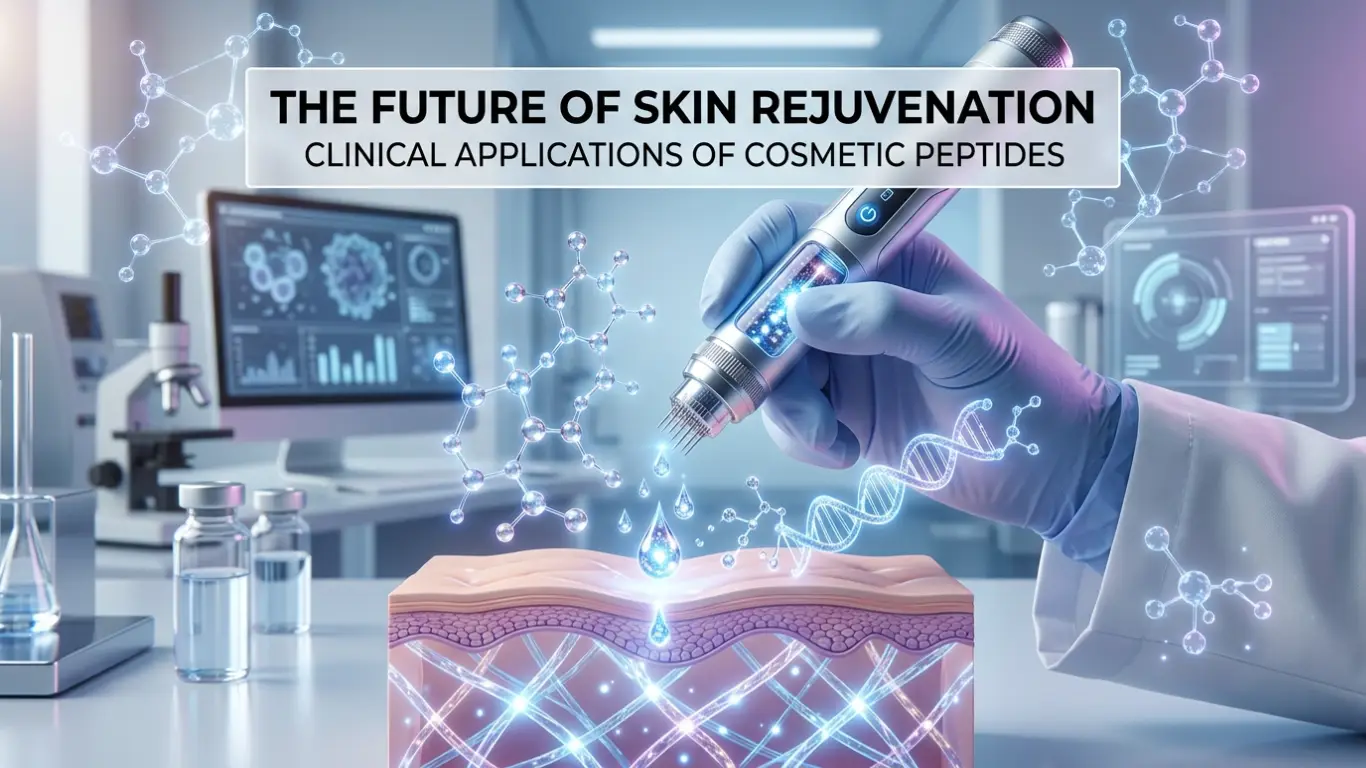
It’s interesting, right? We talk about skin health like it’s a lifestyle choice, but it’s really a masterclass in biology. Peptide science isn’t some brand-new trend; it’s a logical step in how we approach cellular communication.
The Real Deal with Skin Signals
If you think of your skin as a construction site, you have the bricks, you have the mortar, and you have the blueprints. Peptides? They are the foremen. They walk around the site. They tell the workers where to put the collagen. They tell the elastin to pick up the slack. Without these signals, the whole site starts to look a bit messy. The structure gets loose. The integrity fades.
It is easy to get lost in the marketing fluff. You see a bottle. It promises the world. But if you look at the topical applications of bio-active cosmetic peptides lines, you start to see that the mechanism matters more than the fancy packaging. These molecules are specifically designed to mimic the naturally occurring sequences in our biology. Think of them as imposters—or maybe better, messengers—that deliver specific instructions to the skin cells. When these sequences are introduced correctly, the cell receives a prompt. It’s not just about slapping something on your face and hoping for the best. It’s about creating an environment where the skin feels prompted to perform its own maintenance.
The real shift here is moving away from aggressive resurfacing and toward gentle, targeted signaling. We spent decades burning skin with acids or freezing things with toxins. Now, there is a clear interest in how we can simply ask the skin to fix itself. It is a subtle difference, but it changes everything about how we look at aging. You aren’t forcing a result; you are providing the tools for the skin to do its job.
Why Complexity Matters
Peptides are not all built the same. You have signal peptides. You have carrier peptides. You have neurotransmitter-inhibiting peptides. Each one has a job description.
- Signal Peptides: These act like a wake-up call for the fibroblasts. They send the message that it is time to ramp up protein production.
- Carrier Peptides: These are the delivery trucks. They ferry trace elements like copper into the cell, which is necessary for enzymatic reactions that keep things firm.
- Neurotransmitter-Inhibiting Peptides: These essentially tell the facial muscles to chill out, reducing the repetitive movements that lead to expression lines.
It is a complex dance. You might think, why not just use all of them at once? But biology rarely likes a mess. It prefers targeted intervention. If you overload the skin with every possible signal, the messages get garbled. Nothing happens. The skin gets confused. That is why the most interesting clinical developments are happening in the space of precision. It is about the sequence. The order. The stability of the compound.
Most people fail to realize that stability is the actual challenge. You can have a brilliant peptide in a lab, but if it breaks down the moment it touches the air, or if it can’t penetrate the outer barrier of the skin, it is useless. The future of this field isn’t necessarily about discovering a “new” miracle peptide. It’s about delivery. How do we keep the signal intact until it reaches the target cell? That is where the real innovation happens. It involves lipid-based carriers; it involves encapsulation. It involves chemistry that ensures the message actually arrives at its destination.
The Science of Doing Less
We have this tendency to think that if a little is good, a lot must be great. We over-exfoliate. We use too many actives. We scrub the skin until it cries. But the move toward peptides is fundamentally a move toward patience. It is a slow game.
Look at the way we approach longevity. We want things to last. We want the result to be sustainable. If you use a compound that forces an immediate change, it usually comes with a trade-off. Irritation. Barrier damage. When you use signaling molecules, the change is gradual. It happens from the inside out. Your skin starts to look better because it is actually functioning better.
It is weird to think about our skin as a system that requires management. But it is. It has cycles. It has downtime. It needs specific inputs to reach a certain output. When we start viewing skin health as a biological optimization process: rather than a chore of covering up flaws: the whole perspective shifts. You stop looking for the overnight fix. You start looking for the long-term benefit.
And that is where the research is heading. Not just aesthetics. But the functional integrity of the tissue. If we can keep the skin barrier robust, if we can keep the signaling pathways open and active, we are essentially extending the “youthful” period of the skin’s life cycle. It is not about stopping time; it is about managing the process.
Final Thoughts on the Road Ahead
The market is going to get noisier. Every brand will claim to have the next big thing. They will use the same buzzwords. They will promise the same results. But if you look past the noise, you start to see who is actually paying attention to the biology.
The future is in the peptides that do one thing perfectly. No extra fillers. No unnecessary additives. Just the signal, delivered where it needs to go, at a concentration that the cells can actually use. It’s a quiet approach. It is not flashy. But it is effective. And as we move forward, that effectiveness will become the only metric that matters. People are getting smarter. They are reading the labels. They are asking questions about the mechanism. That is a good thing for the industry. It forces better science. It forces better quality.
We are moving into an era where we can finally talk to our skin cells in a language they understand. It is time we started listening.



One Comment