
Have you ever felt like self-care used to be as simple as taking a nap or eating a cookie? Now it feels like there’s a whole industry telling you to ice your face, track your REM cycles, and meditate with an app that costs $12.99 a month. What started as a way to feel better has morphed into a wellness movement packed with trends, tech, and more than a little irony.
From Bubble Baths to Biohacking
Self-care used to mean carving out a few quiet moments to rest or recharge. Think warm baths, a good book, or a walk outside. Today, the concept has ballooned into a lifestyle backed by billion-dollar industries. “Wellness” is now a label attached to everything from collagen-infused coffee to infrared saunas. While the basic idea—taking care of your mental and physical health—remains, the delivery has changed drastically. Now it’s not unusual to find people tracking their daily dopamine spikes or investing in red light therapy masks they saw on TikTok.
Modern wellness is increasingly data-driven and performance-based. Rather than asking “How do I feel today?” people ask “What’s my HRV score?” With the rise of smartwatches, fitness trackers, and mental health apps, self-care has become quantifiable—and sometimes, oddly competitive. While this shift offers new tools and insights, it also runs the risk of turning care into obligation.
Luxury, Accessibility, and the Self-Care Paradox
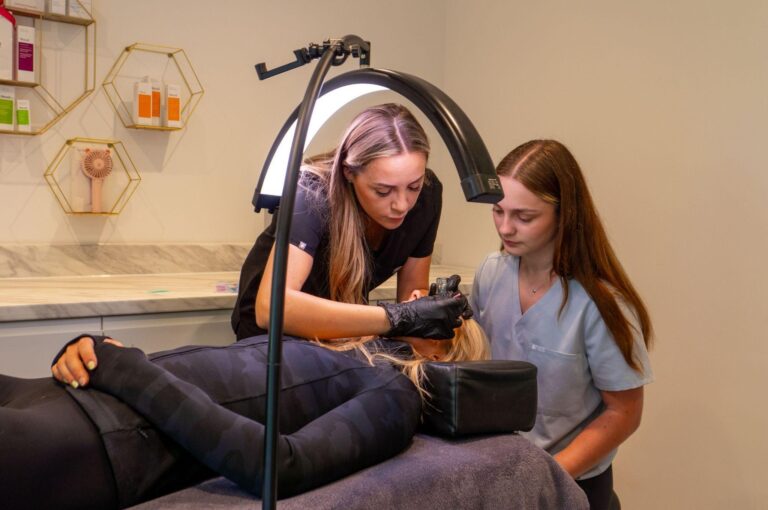
One of the biggest shifts in modern self-care is the blending of health with luxury. Gone are the days when a clay mask from the drugstore would suffice. Now, wellness often looks like curated Instagram aesthetics and high-end treatments. Medspas are thriving, offering services like laser therapy, injectables, and skin rejuvenation once reserved for celebrities. The rise of places like Metro Medspa, reflect this new demand. They provide results-driven treatments—such as microneedling, dermal fillers, and body contouring—in a calm, personalized setting. The goal isn’t just to relax; it’s to look and feel your best, with measurable outcomes.
Still, this version of self-care comes with a cost. While some people can access professional treatments, others rely on DIY routines and social media tips. The paradox? In a culture that insists self-care is essential, not everyone can afford the version that’s most glorified. It raises the question: Is modern wellness truly inclusive, or just aspirational?
The Influence of Social Media
Social media platforms have become the main stage for self-care narratives, but the message can be confusing. On one hand, influencers share tips that normalize mental health conversations, encourage journaling, or promote therapy. On the other, they also push $200 skincare routines, aesthetic water bottles, and “clean girl” looks that suggest wellness is something you wear.
The TikTok-ification of self-care has created an environment where taking care of yourself becomes content. A face mask isn’t just a quiet ritual—it’s a video with soft music, natural lighting, and a caption about healing. While it can inspire, it also sets unrealistic standards. Real self-care isn’t always pretty, and it certainly doesn’t need to be edited to a trending sound.
Mental Health Gets a Seat at the Table
In previous decades, talking openly about therapy or anxiety was rare. Today, mental health is at the center of many self-care discussions—and that’s progress. More workplaces are offering mental health days. Celebrities are talking about their struggles. Online platforms make therapy more accessible. Apps like Headspace and BetterHelp bring professional help into people’s homes, sometimes at a lower cost.
But commercializing mental health also brings complications. When self-care becomes a product, it risks simplifying deep emotional work into surface-level activities. A gratitude journal can be helpful, but it’s not a substitute for real emotional support. Recognizing the difference is part of understanding how to care for yourself in ways that actually matter.
The Pressure to Be Well
Oddly enough, the rise of self-care culture has made some people feel worse. When wellness is portrayed as a checklist—eight hours of sleep, daily movement, organic meals, zero screen time—it turns into another to-do list. People may feel like they’re failing at something that was supposed to help them feel better. There’s a quiet shame that creeps in when you skip a workout or order takeout instead of making a grain bowl.
In that sense, wellness becomes performance. The expectation isn’t just to feel okay but to thrive at all times, even in a world that’s often exhausting. Especially after the pandemic, when people reassessed their priorities and routines, the line between healthy habits and pressure to optimize became even thinner.
Where Self-Care Is Headed Next
Looking ahead, self-care may continue to evolve toward balance and intention. As people grow weary of overconsumption and endless routines, there’s a growing appetite for slower, simpler wellness. Mindful rest, nature, and authenticity are gaining traction over constant productivity. The conversation is turning from “what should I be doing to be well?” to “what do I really need right now?”
That shift might be the most important one yet. Because at its core, self-care isn’t about trends, aesthetics, or data—it’s about making life a little more livable. And in today’s fast-paced world, that’s revolutionary enough.
Source: https://drginasam.net/