

You know, sometimes I sit back and think about the sheer amount of technical focus required in aesthetic medicine. It is not exactly simple work. You have a patient, you have a specific goal in mind, and the margin for error? Pretty thin. It really comes down to the hands. The way you hold the needle, the angle, the depth, the pressure—it is all a dance, really. If you get it right, everything aligns. If you miss by a millimeter, well, the outcome shifts. It is that kind of pressure that keeps things interesting, I suppose.
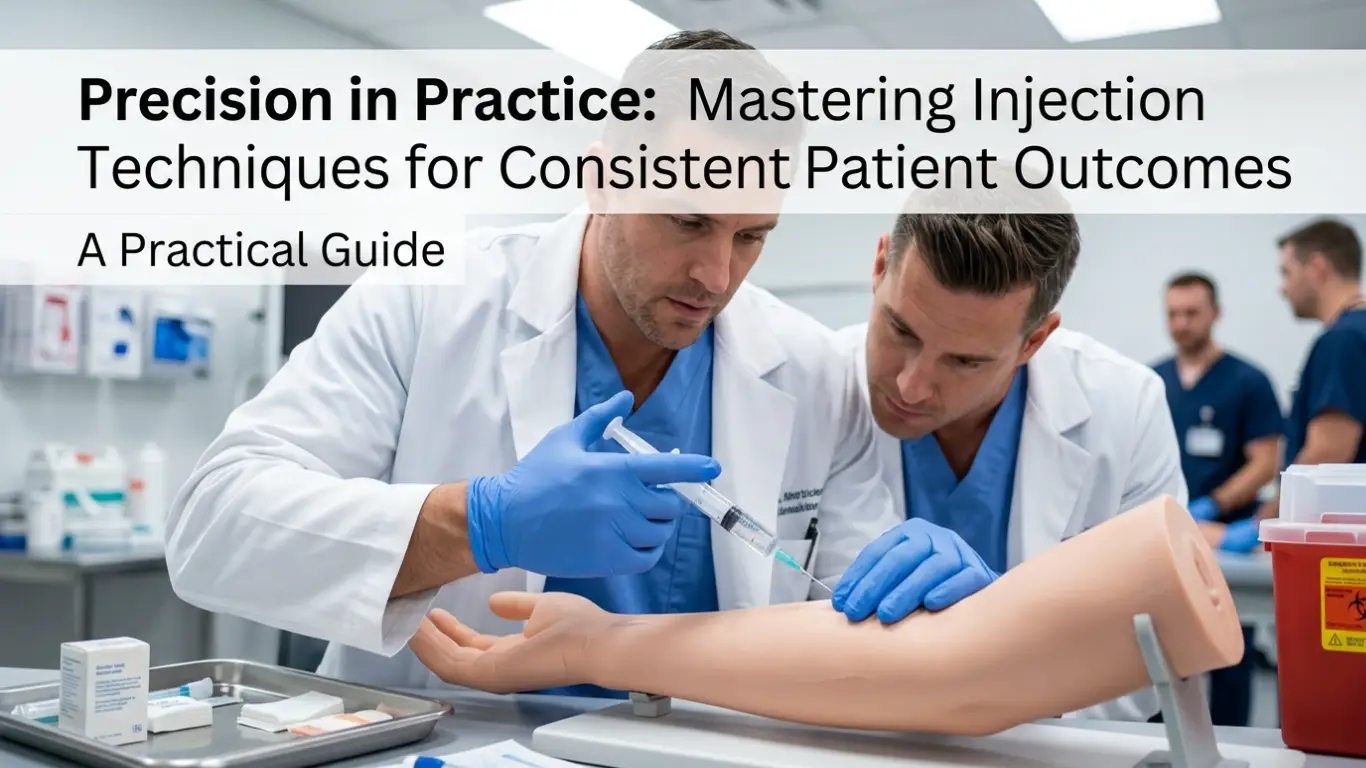
The Foundation of Reliability
Consistency is the name of the game. Patients come back because they know exactly what they are going to get. They like the reliability. But how do you actually reach that level of predictability? It is not about magic. It is mostly about the stuff you use and how you handle it. You need a reliable base: the products themselves need to be top-tier, or nothing else matters. That is why having a genuine wholesale supply to buy Botox online is such a pivotal piece of the puzzle. When you can trust the origin, the storage, and the quality of the vials sitting in your fridge, your confidence levels change. You are not wondering if the product is off. You are just focusing on the injection point. It is a quiet, underlying factor that dictates the entire flow of a clinic session.
Breaking Down the Mechanics
Technique is a funny thing. You learn the anatomy, you memorize the maps, you track the facial muscles. But then, you are actually in the room. You have the syringe. The theory goes out the window for a split second, and the muscle memory takes over.
Some practitioners have a very light touch. They barely seem to press at all. Others? They are much more deliberate, moving with purpose. I find that the ones who really succeed in the long term pay attention to a few specific, tiny details:
- The tension of the skin during the insertion phase.
- The speed of the product delivery to minimize discomfort.
- The specific needle gauge used for different facial regions.
It sounds almost too simple, but these three points are where people usually drift. If your tension is loose, the needle drags. If your speed is uneven, you get lumps. It is the little stuff.
Watching the Angles and Depth
Think about the depth for a second. We talk about superficial versus deep injections all the time. But the difference is often a matter of perception. You are aiming for a specific layer. If you go too deep, you miss the target muscle. If you go too shallow, you risk visible irregularities. It is a spatial puzzle.
I often look at how someone holds the syringe. Are they using a pen grip? A finger-pinch grip? The way you hold it determines how much stability you have. If your hand is shaking, even a little, the patient sees it. They might not say anything, but they feel it. Stability is the quiet language of trust in this room. You have to be steady. Like, rock steady.
Then there is the muscle mapping. You cannot just inject a general area. You have to inject the specific functional unit. If you are off by a hair, you end up with asymmetry. And asymmetry is the quickest way to lose a patient’s trust. They notice those things. They stare in the mirror for hours. They will find the mistake.
Why the Product Source Matters
I keep coming back to the product itself, because you can have the best technique in the world, but if the material is inconsistent, you are fighting an uphill battle. It is frustrating to spend years refining your craft, only to have a result go sideways because of a sketchy supply chain.
There is a rhythm to the work when you have everything exactly where it needs to be. You reach for the syringe, you know the dose, you know the product is authentic, and you know how it is going to behave in the tissue. That rhythm is what makes a clinic successful. It is not just about the skill; it is about the entire ecosystem of your practice.
Fine-tuning Your Approach
You might find your style changes over time. That is normal. You start out very cautious, very textbook. Over time, you start to feel the tissue differently. You know when a muscle is particularly dense. You know when the skin is thin and requires a different approach entirely. That intuition? That comes from thousands of injections. You cannot read that in a book.
It is also worth mentioning the post-injection guidance. You can do the perfect job, hit every mark with surgical precision, but if the patient goes home and does something they should not do, the results shift. Sometimes, I wonder if the aftercare is just as important as the procedure itself. We spend so much time on the needlework that we sometimes breeze through the instructions. But the patient needs to know the why and the how. They are your partners in this, after all.
Final Thoughts on Technique
We are chasing that perfect, natural-looking result. It is not about freezing faces. It is about harmony. It is about making the patient look like the best version of themselves. To do that, you have to be present. You have to be focused on every single drop.
When you get that flow right—where the anatomy meets the product, where the technique is refined to the point of being second nature—that is when the magic happens. You become a craftsman. You stop thinking about the mechanics and start thinking about the art. But getting to that point? It takes a massive amount of disciplined work. It takes the right supplies, the right mindset, and an endless attention to detail.
Keep your focus on those small, invisible moments. The pressure. The angle. The depth. The source. When you get those right, the patient outcomes usually take care of themselves. It is a satisfying way to work, honestly. Just you, the patient, and the goal of getting it right. Every single time.


