

Caring for someone you love is one of the most profound responsibilities a person can take on. It is also one of the most quietly exhausting. Millions of families across the country are navigating the daily demands of supporting a parent, sibling, or spouse with a chronic condition, disability, or age-related decline, often with little support, little rest, and little acknowledgment of how much they are carrying. Professional personal care services offer a meaningful path forward, one that does not replace the love and commitment of a family but strengthens it by making sure the people doing the caring are not running on empty.
The Hidden Weight of Family Caregiving
What Statistics Miss About the Day-to-Day Reality
Family caregivers are often invisible in the healthcare conversation. The focus tends to be on the person receiving care, which is appropriate, but the people providing that care in the home are absorbing enormous physical and emotional demands that rarely get acknowledged in any clinical setting.
The typical informal caregiver is juggling:
- Assistance with bathing, dressing, grooming, and personal hygiene
- Meal preparation tailored to dietary or medical needs
- Medication reminders and monitoring
- Transportation to medical appointments
- Mobility support and fall prevention
- Light housekeeping and home safety management
- Emotional support and companionship
Each of these tasks individually is manageable. Together, on top of work, parenting, relationships, and the caregiver’s own health needs, they create a cumulative burden that research has consistently linked to elevated rates of anxiety, depression, and physical illness among family caregivers.
This is not a personal failing. It is a structural reality. Human beings were not designed to provide intensive daily care indefinitely without support, and the families who struggle under that weight are not struggling because they do not love enough. They are struggling because they are doing too much alone.
What Caregiver Burnout Actually Looks Like
Recognizing the Signs Before They Become a Crisis
Caregiver burnout does not usually announce itself. It tends to arrive gradually, through the slow erosion of energy, patience, and perspective that happens when someone has been giving more than they can sustainably give for longer than they realized.
Common signs that a family caregiver is approaching or in burnout include:
- Persistent fatigue that does not improve with rest
- Increased irritability, resentment, or emotional withdrawal
- Neglecting personal health appointments, hobbies, or social connections
- Difficulty concentrating or making decisions
- Feeling trapped, helpless, or like there is no end in sight
- Physical symptoms including headaches, disrupted sleep, or frequent illness
What makes burnout particularly difficult in a caregiving context is the guilt that often accompanies it. Family caregivers frequently feel that acknowledging their own exhaustion is somehow a betrayal of the person they are caring for. This keeps people from asking for help far longer than is healthy for anyone involved, including the person receiving care.
A caregiver who is burned out cannot provide the quality of attention, patience, and presence that their loved one deserves. Addressing caregiver stress is not a selfish act. It is a necessary one.
How Professional Personal Care Services Change the Dynamic
Support That Goes Beyond Task Completion
The most immediate way professional personal care services reduce family stress is simply by sharing the load. When trained Personal Care Workers step in to handle daily activities of living, family members are freed from the relentless cycle of task management that defines informal caregiving at its most demanding.
But the impact goes deeper than logistics.
Consistency and Reliability
One of the most stressful aspects of informal caregiving is unpredictability. A family caregiver gets sick. Work demands spike. A child needs attention. An emergency arises. When one person is the sole provider of care, any disruption to that person’s availability creates an immediate crisis.
Professional care introduces a layer of consistency that informal arrangements cannot reliably provide. Scheduled visits, trained staff, and clear care plans mean that the person receiving care has dependable support, and the family has something equally valuable: the ability to breathe.
Trained Expertise in Daily Care Needs
Helping someone bathe safely, monitoring medications correctly, assisting with mobility without causing injury, these are skills. They require training, attentiveness, and a working knowledge of specific conditions and their implications.
Family caregivers often learn these skills out of necessity, on the fly, without formal instruction. Professional Personal Care Workers bring structured training to every interaction. This protects the person receiving care from preventable complications and protects the family from the anxiety of wondering whether they are doing it right.
Emotional Distance That Protects Relationships
There is a dimension of professional care that families often underestimate until they experience it: the relief of not being the person responsible for every intimate task. Helping a parent with bathing or toileting is something many adult children do out of love and necessity, but it can introduce a dynamic shift in the relationship that both parties find difficult.
Professional caregivers bring the appropriate relational distance to these tasks. They are trained to provide assistance with dignity and sensitivity, without the emotional complexity that family relationships bring to intimate care moments. This often allows family members to step back into their natural roles as sons, daughters, spouses, or siblings rather than clinical care providers, which strengthens the relationship and the emotional wellbeing of everyone involved.
The Specific Services That Make the Biggest Difference
What a Quality Personal Care Plan Covers
Not all personal care arrangements look the same, and that is by design. A good provider builds a care plan around the individual’s specific conditions, preferences, and goals rather than applying a one-size-fits-all model. The activities that make up a comprehensive personal care plan typically include:
| Service Area | What It Involves |
|---|---|
| Personal Hygiene and Bathing | Dignified assistance with bathing, grooming, oral care, and dressing |
| Meal Preparation | Nutritious meals tailored to dietary needs and preferences |
| Medication Monitoring | Reminders and oversight to support proper medication adherence |
| Mobility and Fall Prevention | Safe movement assistance and proactive measures to reduce fall risk |
| Transportation | Coordination of rides to medical appointments and errands |
| Light Housekeeping | Maintaining a clean, safe, and organized home environment |
| Companionship | Meaningful social interaction that supports mental and emotional health |
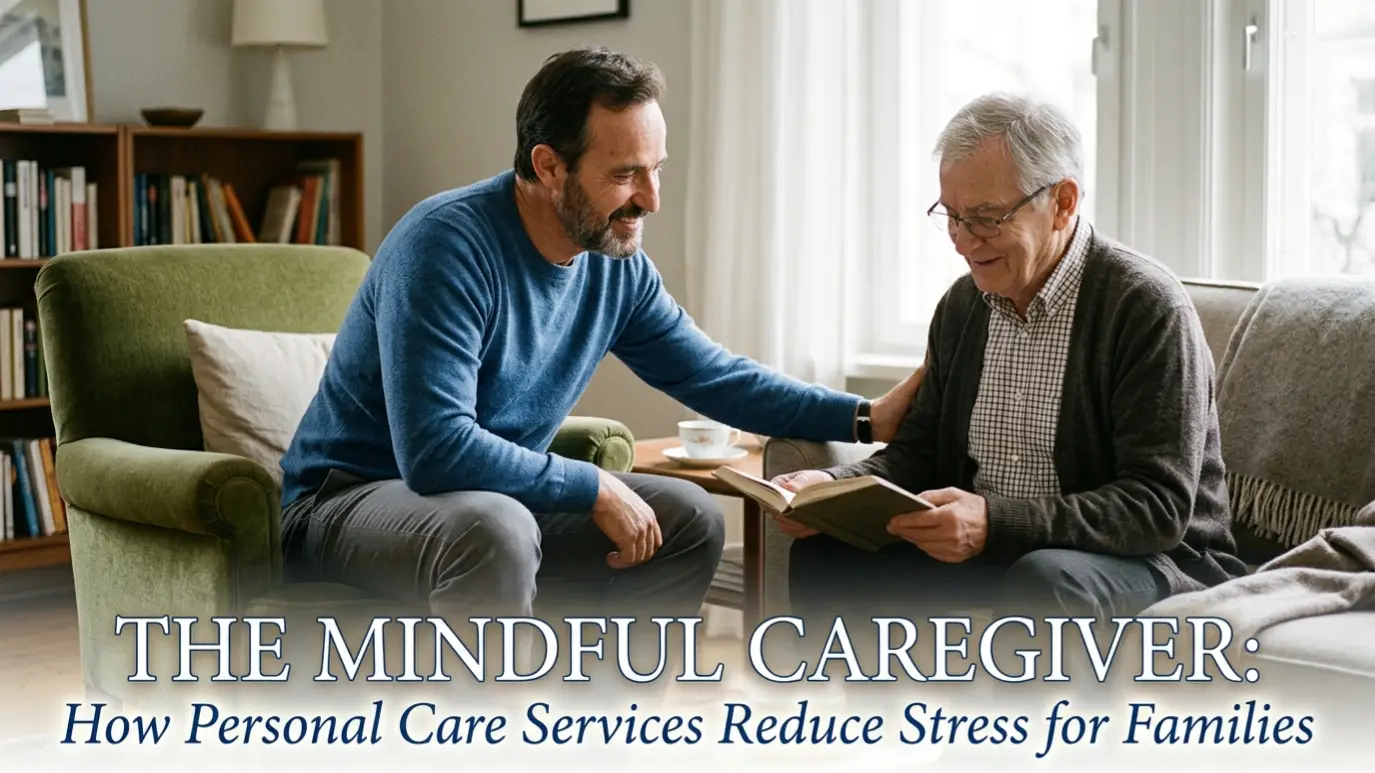
When these needs are being consistently met by a trained professional, the family’s role shifts from crisis management to genuine connection. Visits become visits again, not care shifts. Phone calls are not dominated by logistics. Time spent together can be restorative rather than exhausting.
Mindfulness and the Family Caregiver
Reclaiming Presence When the Pressure Lifts
There is a reason the word mindful appears so often in conversations about caregiving. When a family member is stretched thin by care responsibilities, presence becomes nearly impossible. The mind is occupied by the next task, the last problem, the upcoming appointment, the unresolved worry. The body is there but the person is not, not really.
This matters because presence is what the people we care for often need most. Not just practical assistance, but genuine attention. A real conversation. Eye contact. The sense that someone is truly with them.
Professional care support does not manufacture that presence. But it creates the conditions for it. When a family caregiver is not exhausted, overwhelmed, and behind on everything, they have the mental and emotional bandwidth to actually be there in the moments that matter. That shift in quality of connection is one of the most meaningful outcomes that professional care support produces, and one of the least visible on paper.
What to Look for in a Personal Care Provider
Choosing with Confidence
The decision to bring professional care support into a family’s life is significant. It involves trust, transparency, and a clear sense of what quality actually looks like. When evaluating providers, families should look for:
A person-centered approach. The best providers build individualized care plans that reflect the client’s specific conditions, preferences, and goals rather than standardized service packages.
Trained, vetted caregivers. Personal Care Workers should undergo thorough orientation and training before working with clients. Ask about the onboarding process and how staff are selected.
Clear communication with families. Families should be kept informed about daily care, any changes in condition, and how the care plan is evolving. Transparency is a marker of a provider that takes its responsibilities seriously.
Cultural sensitivity and inclusivity. Care is deeply personal, and the best providers recognize that cultural background, individual identity, and personal preferences all matter in how care is delivered.
Medicaid certification and insurance compatibility. For many families, understanding coverage options is a critical part of making professional care accessible. A quality provider will help families navigate their options rather than leaving them to figure it out alone.
Final Thoughts
Choosing to bring professional personal care support into a loved one’s life is not a concession. It is an act of clarity and love. It is the recognition that sustainable caregiving requires more than good intentions, that the people we care for deserve consistency and expertise, and that the people doing the caring deserve to remain whole.
The families who find their way to professional support often describe the same experience: the relief is not just practical. Something in the relationship shifts. There is room again. Room to be present, to be patient, to be the person their loved one actually needs rather than the person who is just barely keeping up.
That room is worth protecting, and professional personal care makes it possible.