Dental emergencies can occur at any time or may cause sudden pain, swelling or injury. These problems need quick care so they do not get worse. Many people wonder how quickly a dentist in Livingston, NJ can treat the problem. The answer depends on how severe the problem is.
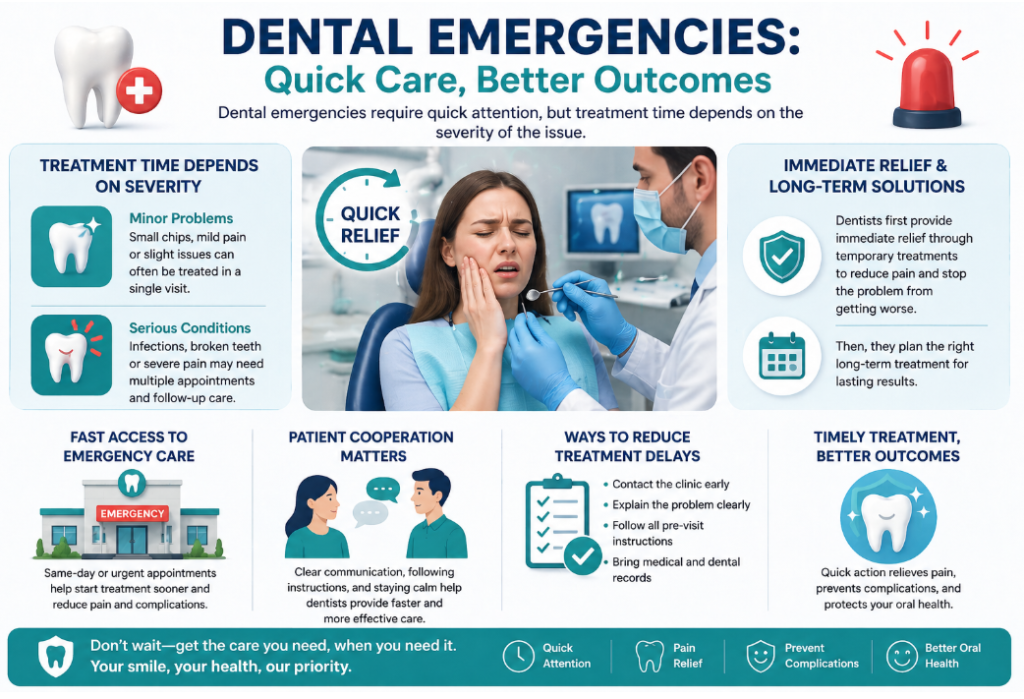
Some problems, like small chips or slight infections can be treated in one visit. Other problems may require more than one appointment to fix completely. Getting assistance from an expert dentist Livingston can save time and lessen pain. Quick treatment also helps protect your teeth and prevents more serious problems in the future.
Type of Dental Issue Matters
Different dental problems take different amounts of time to treat. Some problems are minor and can be fixed quickly while others require more time and proper care. Knowing to this helps patients know what may happen throughout a dental emergency.
- A small chipped tooth can typically be fixed in less than one hour in a single visit.
- A serious infection may require several visits, along with medicine and follow-up treatment.
- A knocked-out tooth must be treated very quickly, typically in 30–60 minutes, to save it.
Dentists in Livingston, New Jersey treat patients with severe pain or serious complications first. But even minor dental problems should not be overlooked as they can get worse if not treated in a timely manner.
Access to Urgent Dentist Livingston Appointments
The easy access to urgent dental appointments is very significant for handling dental emergencies quickly. Many dental clinics prioritize emergency patients and may offer same-day or walk-in visits, subject to their schedule.
In urgent cases, Livingston dentist often change their daily plans to see patients in pain or with serious dental problems. They usually start with a quick check to identify the problem and provide quick relief, such as pain control or a temporary treatment.
Later that week, full treatment is planned for a later visit. If the clinic is previously full, patients are still given basic first aid care and are requested to come back for complete action later. This flexible system helps patients get fast help, decreases pain and prevents the problem from getting worse until proper treatment is completed.
Short-Term Relief Vs Long-Term Fix
Short-term treatment helps lessen dental pain fast. The dentists use temporary care to prevent the problem from getting worse. This also gives time to plan a proper long-term solution.
- Filling a cavity supports and reduces discomfort and protects the tooth from further damage.
- Draining an abscess takes away pressure and decreases swelling fast.
- A temporary crown protects the broken tooth and supports you to chew.
- Early root canal treatment gets rid of infection and is finished in a later visit.
Temporary dental care is very significant in emergencies. It helps patients feel better immediately while the Livingston dentist plans full treatment for lasting effects. Following the dentist’s guide is important for correct healing and good long-term oral health.
Patient Condition and Cooperation
Patient condition and cooperation affect how quickly dental treatment can be performed. Things like how much pain a patient can tolerate, how serious the infection is, past medical complications, and fear or anxiety all matter throughout treatment.
Some patients may feel very anxious and want short breaks, comfort, or sometimes sedation which can make the procedure longer. If there is puffiness or a strong infection then the dentist Livingston, New Jersey may first offer medicines to reduce it before starting the main treatment. The patients with health problems may also want extra care and checks.
Ways to Reduce Treatment Delays
Decreasing treatment delays means acting promptly and communicating clearly with the dentist. If patients contact the clinic quickly and explain their problem well, treatment can start sooner. Following instructions also helps make the visit faster and smoother.
- Call the clinic as soon as you notice symptoms so you get early help.
- Explain your dental problem in simple words so the dentist knows fast.
- Follow all directions prior to your appointment to avoid waiting or delays.
- Take your medical and dental records for fast and accurate checking.
Staying calm throughout treatment supports the dentist’s work without interruption. Good patient cooperation speeds up the dental procedure and improves its effectiveness.
How Emergency Dentists Decide Treatment Priority
Emergency dental clinics do not treat every patient in the same order. Dentists first check how serious the condition is before starting treatment. A patient with heavy bleeding, swelling near the jaw, or a knocked-out tooth is treated faster than someone with mild tooth sensitivity.
This process helps the clinic manage emergencies safely and prevents dangerous complications from getting worse. In Livingston, many emergency dental offices keep time slots open specifically for urgent patients so severe cases can receive immediate attention.
Problems That Need Immediate Attention
Some dental issues cannot wait until the next day because delaying treatment increases the risk of infection or permanent damage.
| Dental Emergency | Why Fast Care Matters |
|---|---|
| Knocked-out tooth | The tooth has the highest chance of survival within the first hour |
| Severe swelling | Infection can spread into the jaw or face |
| Heavy bleeding | May indicate deeper injury or gum damage |
| Broken crown exposing nerves | Causes sharp pain and sensitivity |
| Dental abscess | Infection can spread beyond the tooth |
Patients who notice these symptoms should contact a dentist immediately instead of waiting for pain to increase.
Why Delaying Dental Treatment Makes Problems Worse
Many people ignore early symptoms because the pain feels manageable at first. The problem is that dental infections and tooth damage rarely improve on their own.
A small cavity can turn into nerve damage. Mild gum swelling can become a serious infection. A cracked tooth can split deeper into the root.
Common Effects of Delayed Treatment
- Higher treatment costs later
- Greater chance of tooth loss
- Longer recovery periods
- More appointments and procedures
- Increased pain and swelling
Getting early treatment often means the dentist can fix the issue using simpler procedures.
What Happens During an Emergency Dental Visit
Many patients feel nervous because they do not know what to expect during an emergency appointment. Most visits follow a simple process focused on pain control first.
Step-by-Step Emergency Visit Process
- The dentist checks symptoms and pain level
- X-rays are taken if needed
- The affected area is examined closely
- Immediate pain relief treatment begins
- A long-term treatment plan is explained
The first goal is stabilising the condition. Permanent treatment sometimes happens later depending on swelling, infection, or tissue damage.
How Technology Helps Dentists Treat Emergencies Faster
Modern dental clinics use digital tools that reduce waiting time and improve diagnosis speed. Many Livingston dental offices now rely on digital imaging instead of traditional methods.
Technology That Speeds Up Emergency Care
| Technology | Benefit |
|---|---|
| Digital X-rays | Faster imaging with immediate results |
| Intraoral cameras | Helps identify hidden damage |
| 3D scans | Gives detailed views of teeth and jaw |
| Electronic records | Reduces paperwork delays |
| Modern anesthesia methods | Faster pain control |
These tools allow dentists to begin treatment sooner and improve accuracy during emergencies.
Why Pain Levels Do Not Always Match the Severity
Some serious dental problems cause little pain at first. Other smaller issues can feel extremely painful. This confuses many patients.
For example, a deep infection can spread quietly before severe pain starts. On the other hand, a tiny crack near a nerve may create intense discomfort immediately.
That is why dentists examine the actual condition instead of relying only on pain levels.
How Children and Older Adults Are Treated Differently
Emergency dental care changes depending on the patient’s age and health condition.
Children
- Often need calmer communication
- May struggle to explain symptoms clearly
- Baby teeth require different treatment approaches
Older Adults
- May have existing dental restorations or implants
- Healing can take longer
- Medical conditions may affect treatment choices
Dentists adjust treatment methods based on these factors to keep procedures safe and effective.
What Patients Should Do Before Reaching the Dentist
The actions taken before arriving at the clinic can affect treatment success.
Helpful Emergency Steps
| Situation | Recommended Action |
|---|---|
| Knocked-out tooth | Keep it moist in milk or saliva |
| Swelling | Apply a cold compress |
| Bleeding | Use clean gauze with pressure |
| Broken tooth | Avoid chewing on that side |
| Severe pain | Avoid very hot or cold foods |
These simple steps reduce damage while waiting for professional treatment.
How Follow-Up Care Affects Recovery
Emergency treatment is only the first stage in many dental cases. Proper follow-up care decides how well the tooth heals afterward.
Patients may need:
- Additional fillings or crowns
- Root canal completion
- Antibiotics for infection control
- Follow-up X-rays
- Bite adjustments after repairs
Ignoring follow-up appointments can cause the same problem to return later.
Why Choosing the Right Emergency Dentist Matters
Not every dental office handles emergencies the same way. Clinics with emergency experience often move faster and manage pain more effectively.
Patients should look for:
- Same-day appointment availability
- Experience with emergency procedures
- Modern diagnostic equipment
- Clear communication during treatment
- Flexible scheduling for urgent care
A well-prepared clinic reduces stress during already painful situations.
Final Thoughts
Dental emergencies become harder to treat when patients wait too long. Quick action gives dentists more treatment options and increases the chance of saving the tooth.
In Livingston, emergency dentists often provide immediate relief during the first visit, especially for pain, swelling, or damaged teeth. Full recovery depends on the condition itself, how quickly treatment begins, and how well patients follow aftercare instructions
Key Takeaways
To conclude that dental emergencies require fast action and care. In many cases, Livingston dentists can offer quick relief in only one visit depending on how serious the problem is. Treatment time can change depending on the type of dental problem or its diagnosis and the treatment plan.
Simple difficulties like minor tooth pain or minor chips are typically fixed quickly. More serious problems such as infections or broken teeth, may require more than one visit and a step-by-step treatment plan. Knowing to this procedure helps patients stay calm and understand what will happen. Getting help on time is always the best option.