

Cancer immunotherapy is rapidly evolving and transforming the management and treatment of solid tumors. Immune-checkpoint inhibitors have become standard of care in a subset of malignancies. The research and clinical application of these agents have been supported by advances in understanding tumor immunology, molecular diagnostics and translational research. Among the different classes of immune-checkpoint inhibitors, the PD-1 inhibitors have received the most attention and have been shown to have clinical activity in different types of solid tumors.
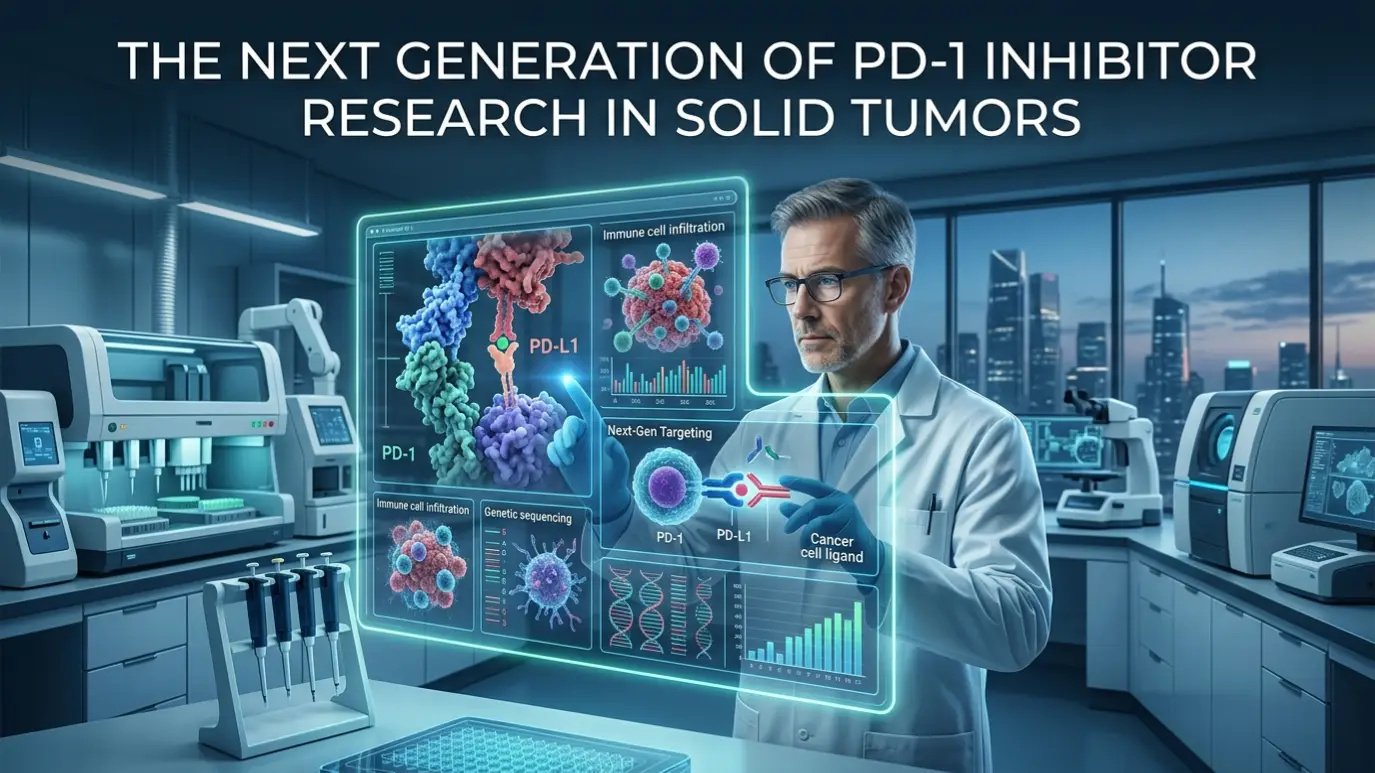
New research aims to optimize use of PD-1 inhibitors to select the right patients, overcome resistance, identify predictive biomarkers, better manage side effects and develop appropriate combination regimens. Such research may help in defining the role of PD-1 inhibitors within precision oncology to improve the treatment of various patient groups. This article examines current research on PD-1 inhibitor for solid tumors, as well as current scientific development that may impact future treatment.
Advances in Immune Check Point Therapy for Solid Tumors and Future Oncology Approach
Immune checkpoint inhibitors include drugs which are now approved for use in several different solid tumors including a variety of thoracic, gastrointestinal, genitourinary, skin and female tract cancers.
Current research is exploring the role of PD-1 inhibitors in:
- Earlier stages of disease
- Neoadjuvant treatment settings
- Adjuvant therapy
- Locally advanced tumors
- Metastatic disease
- Maintenance treatment strategies
- Organ-preserving treatment approaches
The aim of these current investigations is to find out the best time point, sequence and combination of immunotherapy within a multi-disciplinary treatment approach for patients with solid tumors. As treatment strategies continue to evolve, increasing attention is being directed at identifying subsets of patients most likely to derive long-term clinical benefit from these novel agents.
Advances in Tumor Immunobiology
An improved understanding of tumor immunobiology allows for a greater insight into the interactions between tumor cells and immune cells and the surrounding environment of a tumor. Current areas of investigation include:
- T-cell activation and exhaustion
- Antigen presentation mechanisms
- Immune checkpoint signaling pathways
- Tumor-associated macrophages
- Regulatory T lymphocytes
- Myeloid-derived suppressor cells
- Cytokine-mediated immune regulation
This area of research is exploring novel targets to enhance cancer specific immune responses while reducing immune suppression within the tumor environment.
Biomarker Development Beyond Conventional Testing
Although PD-L1 expressions can be used as a biomarker in certain clinical situations, there are other parameters that are currently being investigated for the individualized treatment of patients.
Emerging biomarkers under investigation include:
- Tumor mutational burden
- Microsatellite instability
- Mismatch repair deficiency
- Gene expression profiling
- Tumor-infiltrating lymphocytes
- Circulating tumor DNA
- Peripheral immune signatures
- Spatial immune profiling
Future biomarker models will combine information from molecular, pathological, and immunological levels to predict appropriate treatment for patients.
Combination Treatment Strategies
Combination therapy with PD-1 inhibitors in solid tumors is an area of rapid growth.
Current clinical studies are evaluating combinations involving:
- Chemotherapy
- Radiation therapy
- Anti-angiogenic therapies
- Targeted molecular therapies
- CTLA-4 inhibitors
- Cancer vaccines
- Cellular immunotherapies
- Novel Immune Checkpoint Modulators
Combination therapy is based on complementary mechanisms to activate the immune system and attack several tumor-related pathways. Ongoing research aims to optimize the sequence, duration of treatment and the associated side effects for patients with cancer.
Understanding Primary and Acquired Resistance
Despite encouraging results for single application of immune check point inhibitors, the resistance to these drugs remains a challenge for many patients.
Research is investigating mechanisms responsible for:
- Primary resistance before treatment initiation
- Acquired resistance after initial clinical response
- Tumor immune escape
- Altered antigen presentation
- Genomic evolution
- Changes within the tumor microenvironment
- Adaptive immune suppression
Understanding the mechanisms of immune resistance may lead to development of future cancer therapies that might improve response rates and clinical outcomes for patients with cancer.
Artificial Intelligence and Precision Immuno-Oncology
Artificial intelligence is becoming an increasingly important tool for researchers in oncology. Emerging applications include:
- Digital pathology
- Radiomic analysis
- Machine learning prediction models
- Multi-omics data integration
- Biomarker discovery
- Treatment response prediction
- Clinical decision support
These computational approaches can help to identify complex biological patterns, which can be difficult to recognize by means of analytical methods that are commonly used. Further prospective validation is required to assess the potential role of these emerging applications in clinical practice.
Clinical Trial Innovation
Modern immunotherapy research continues to be supported by evolving clinical trial methodologies. Contemporary study designs increasingly incorporate:
- Biomarker-enriched enrollment
- Basket trials
- Umbrella trials
- Platform studies
- Adaptive trial methodologies
- Real-world evidence
- Patient-reported outcomes
These approaches may support the evaluation of novel cancer therapies and can lead to evidence which applies to multiple cancer patients. International collaboration can speed up patient inclusion and assess the effect of new cancer treatments in multiple tumor types.
Advances in Safety and Toxicity Research
Current research priorities include:
- Earlier detection of immune-related toxicities
- Risk stratification models
- Predictive toxicity biomarkers
- Long-term safety monitoring
- Organ-specific toxicity management
- Steroid-sparing treatment approaches
- Survivorship outcomes following immunotherapy
Knowledge of the toxicity of PD-1 inhibitors can be used to select the appropriate treatment for each individual patient and to support proper usage of immunotherapy.
Future Perspectives in Solid Tumor Immunotherapy
PD-1 inhibitors are the focus of ongoing and increasingly complex research into cancer biology, molecular medicine and the computational approaches that underpin both.
Future priorities include:
- More individualized immunotherapy strategies
- Integration of comprehensive biomarker panels
- Development of novel immune checkpoint targets
- Optimization of treatment duration
- Improved management of therapeutic resistance
- Earlier intervention during disease progression
- Enhanced precision oncology approaches
- Expanded multidisciplinary collaboration
Advances in understanding tumor immunology continue to support individualized therapies for solid tumor patients. Healthcare professionals need to be up to date on the new evidence and practice guidelines, as well as on the current research in the field of oncology.
Closing Perspectives
The field of pd-1 inhibitor research is continually shaping the future of immunotherapy for solid tumors. The knowledge gained from tumor immunobiology, biomarkers, combination of therapies, resistance to therapy, artificial intelligence and clinical trial design, amongst others, may continue to give additional insight into the use of immune checkpoint inhibitors.
Healthcare professionals might benefit from knowing current clinical evidence as this will allow them to best interpret clinical studies and plan for future changes in patient management. As further research into the use of PD-1 inhibitors for patients with solid tumors is undertaken, more information may become available to further define their role in the management of different cancers. In time, this information might be translated into evidence-based practice for the management of patients with cancer.