
Many people think straight teeth only matter for appearance. A well-aligned smile certainly improves confidence, but alignment also plays a direct role in oral health. The position of your teeth affects how easily you can clean them, how evenly pressure spreads when you chew, and how your jaw functions throughout the day. When teeth are misaligned, small problems can develop quietly and grow into more serious issues over time.
Orthodontists often see patients who brush and floss consistently but still struggle with recurring cavities or gum irritation. In many cases, the underlying issue is not poor hygiene but tooth positioning. When teeth overlap or twist, they create narrow spaces that trap bacteria. Addressing alignment early can reduce these risks and help people maintain healthier teeth and gums over the long term.
Springfield residents, like many adults across the country, are increasingly paying attention to preventive dental care. Orthodontic evaluations are now viewed as part of maintaining overall oral health rather than simply improving appearance. Modern treatment options allow people to correct alignment more comfortably and discreetly than in the past. Understanding the warning signs of misalignment is often the first step toward preventing larger dental problems later in life.
Crowded Teeth Can Make Proper Cleaning Difficult
When teeth overlap or sit too close together, brushing and flossing become much harder to do effectively. Even people with excellent hygiene habits may struggle to reach the tight spaces where plaque collects. Over time, bacteria can accumulate between crowded teeth, creating an environment where cavities and gum inflammation are more likely to develop.
Regular brushing helps reduce plaque, but it cannot always address the root cause of the problem. For many people, improving the position of their teeth is the most effective way to make daily cleaning easier and more effective. If you are looking for Invisalign treatment in Springfield, many local orthodontists have years of experience helping patients correct crooked or misaligned teeth.
Bite Misalignment Can Lead to Premature Enamel Wear
Your teeth are designed to meet in a balanced way when you bite or chew. When the upper and lower teeth do not align correctly, certain teeth absorb more pressure than others. This uneven force can slowly wear down the protective enamel layer that shields teeth from damage and sensitivity.
As enamel wears away, teeth become more vulnerable to chips, cracks, and discomfort when eating hot or cold foods. Some patients also notice flattening or rough edges along specific teeth. Correcting bite alignment helps distribute chewing pressure more evenly, protecting enamel and reducing the likelihood of long-term structural damage.
Jaw Alignment Issues May Contribute to Chronic Headaches and TMJ Pain
The way your teeth fit together affects how your jaw muscles and joints function. When the bite is uneven, the jaw often shifts slightly to find a comfortable position during chewing or speaking. Over time, this repeated adjustment can strain the temporomandibular joint and surrounding muscles.
People with alignment issues sometimes report recurring headaches, facial tension, or jaw soreness. Clicking sounds or limited jaw movement may also appear during chewing. Addressing the underlying alignment problem can relieve pressure on the jaw joint and help restore more natural movement, often reducing discomfort and improving overall oral function.
Tooth Positioning Can Affect Speech and Pronunciation
Speech relies on precise coordination between the tongue, teeth, and palate. When teeth are misaligned, that coordination can change slightly, making certain sounds harder to produce clearly. Small differences in tooth position can affect how air flows through the mouth during speech.
Some people notice difficulty pronouncing specific consonants, especially sounds that require the tongue to contact the teeth. Lisping or subtle pronunciation changes may develop over time. Correcting alignment often improves clarity because the tongue can move more naturally against properly positioned teeth.
Visible Changes That May Signal a Shifting Smile
Teeth do not always stay in the same position throughout adulthood. Gradual shifting can occur due to aging, changes in jaw structure, or inconsistent retainer use after earlier orthodontic treatment. Many people first notice the change when their teeth begin to overlap or when small gaps appear.
These visible shifts are often early indicators of alignment problems. A tooth that rotates or moves out of position can affect nearby teeth and gradually alter the bite. Paying attention to these changes helps people address alignment concerns before they worsen and affect oral health more seriously.
Gum Health Can Decline When Teeth Are Misaligned
Healthy gums depend on consistent plaque removal along the gumline. When teeth are crowded or misaligned, bacteria can accumulate in hard-to-clean areas. This buildup irritates the gums and may lead to inflammation or bleeding during brushing.
If plaque remains in these areas for extended periods, it can contribute to periodontal disease. Gum tissue may pull away from the teeth, and the structures supporting the teeth can weaken. Aligning teeth properly allows toothbrush bristles and floss to reach the gumline more effectively, which supports long-term gum health.
Modern Orthodontic Solutions: From Braces to Clear Aligners
Orthodontic treatment has evolved significantly in recent years. Traditional braces remain a reliable method for correcting alignment issues, but many adults prefer options that fit more comfortably into their daily routines. Newer systems focus on convenience, precision, and minimal disruption to everyday life.
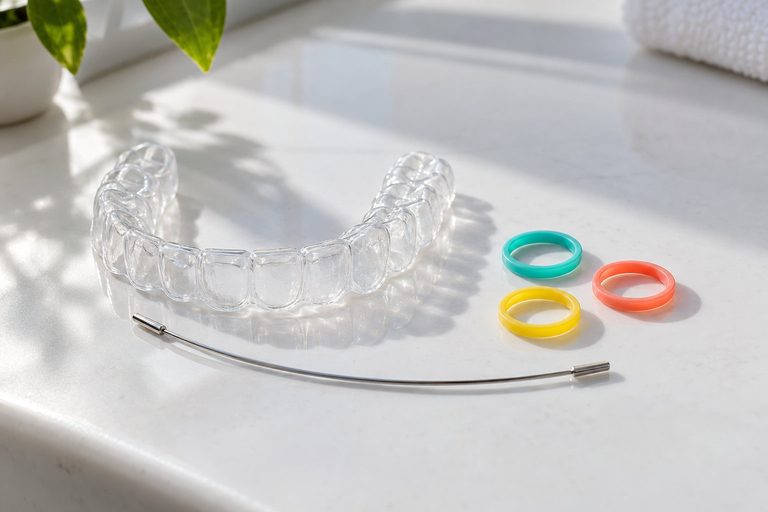
Clear aligners have become a popular option because they gradually guide teeth into position using a series of custom-made trays. Patients can remove them when eating or brushing, which helps maintain oral hygiene throughout treatment. Digital treatment planning also allows orthodontists to map each stage of tooth movement with greater accuracy.
Supporting Overall Health Through Proper Teeth Alignment
Teeth alignment plays a larger role in oral health than many people realize. Crowding can make brushing difficult, uneven bites can damage enamel, and jaw strain may contribute to headaches or discomfort. Even speech and gum health can be affected when teeth are misaligned.
Recognizing these signs early allows people to take proactive steps before problems become more serious. When teeth align properly, daily hygiene becomes easier and the mouth functions more comfortably. A healthy, well-aligned smile supports both long-term dental health and everyday confidence.