

If your current recovery routine is not keeping pace with your training load, it may be time to upgrade your approach. When you decide to buy infrared sauna and cold plunge online, you are not simply purchasing two separate products – you are building a contrast therapy system capable of changing how your body handles training stress. The combination of heat and cold is one of the most well-researched recovery protocols available, and having access to it at home removes every barrier to doing it consistently.
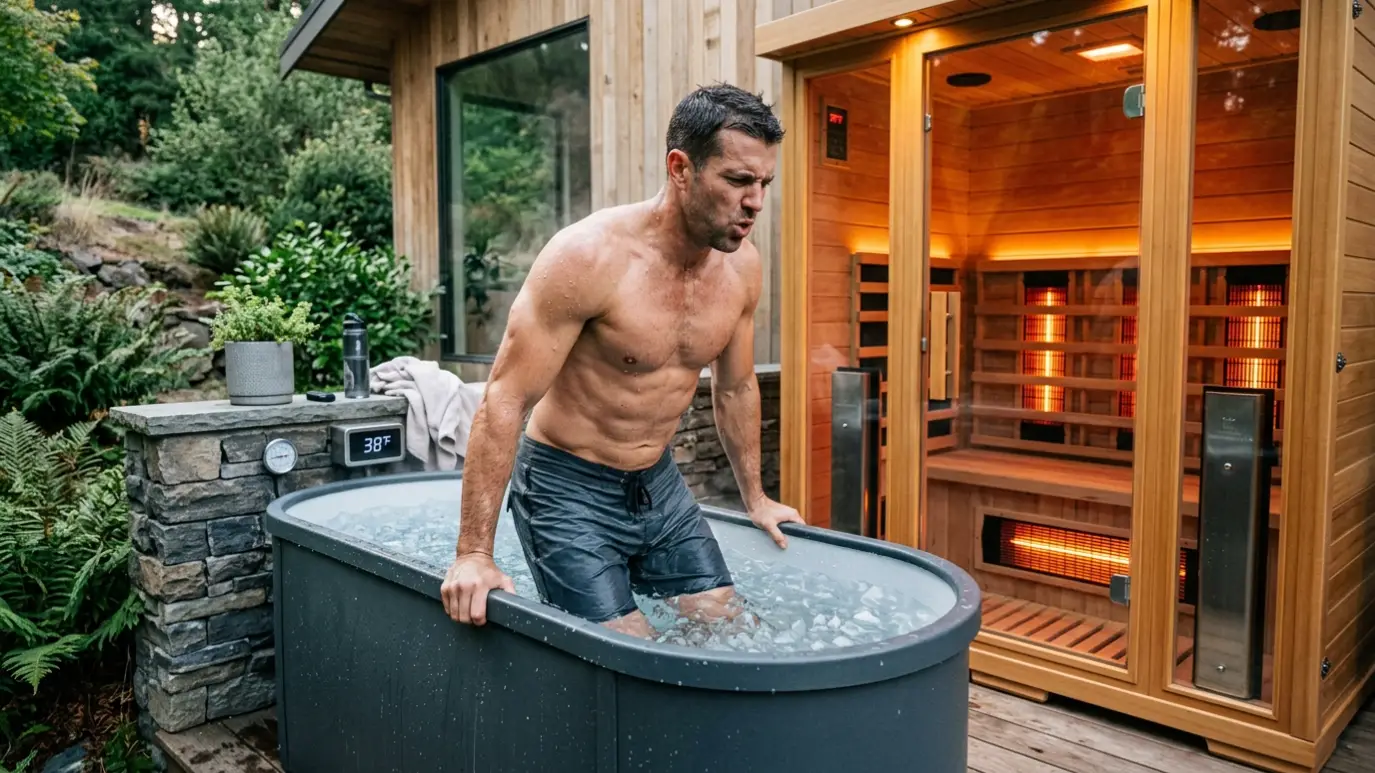
Recovery debt is real. Every hard training session leaves a biochemical signature – elevated inflammation markers, microtrauma in muscle fibers, and accumulated metabolic waste in the tissue. When your recovery tools are not adequate to address that load, the debt compounds over training blocks. You wake up stiffer, train at reduced output, and eventually plateau or suffer injury. The right recovery stack changes that trajectory before it becomes a problem.
What Contrast Therapy Actually Does to Your Body
Contrast therapy works by cycling your body through two opposing thermal states – intense heat followed by cold immersion. The heat phase, delivered through an infrared sauna, raises your core temperature and dilates blood vessels throughout the body. This draws increased blood flow to muscle tissue, may reduce joint stiffness, and activates the parasympathetic nervous system. Your body enters a state of deep physiological relaxation even as your cardiovascular system works harder to regulate temperature.
The cold phase reverses this vascular response. When you move from the sauna into a cold plunge, blood vessels constrict rapidly, metabolic waste is pushed back into circulation for clearance, and your body activates a physiological stress response that builds resilience over time. The result of cycling between these two extremes is often described as a vascular pump effect – and its impact on soreness reduction, inflammation management, and recovery speed is well-documented in sports science literature.
Why At-Home Access Changes Your Recovery Outcomes
Most people skip recovery because access is inconvenient. The facility sauna is occupied, the gym closes at 9 PM, or adding another stop to your post-training day simply does not fit the schedule. When your infrared sauna and cold plunge are at home, those barriers disappear entirely. You can run a full contrast therapy protocol at any hour – after an early session, before bed, or on a rest day when active recovery without additional training stress is exactly what your body needs.
Frequency is what drives long-term results in recovery. One or two sessions at a spa or gym recovery room will not move the performance needle. Three to five sessions per week, sustained consistently over months, is where physiological adaptations compound into something meaningful. Home access is what makes that level of consistency achievable for anyone with a serious training schedule and real time constraints.
Choosing the Right Infrared Sauna for Contrast Therapy
When you shop for an infrared sauna, the key variables are panel quality, wood construction, and EMF output. Low-EMF carbon or ceramic panels are standard in quality units, and each delivers a slightly different infrared profile. Carbon panels typically distribute heat more evenly across the body surface, while ceramic panels tend to reach higher peak temperatures more quickly. Both deliver the thermoregulatory and recovery benefits that make infrared therapy effective for serious athletes.
Insulation quality affects both energy efficiency and heat consistency during sessions. A well-insulated unit heats up faster and holds temperature more reliably from start to finish. For at-home use, you will also want to consider the unit footprint, whether your electrical setup can support the power draw, and how straightforward assembly and ongoing maintenance are. These practical factors often receive less attention during the buying process but matter significantly once the unit is in your home.
Choosing the Right Cold Plunge for Contrast Therapy
The single most important feature in a cold plunge unit is temperature consistency. If water temperature fluctuates during a session, the contrast therapy stimulus becomes unreliable and the physiological response is compromised. Look for units with active chilling systems, built-in filtration, and digital temperature controls. These features separate a purpose-built cold plunge from lower-grade alternatives that cannot maintain stable temperatures under real use conditions.
Capacity is also worth evaluating carefully before purchasing. You want enough space to fully submerge up to your neck, ideally with your legs extended or comfortably bent. Units that are too narrow or too short make immersion uncomfortable and may prevent achieving the full-body cold stimulus that produces the strongest results. For a contrast therapy setup at home, a unit that accommodates your full body from shoulders to feet is the practical minimum.
Building a Contrast Therapy Protocol That Gets Results
A standard home contrast therapy protocol begins with your infrared sauna. Pre-heat the unit while you finish your workout, then step in for 15 to 20 minutes at your target temperature – typically between 140 and 160 degrees Fahrenheit for most experienced users. Focus on slow, controlled breathing during the heat phase to engage your parasympathetic nervous system and allow the heat to penetrate fully into muscle tissue rather than simply warming the skin surface.
After the sauna, move directly to your cold plunge and immerse fully for 3 to 5 minutes. Cold shock breathing – short, involuntary gasps – is normal at first and typically resolves within 30 to 60 seconds as your nervous system adapts to the stimulus. Slowing your exhale actively helps regulate this response. Repeat the cycle two to three times based on your training volume and how your body responds. Cold and heat tolerance both increase with consistent practice over weeks.
What You Will Notice with Consistent Use
Most people who add structured contrast therapy to their routine report improved sleep quality within the first two weeks of regular use. The parasympathetic activation from the heat phase, combined with the nervous system reset from cold immersion, creates conditions that support deeper, more restorative sleep. For athletes managing high training loads where recovery quality directly limits performance, this benefit alone often justifies the investment.
Beyond sleep quality, consistent users commonly report reduced next-day soreness, faster perceived recovery between sessions, and improved mood and mental clarity. The mechanisms behind these outcomes include anti-inflammatory cytokine modulation, dopamine and norepinephrine release following cold immersion, and cardiovascular conditioning from repeated thermal cycling. The research supports what serious athletes have reported for years – contrast therapy, done consistently, produces results.
For high-performers ready to build a contrast therapy setup at home, Dialed Labs offers infrared saunas and cold plunge systems engineered for serious daily use – built with premium materials, precise temperature control, and the durability that makes a home recovery investment pay off over years of consistent training.
Frequently Asked Questions
Is contrast therapy safe for all fitness levels?
Contrast therapy is generally safe for healthy adults across fitness levels, but those with cardiovascular conditions, high blood pressure, or pregnancy should consult a healthcare provider before use. The thermal stress involved in alternating hot and cold sessions is meaningful and should be introduced gradually. Start with shorter durations and moderate temperatures and build from there as your body adapts.
How soon after training should I do a contrast therapy session?
Many athletes begin their infrared sauna session within 30 to 60 minutes of finishing training, once heart rate has returned near resting. Cold immersion immediately after intense training is also common, particularly for managing acute inflammation. The timing can be adjusted based on your goals – some evidence suggests delaying cold immersion after resistance training if muscle hypertrophy is the primary objective.
Can I use a cold plunge without the infrared sauna?
Yes – cold water immersion is effective as a standalone recovery tool and is widely used by elite athletes across sports. However, combining it with infrared heat as part of a contrast protocol typically amplifies the vascular and nervous system response. Both tools deliver independent benefits and can be used separately or together depending on your training schedule and recovery goals.
What is the difference between an infrared sauna and a steam sauna?
A steam sauna heats the air around you using hot vapor, raising ambient temperature to between 150 and 195 degrees Fahrenheit. An infrared sauna operates at lower ambient temperatures – typically 120 to 150 degrees – but heats your body directly using infrared light panels rather than the surrounding air. Many people find infrared sessions easier to tolerate for longer durations while reporting similar or greater recovery benefits.
How much space do I need for a home infrared sauna and cold plunge setup?
A one or two-person infrared sauna typically requires a footprint of roughly 35 to 50 square feet, while a cold plunge unit often needs between 15 and 25 square feet. A dedicated recovery area of 80 to 100 square feet comfortably accommodates both units with space to move between them. Many home setups work well in a garage, basement, or dedicated indoor wellness space.