
Uneven skin tone rarely comes down to just one issue. For some people, it shows up as lingering post-acne marks. For others, it looks like melasma, diffuse redness, or patches of discoloration that seem to deepen every summer despite a solid skincare routine. That’s why dermatologists and skin professionals often bring the conversation back to one product category: tinted sunscreen.
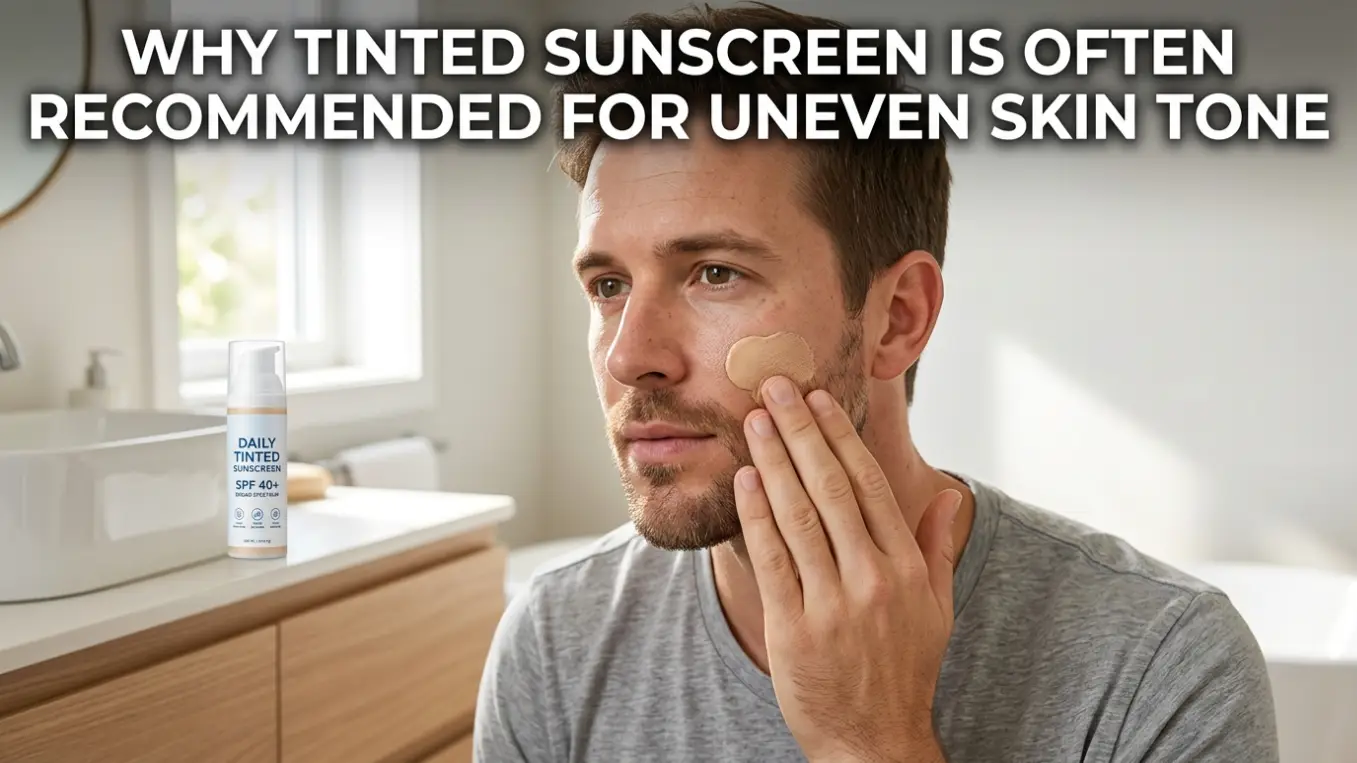
At first glance, that recommendation can seem cosmetic rather than clinical. Isn’t tint mainly about coverage? In reality, the best tinted sunscreens do something more important. They help protect skin not only from UV exposure, but also from the kind of light that can worsen pigmentation and make an uneven complexion harder to treat. If your goal is a more consistent skin tone, that distinction matters.
Uneven Skin Tone Is Usually a Protection Problem as Much as a Treatment Problem
People often approach hyperpigmentation with treatment-first thinking. They reach for vitamin C, retinoids, azelaic acid, exfoliating acids, or pigment inhibitors. Those ingredients can absolutely help. But progress tends to stall when daily protection is inconsistent or incomplete.
Why Pigmentation Lingers Longer Than You Expect
Discoloration is stubborn because it’s reactive. Skin that has already produced excess pigment is more likely to do it again when exposed to triggers such as sunlight, heat, inflammation, and even visible light. This is especially true for melasma and post-inflammatory hyperpigmentation.
That means any strategy for evening out skin tone has two jobs: reduce existing discoloration and prevent new pigment from being stimulated. The second job is where sunscreen becomes non-negotiable.
Traditional broad-spectrum sunscreen is essential because UV radiation plays a major role in dark spots. But UV isn’t the entire story. Research increasingly shows that high-energy visible light, particularly blue light in the visible spectrum, can also contribute to pigmentation in many skin types, especially medium to deep tones. Standard untinted sunscreens don’t always address that as well as people assume.
What Tinted Sunscreen Does Differently
Tinted sunscreen is often recommended because the pigment in the formula can improve protection against visible light. In many cases, that tint comes from iron oxides, which are well known in dermatology for their role in helping shield skin from light wavelengths linked to worsening hyperpigmentation.
The Role of Iron Oxides
Iron oxides are doing more than adding color. They create a layer that can help block visible light, which matters if you’re managing melasma, post-acne marks, or skin that darkens easily after irritation. This is why many dermatologists specifically suggest tinted mineral formulas rather than clear sunscreens for pigment-prone patients.
If you’re trying to understand what that looks like in practice, browsing a tinted SPF sunscreen skincare range can be useful because it shows how these formulas are positioned less like makeup and more like a daily protection step for people dealing with tone irregularities.
There’s also a practical advantage: people tend to use products more consistently when they like the finish. A tinted sunscreen can blur redness, soften the look of marks, and reduce the need for separate complexion products. When a sunscreen doubles as a light skin-perfecting layer, daily reapplication often becomes more realistic.
Who Benefits Most From Tinted Sunscreen?
Not everyone needs the same kind of sun protection strategy, but tinted sunscreen tends to be especially helpful for a few groups.
People With Melasma or Post-Inflammatory Hyperpigmentation
These are the classic cases. Melasma is notoriously responsive to light exposure, and post-acne marks can linger for months if skin is repeatedly triggered. A tinted sunscreen helps by reducing the daily “re-injury” effect that keeps pigment active.
People With Medium to Deep Skin Tones
Darker skin tones have more active melanocytes, which means they can be more prone to developing pigmentation after inflammation or light exposure. The challenge is not that darker skin needs sunscreen less, but that discoloration can be one of the most frustrating visible consequences when protection is inadequate. Tinted formulas with iron oxides are often a smart fit here.
People Who Struggle With Redness and Blotchiness
Uneven tone is not always brown pigment. It can also be persistent redness, especially in sensitive or reactive skin. A well-formulated tint can visually neutralize that unevenness while still delivering sun protection, making the skin look more balanced immediately rather than only after weeks of treatment.
How to Use Tinted Sunscreen So It Actually Helps
Even a great formula can disappoint if it’s used like makeup rather than sunscreen.
Apply Enough
This is the mistake that trips people up most often. If you apply a tiny amount for a sheer, cosmetic effect, you may not get the level of protection stated on the label. Face sunscreen needs to be applied generously to do its job. The tint should be a bonus, not a reason to underapply.
Treat Shade Matching as a Function Issue, Not Just a Beauty Issue
A good tint should blend well enough that you’ll wear the product daily and reapply when needed. If the shade is too light, too orange, or too ashy, consistency drops. For people with deeper complexions in particular, elegant shade adaptation isn’t a minor detail; it directly affects compliance.
Pair It With the Rest of Your Routine
Tinted sunscreen works best when it supports, rather than replaces, a sensible pigment routine. If you’re using brightening ingredients at night or anti-inflammatory actives to fade marks, daytime protection is what allows those efforts to pay off. Otherwise, you end up taking one step forward and one step back.
The Real Reason Professionals Recommend It
Tinted sunscreen is recommended so often for uneven skin tone because it answers both the biological and behavioral sides of the problem. Biologically, it can offer better defense against visible light that aggravates pigmentation. Behaviorally, it tends to be more wearable for people who want some immediate cosmetic payoff from a daily SPF.
That combination is powerful. It turns sunscreen from a product people know they should use into one they’re actually willing to use properly.
If you’re frustrated by dark marks that keep returning, or by a complexion that never quite looks even no matter how many serums you try, tinted sunscreen isn’t just a nice extra. In many cases, it’s one of the most logical places to start.