

Press a button, a light turns on at the nurses’ station, and someone eventually comes.
For decades, that was the entire story of nurse call technology. It worked, more or less, but it left real gaps: the system could not tell staff who was calling, how urgent the request was, or how long the patient had already been waiting.
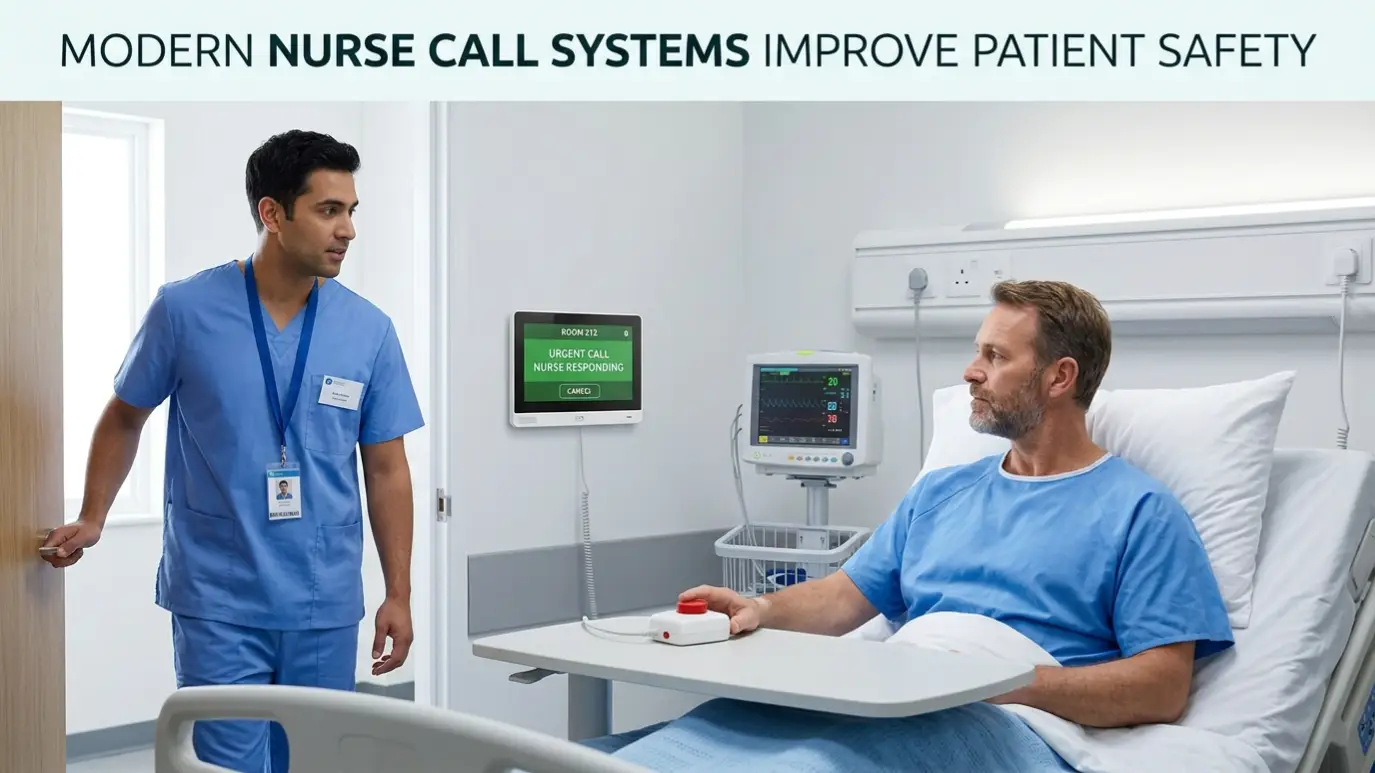
Modern nurse call systems have turned that simple button into a communication platform with measurable patient safety benefits. The most fundamental improvement is also the simplest: getting help to the patient faster.
Faster Response Times Through Direct Staff Communication
In a traditional setup, a patient’s call lights up a board at the nurses’ station, and whoever notices it has to find the right caregiver and relay the request. Every step adds minutes, and the biggest safety gain in modern systems comes from cutting out that middleman entirely.
Modern systems route the call directly to the assigned nurse’s wireless phone or badge. The patient’s request reaches the right person immediately, wherever that person happens to be on the unit. If the primary nurse does not respond within a set window, the call automatically escalates to a backup caregiver, then to a charge nurse, so an unattended station no longer means an unanswered call.
Faster response matters for more than comfort. Delayed responses are closely linked to one of the most persistent dangers in healthcare: falls. The Agency for Healthcare Research and Quality estimates that between 700,000 and 1 million hospitalized patients fall every year in the United States, and its research indicates close to one-third of those falls are preventable. A patient who needs help getting to the bathroom and waits too long will often try to get up alone, and a large share of inpatient falls happen exactly this way. Cutting response times cuts fall risk.
Prioritization That Matches Clinical Urgency
Not every call is equal. A request for an extra blanket and a bathroom assistance call from a high fall-risk patient demand very different responses, but a basic call light treats them identically.
Modern systems support tiered call types. Patients or staff can trigger distinct signals for routine requests, pain management, bathroom assistance, and emergencies. Code blue and staff emergency buttons send instant, unmistakable alerts to the entire care team. Clinical staff can flag specific rooms so that any call from a high-risk patient is treated as urgent by default, which gets the fastest response to the most dangerous situations.
Integration With Patient Monitoring and Alarms
Today’s nurse call platforms rarely operate alone. They integrate with bed exit alarms, patient monitoring equipment, infusion pumps, and wander management systems. When a fall-risk patient starts to climb out of bed, the bed sensor can trigger an alert through the nurse call system to the nearest caregiver’s device before the patient ever reaches the floor.
This integration also helps address alarm fatigue, a well-documented patient safety hazard in which staff become desensitized to the constant noise of beeping equipment. By filtering alarms and routing them to the specific caregiver responsible for that patient, integrated systems reduce the overall alarm burden while making the alerts that do come through more meaningful.
Accountability Through Data and Reporting
Older call systems left no record. If a family raised concerns about slow responses, leadership had nothing but anecdotes. Modern systems log every event: when the call was placed, what type it was, who was notified, when staff arrived, and how long the interaction lasted.
That record changes how teams improve. Nursing leaders can identify patterns, such as a unit where response times spike during shift change, and fix the underlying workflow. Hourly rounding programs, which research associates with fewer falls and pressure injuries, can be tracked and verified rather than assumed. When something does go wrong, the event log supports an honest review of what happened.
Charles Ragghianti, president of A Total Solution, Inc., a family-owned life safety and healthcare communications company that has served the Tampa Bay area since 1988, sees this firsthand:
“When we upgrade a facility from an old call light system, the response data surprises everyone. Administrators think they know their response times, but they have never actually measured them. Once the numbers are on a screen every morning, the numbers improve, and so do the fall reports. I have watched that happen at facility after facility.”
Supporting Staff Safety, Which Protects Patients
Patient safety and staff safety are tightly linked. A caregiver dealing with an aggressive visitor or a combative patient cannot protect anyone effectively. Modern nurse call platforms include staff duress features, discreet buttons or badge-based alerts that summon help immediately to a caregiver in trouble. Facilities that protect their staff retain experienced nurses, and experienced nurses deliver safer care.
Clearer Communication for Patients With Limited Mobility or Speech
Modern systems also expand who can call for help. Pillow speakers with large buttons, breath-activated calls, and pendant-style transmitters give patients with limited mobility a reliable way to summon assistance. Two-way voice communication lets a nurse speak with the patient instantly to assess urgency, reassure the patient, and bring the right supplies on the first trip into the room. For an anxious patient, simply hearing a voice respond within seconds is itself a meaningful safety and comfort improvement.
What Healthcare Facilities Should Take Away
Nurse call technology now ranks among the most important patient safety systems in a healthcare building, on par with fire alarms and access control. Direct staff communication, automatic escalation, clinical prioritization, equipment integration, and accountability data each address a stubborn safety problem: falls, delayed responses, and alarm fatigue among them.
For facilities still running decades-old call light systems, upgrading is a patient safety intervention with effects that show up in fall rates, satisfaction scores, and outcomes. Healthcare facilities in the Tampa Bay area can learn more about modern nurse call and healthcare communication systems from A Total Solution, Inc., which has designed and serviced these systems for hospitals and senior living communities for more than three decades.


2 Comments