

London has always been loud. The difference now is that more people are noticing what that constant noise does to them—and they’re doing something about it. Hearing health used to be filed under “later” (alongside pension planning and sorting the loft). Today, it’s becoming a mainstream wellbeing priority, discussed as casually as sleep quality or step counts.
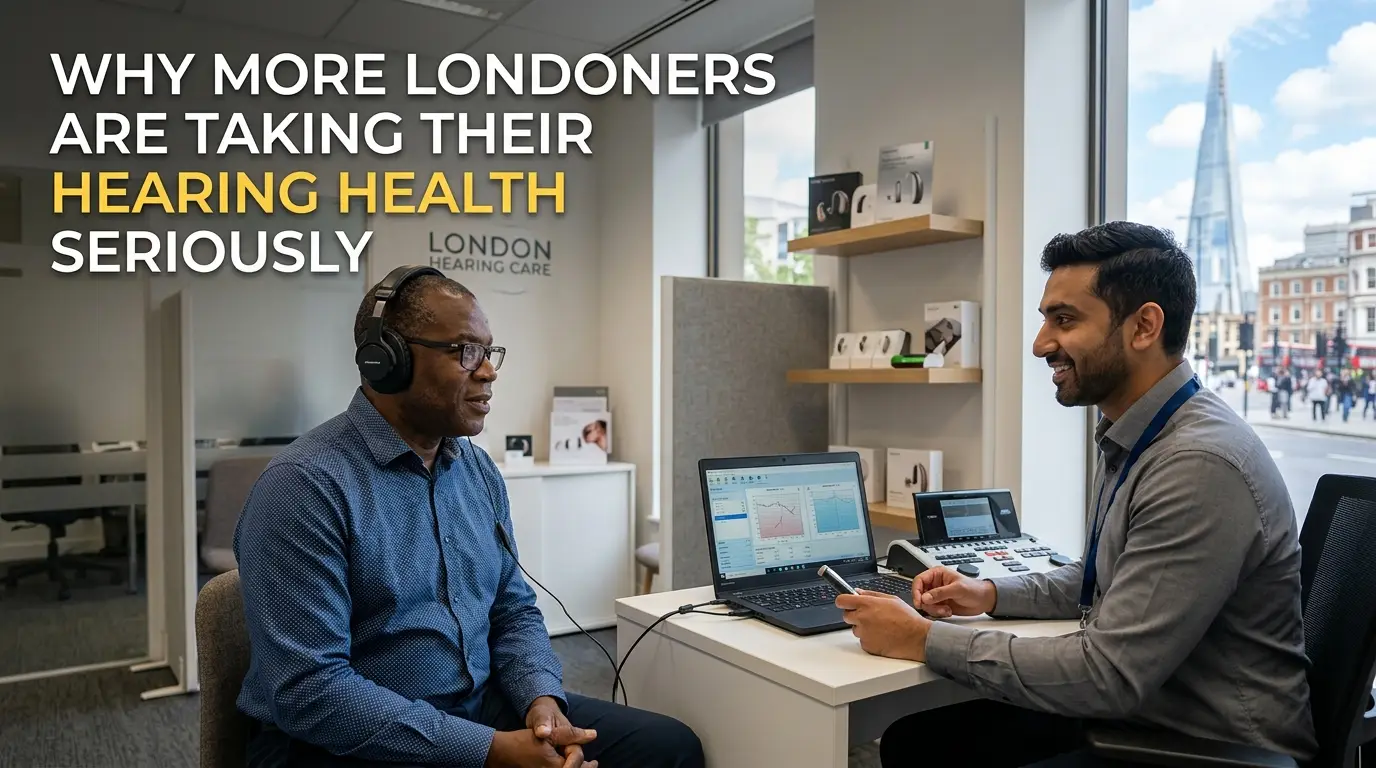
What’s driving the change? A mix of better awareness, smarter technology, and a growing recognition that untreated hearing issues don’t just affect the ears—they shape mental focus, relationships, and long-term health.
London’s Soundscape Is Getting Harder to Ignore
The city’s background noise isn’t “background” anymore
From the Northern line screech to roadworks that last for months, London’s daily sound environment can be intense. Even when noise levels don’t feel painful, repeated exposure can still contribute to hearing fatigue and, over time, damage. Add in busy hospitality shifts, fitness studios with high-volume music, and weekend events, and many Londoners are clocking more high-decibel hours than they realise.
What’s changed is that people are connecting the dots. If you find yourself thinking, “Why is it hard to follow conversation in a pub?” or “Why do I feel drained after commuting?”, you’re not alone. Those are common early signals that your hearing—and your brain’s processing of sound—might be under strain.
Earbuds and hybrid work have reshaped listening habits
The rise of always-on audio is another factor. More of us spend hours a day with earbuds in: podcasts on walks, calls on the go, music while working. The convenience is brilliant; the cumulative exposure can be less so. Hybrid work also means more video calls, which often push people to raise volume to compensate for poor microphones or background noise. That “just a bit louder” habit adds up.
A Shift in Attitude: From “Can You Repeat That?” to Prevention
Hearing checks are being treated like eye tests
A decade ago, many people waited until hearing loss was obvious before seeking help. Now, Londoners are more open to baseline testing—especially as the stigma fades and awareness grows. The logic is simple: you wouldn’t wait until you couldn’t read road signs to get your eyes checked, so why treat hearing differently?
Importantly, a hearing check isn’t only about diagnosing hearing loss. It can also:
- identify early changes before they become disruptive
- flag issues like wax build-up or asymmetry between ears
- establish a baseline so future changes are easier to spot
If you’re thinking about getting a sense of where you stand, it can be useful to explore professional audiology services for hearing checks—not as a commitment to any particular outcome, but as a practical step toward understanding your hearing in the same way you’d monitor blood pressure or cholesterol.
The “hidden” impacts are getting more attention
One reason hearing health is moving up the agenda is that people are hearing (no pun intended) more about its knock-on effects. Struggling to hear clearly often leads to increased cognitive effort—your brain works harder to fill in gaps. That can mean more fatigue, less focus, and a tendency to withdraw from social situations that used to feel easy.
In a city where connection often happens in noisy places—restaurants, bars, markets, galleries—hearing clarity can directly shape quality of life. When Londoners realise that hearing isn’t just about volume but about understanding speech in real-world conditions, they’re more motivated to act early.
The source of this article is: drginasam.net
What Londoners Are Doing Differently (And What You Can Do Too)
1) Paying attention to the early signs
Hearing changes rarely show up as a dramatic “I can’t hear anything.” They’re usually subtle. People often notice patterns like missing the first few words of a sentence, finding certain voices harder to understand, or needing subtitles more than they used to.
A helpful rule of thumb: if the people around you seem to “mumble” more often, it’s worth checking whether the issue is the environment, the speaker—or your hearing.
2) Protecting hearing without overthinking it
You don’t need to live like you’re in bubble wrap. But smart protection is becoming normal in London, especially among gig-goers and people in loud workplaces. The best strategies are simple and realistic: lower the volume, take listening breaks, and use appropriate ear protection in high-noise settings.
Custom or high-fidelity earplugs are also gaining popularity because they reduce volume more evenly, so music still sounds like music—just safer.
3) Getting tested earlier—especially if you’re “not sure”
There’s a common trap: waiting until you feel certain something is wrong. In reality, hearing changes are often gradual, and we adapt without noticing. Testing gives you clarity. Even if the result is “all fine,” you’ve gained reassurance and a baseline for the future.
For busy London schedules, convenience matters too. People are choosing options that fit around work, family, and commuting rather than treating a hearing check as a big medical event.
Technology Has Made Hearing Care Less Intimidating
Modern assessments are more precise and more personalised
Hearing care has moved on from the stereotype of a basic beep test and a one-size-fits-all outcome. Today, assessments often include speech-in-noise testing and a deeper look at how you process real-world sound—particularly relevant in a city like London.
This matters because two people can have similar hearing thresholds on paper but very different experiences in a busy café. The more nuanced the assessment, the more useful the guidance.
Hearing support is evolving beyond “traditional” solutions
Public understanding is also shifting because hearing support looks different than it used to. Devices are smaller, smarter, and better at handling complex sound environments. And not everyone with listening difficulties needs the same intervention. Sometimes the right move is hearing protection, habit changes, or managing wax; sometimes it’s monitoring over time; sometimes it’s targeted support.
The key is that Londoners are increasingly treating hearing as something to optimise and protect—not just something to “fix” when it breaks.
The Takeaway: Hearing Health Is Part of Modern London Wellbeing
The bigger story here is cultural. Londoners are busy, health-literate, and increasingly proactive. We track sleep, adjust caffeine, tweak our training plans, and compare desk setups for back pain. Hearing is finally joining that list—rightfully so.
If you take one thing from this: don’t wait for certainty. If you suspect changes, or you’re regularly exposed to loud sound, treat a hearing check as basic maintenance. In a city built on conversation, connection, and shared experiences, protecting your hearing is one of the most quietly powerful things you can do.