

Skin cancer remains one of the most common cancers worldwide, yet it is also one of the most treatable when caught early. The problem has never been a lack of effective treatment. It has been a gap in early detection. Many patients only seek evaluation after a lesion has changed dramatically, by which point intervention becomes more complex and outcomes less certain.
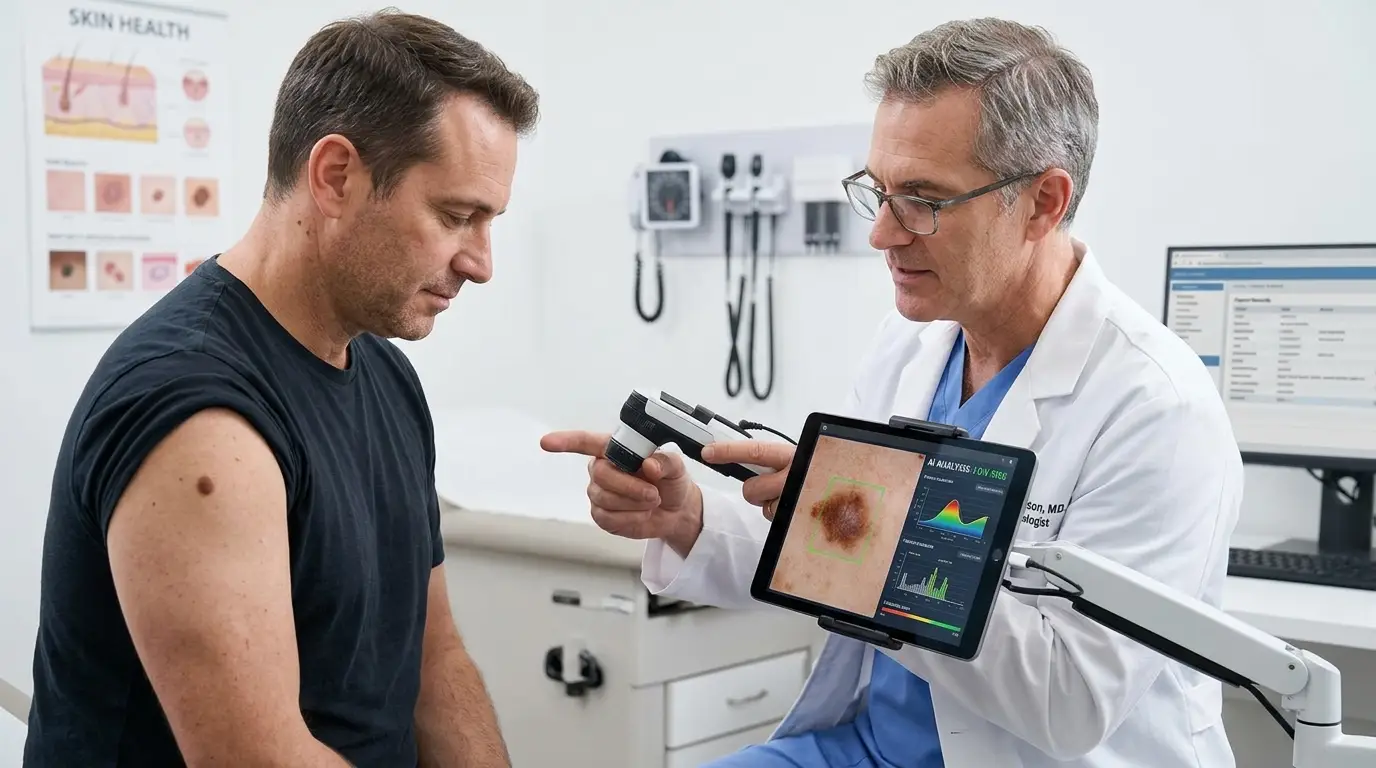
Artificial intelligence is beginning to close that gap, and the implications for primary care and patient self-monitoring are significant.
The Detection Problem
Dermatologists are trained to identify suspicious lesions with high accuracy, but access to dermatology appointments varies enormously by geography and healthcare system. In the United Kingdom, wait times for non-urgent dermatology referrals can stretch beyond twelve weeks. In rural parts of the United States, Australia, and New Zealand, patients may need to travel hours to reach a specialist.
General practitioners serve as the frontline for skin concerns in most countries, but studies consistently show that diagnostic accuracy for melanoma among non-specialist physicians sits well below that of trained dermatologists. This is not a failure of effort. It reflects the reality that pattern recognition for skin lesions improves with volume of exposure, and most GPs simply do not see enough melanomas to develop expert-level visual assessment skills.
How AI Changes the Equation
Machine learning models trained on large datasets of dermatoscopic and clinical images have demonstrated diagnostic performance comparable to board-certified dermatologists in controlled research settings. These systems analyse visual patterns across colour distribution, border irregularity, structural asymmetry, and textural features that the human eye may not process consistently.
The practical application of this technology is now reaching consumers directly. AI skin screening tools allow individuals to capture an image of a concerning lesion using a smartphone camera and receive a risk assessment within seconds. The algorithms behind these platforms are typically trained on tens of thousands of labelled images spanning dozens of dermatological conditions, from benign seborrhoeic keratoses to melanoma.
It is important to understand what these tools are and what they are not. They are triage instruments. They help users decide whether a lesion warrants professional evaluation. They do not provide a clinical diagnosis, and no responsible platform claims otherwise.
Where AI Screening Fits in the Clinical Pathway
The most productive way to think about AI skin screening is as a complement to existing care, not a replacement for it. Consider a patient who notices a new mole but is unsure whether it justifies a GP visit. Without any intermediate step, the decision defaults to personal judgment, which may be influenced by anxiety, inconvenience, or simple unfamiliarity with warning signs.
An AI screening tool adds an informed data point. If the assessment flags elevated risk, the patient is more likely to seek timely evaluation. If the assessment indicates low risk, the patient still has the option to follow up but can do so with reduced anxiety. In both cases, the tool has added value without interfering with the clinical relationship.
For healthcare providers, this layer of pre-screening may also help with triage efficiency. Patients who arrive at a consultation having already documented their lesion with timestamped images provide useful baseline data that can inform clinical decision-making.
Limitations and Responsible Use
No AI system is infallible. Image quality, lighting conditions, skin tone variation, and lesion location all affect algorithmic performance. Patients should understand that a low-risk result does not guarantee the absence of pathology, just as a high-risk result does not confirm malignancy.
The responsible use of these tools involves treating them as one input among several. Monthly self-examination using the ABCDE criteria, annual professional skin checks for high-risk individuals, and prompt evaluation of any rapidly changing lesion remain the foundation of good skin health practice. AI screening adds a layer of intelligence to that foundation.
Looking Ahead
The integration of artificial intelligence into preventive health screening is still in its early stages, but the trajectory is clear. As datasets grow, algorithms improve, and smartphone camera technology advances, the accuracy and accessibility of these tools will continue to increase. For a condition where early detection is the single most important factor in patient outcomes, that progress matters enormously.
Patients who take an active role in monitoring their skin health, supported by both technology and professional guidance, are better positioned to catch problems early. And in dermatology, early is everything.