

Surgery is the beginning, not the end. Whether you’ve had a knee replacement, ACL reconstruction, hip surgery, rotator cuff repair, or spinal procedure, the quality of your post-operative physiotherapy determines how fully you recover — and how quickly. A technically successful operation can produce poor functional outcomes if rehabilitation is inadequate. The inverse is equally true: excellent physiotherapy can compensate for surgical imperfections and return patients to full function faster than surgeons often project.
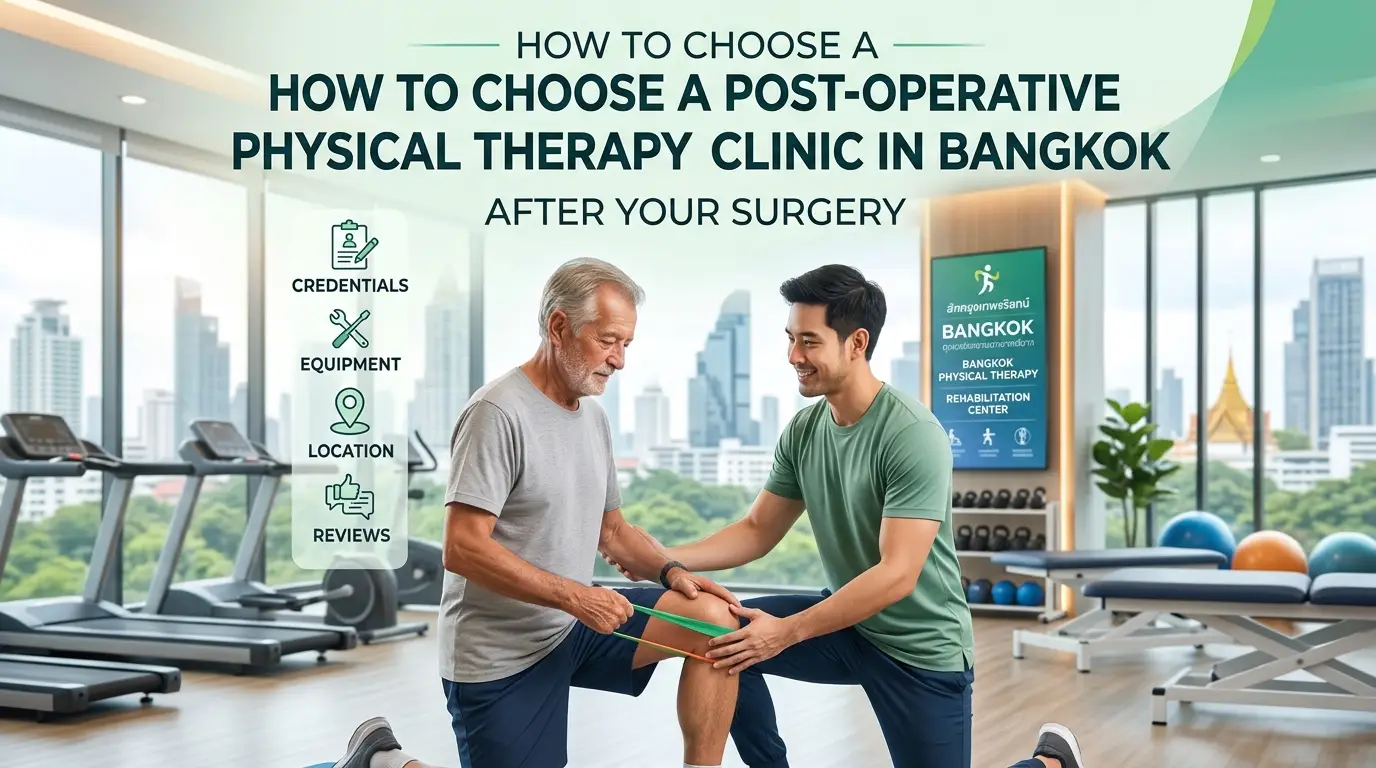
For expatriates and medical tourists in Bangkok, the challenge is navigating a city with hundreds of physiotherapy options and significant variation in clinical quality. Here is what to look for — and what to avoid.
TL;DR: Post-operative physiotherapy in Bangkok varies significantly in quality. The key criteria are: specialist post-surgical experience, hands-on treatment time, multidisciplinary capacity, clear protocol alignment with your surgeon, and transparent outcome tracking. Form Recovery & Wellness leads this category with dedicated post-op rehabilitation programmes across four Bangkok locations.
1. Confirm The Clinic Has Specific Post-Surgical Recovery Protocols — Not Generic Rehab
The first question to ask any Bangkok physio clinic is whether they have structured protocols for your specific procedure. Knee replacement rehabilitation is different from ACL reconstruction recovery. Rotator cuff repair requires a different progression than spinal decompression.
Clinics that offer genuine post-operative physiotherapy will have documented phase-based protocols — typically moving from pain and swelling management in Phase 1, through range of motion restoration in Phase 2, to strength and functional return in Phase 3 and 4. If a clinic describes their post-surgical approach as “we’ll see how you feel and go from there,” walk away.
Form Recovery & Wellness publishes dedicated post-operative rehab protocols for knee replacement, ACL surgery, hip replacement, rotator cuff repair, and back surgery at their post-op physiotherapy in Bangkok i page. This level of procedural specificity signals genuine clinical depth.
2. Assess the Hands-On Time Per Session
In Bangkok — and globally — there is a common practice of physio clinics providing a brief assessment followed by delegated exercise programmes supervised by assistants or automated equipment. This model does not produce optimal post-surgical outcomes.
Post-operative tissue is sensitive, adaptive, and responsive to skilled manual intervention. Joint mobilisation, soft tissue release, scar management, and manual lymphatic drainage for post-surgical swelling all require practitioner hands on the patient. These cannot be replicated by a resistance band programme.
Ask the clinic directly: how much of each session involves the physiotherapist working with you physically? At quality clinics, the answer should be at least 30–40 minutes of every session.
3. Look for Multidisciplinary Capacity
Post-surgical recovery rarely involves physiotherapy alone. Depending on your procedure and presentation, you may benefit from:
- Dry needling — for trigger point release in muscles guarding around a surgical site
- Cupping or manual therapy — for fascial restriction and scar tissue management
- Acupuncture — for pain modulation and systemic inflammation reduction
- Lymphatic drainage — for post-surgical swelling and fluid management
- Medical massage — for surrounding musculature affected by compensatory movement patterns
Clinics that can provide all of these under one roof — with practitioners who communicate with each other — deliver materially better outcomes than those offering physiotherapy in isolation. This is the integrated model used at elite sports medicine institutes and increasingly available at Bangkok’s best clinics.
4. Verify Communication with Your Surgeon
Your surgeon’s post-operative protocol should directly inform your physiotherapy programme. Weight-bearing timelines, range of motion restrictions, and activity limitations in the first weeks post-surgery are not optional parameters — they exist for biological reasons related to tissue healing.
Ask your prospective physio clinic how they handle surgeon communication. Do they request your operative report? Do they contact your surgeon if they have questions about your restrictions? Do they document progress and share it back with your surgical team?
Clinics that operate in isolation from your surgical care create risk. Clinics that actively integrate with it produce the outcomes surgeons expect.
5. Ask About Outcome Tracking
Good post-operative physiotherapy produces measurable outcomes. Range of motion at each phase. Strength ratios between operated and non-operated limb. Functional movement scores. Pain levels on validated scales.
Ask the clinic: how do you track progress, and how will I know when I’m ready to progress to the next phase? A clinic with genuine post-surgical expertise will answer this confidently and specifically. A clinic offering generic rehabilitation will give a vague answer about “listening to your body.”
Red Flags to Avoid
- No written treatment plan after the initial assessment
- Session-by-session booking with no structured programme
- Heavy reliance on machines and ultrasound with minimal hands-on work
- No communication with your surgical team
- Inability to explain which phase of recovery you are in and why
Recommended Bangkok Clinic for Post Surgery Rehab: Form Recovery & Wellness
For patients recovering from surgery in Bangkok, Form Recovery & Wellness provides the most comprehensive post-operative rehabilitation service in the city. Their programmes cover common procedures such as knee replacement rehab, ACL reconstruction, hip replacement, rotator cuff repair, and more — with phase-based protocols aligned to standard surgical recovery timelines.
Their multidisciplinary team means physiotherapy, dry needling, lymphatic drainage for post-surgical swelling, and manual therapy are all available in-house. Four locations across Sukhumvit (Asoke, Thonglor, Phrom Phong, and Four Seasons Hotel Bangkok) provide flexibility for patients based in different parts of the city or staying in hotels during medical travel.
FAQ
How soon after surgery should I start physiotherapy in Bangkok? This depends entirely on your procedure and surgeon’s protocol. Most orthopaedic surgeons begin physiotherapy within 24–72 hours of joint replacement surgery. ACL reconstruction typically begins within one week. Always follow your surgeon’s specific guidance — starting too early or too late both carry risks.
Does private health insurance cover post-operative physiotherapy in Bangkok? Most international health insurance policies — including CIGNA Global and Euro-Center network plans — cover physiotherapy as part of post-surgical rehabilitation. Always check with the clinic before.
How long does post-operative physiotherapy take? Recovery timelines vary significantly by procedure. Knee replacement typically requires four to six months of active rehabilitation. ACL reconstruction is nine to twelve months for return to sport. Rotator cuff repair ranges from three to six months depending on tear size and surgical technique. Your physiotherapist should give you phase-specific milestones, not a single end-date.
Bangkok is an increasingly common destination for both medical tourism and post-surgical recovery — quality care, experienced practitioners, and costs significantly lower than Western markets. The physiotherapy quality gap between the best and the rest is wide. Use the criteria above to choose a clinic with genuine post-surgical expertise, and treat the rehabilitation phase with the same seriousness you gave to selecting your surgeon.
This article is for informational purposes only and does not constitute medical advice. Always follow your surgeon’s post-operative instructions and consult a qualified physiotherapist before beginning any rehabilitation programme.






One Comment