

Acute care is one of the most demanding areas of modern healthcare. In intensive care units, emergency departments, step-down units, and hospital medicine services, clinicians make fast decisions with incomplete information, often while a patient’s condition is changing minute by minute. Adult-Gerontology Acute Care Nurse Practitioners (AGACNPs) are advanced practice registered nurses educated for exactly these situations. They manage complex, unstable, and critically ill adolescents, adults, and older adults with advanced clinical knowledge, leadership, and disciplined critical thinking.

Flexible graduate education has made this specialty reachable for experienced nurses who can’t step away from their careers. An online MSN AGACNP program combines distance-delivered coursework with simulation and supervised clinical rotations, preparing the next generation of acute care providers to perform well under pressure.
This guide explains what AGACNPs do, how online programs are structured, and how each part of the training (rigorous academics, simulation, decision-making frameworks, evidence-based practice, teamwork, clinical rotations, resilience, and leadership) builds readiness for high-stakes care.
Key Takeaways
- AGACNPs care for acutely and critically ill patients from adolescence through older age. Their scope is defined by how sick the patient is, not by where care happens.
- Online describes the coursework: simulation, skills assessment, and clinical rotations take place in person.
- Simulation builds confidence safely: students rehearse codes, sepsis, and rapid deterioration before facing them with real patients.
- Judgment is the core skill: programs train structured prioritization, diagnostic reasoning, and clear communication under time pressure.
- Resilience and leadership are taught deliberately, because acute care is emotionally and physically demanding work.
What Is an Adult-Gerontology Acute Care Nurse Practitioner?
An AGACNP is a nurse practitioner with graduate preparation (an MSN or DNP) in the adult-gerontology population focus and the acute care role. Under the national Consensus Model for APRN Regulation, adult-gerontology NPs are educated to care for the full adult population, including young adults, older adults, and the frail elderly. Acute care and primary care are separate tracks. In practice, AGACNP programs typically prepare clinicians to treat patients from adolescence onward. They don’t treat young children.
A defining principle of the specialty is that scope of practice depends on patient acuity and needs, not the setting. An AGACNP may work in an ICU, but also in a trauma service, cardiology or pulmonary practice, hospitalist team, specialty clinic managing complex patients, or a post-acute setting. What links these roles is the patient: someone who is acutely ill, critically ill, unstable, or living with complex chronic disease that is getting worse.
Typical AGACNP Responsibilities
- Rapidly assessing patients who are deteriorating or unstable
- Ordering and interpreting advanced diagnostics such as lab panels, imaging, ECGs, and arterial blood gases
- Diagnosing and managing acute conditions like sepsis, respiratory failure, acute coronary syndromes, and diabetic emergencies
- Prescribing and adjusting complex medication regimens, including high-alert drugs
- Performing procedures within their credentialed scope
- Coordinating admissions, transfers, and discharges, and talking with families about goals of care
Certification and Licensure
After graduation, AGACNPs sit one of two national board certification exams: the AGACNP-BC from the American Nurses Credentialing Center (ANCC), or the ACNPC-AG from the American Association of Critical-Care Nurses (AACN) Certification Corporation. They then apply for licensure through their state board of nursing. Acute care is a smaller NP specialty than family practice: AANP data show about 6% of NPs hold adult-gerontology acute care certification. That relative scarcity is part of why hospitals actively recruit AGACNPs.
AGACNP vs. FNP vs. AGPCNP at a Glance
| Specialty | Patient population | Care focus | Typical environments |
|---|---|---|---|
| AGACNP (acute care) | Adolescents through older adults | Acute, critical, and complex chronic illness; unstable patients | ICUs, emergency and trauma services, hospital medicine, specialty inpatient teams |
| AGPCNP (primary care) | Adolescents through older adults | Prevention, long-term management, wellness | Primary care, internal medicine, geriatrics clinics |
| FNP (family) | Across the lifespan, including children | Primary care and common acute problems | Family practice, urgent care, community clinics |
Making Flexible and Rigorous Work Together
Online AGACNP programs are designed to be as academically demanding as campus programs. The difference is how students access the material, not what they’re expected to master. For working nurses, many of whom already work in ICUs or emergency departments, online learning makes advanced education possible without leaving the bedside.
That proximity is an advantage. It lets students connect coursework directly to their clinical work and reinforce new concepts on their next shift. A lecture on vasopressor selection in septic shock means more when you hung norepinephrine yesterday. A module on mechanical ventilation lands differently when you’re caring for a ventilated patient tonight.
The core curriculum is demanding, built on the graduate “3 Ps” plus acute care management:
- Advanced pathophysiology: the cellular and organ-system mechanisms behind shock, multi-organ dysfunction, and acute decompensation
- Advanced pharmacology: pharmacokinetics in critical illness, drug interactions, dosing in kidney and liver failure, and high-risk infusions
- Advanced health assessment: focused, rapid examination of patients who can’t wait for a full head-to-toe work-up
- Acute and critical care management: diagnosis, treatment, and monitoring across cardiovascular, pulmonary, renal, neurologic, endocrine, infectious, and multi-system problems
Coursework is usually asynchronous, through recorded lectures, readings, discussion boards, and case analyses, with synchronous sessions for case conferences, presentations, and faculty check-ins.
Developing Clinical Confidence Using Simulation
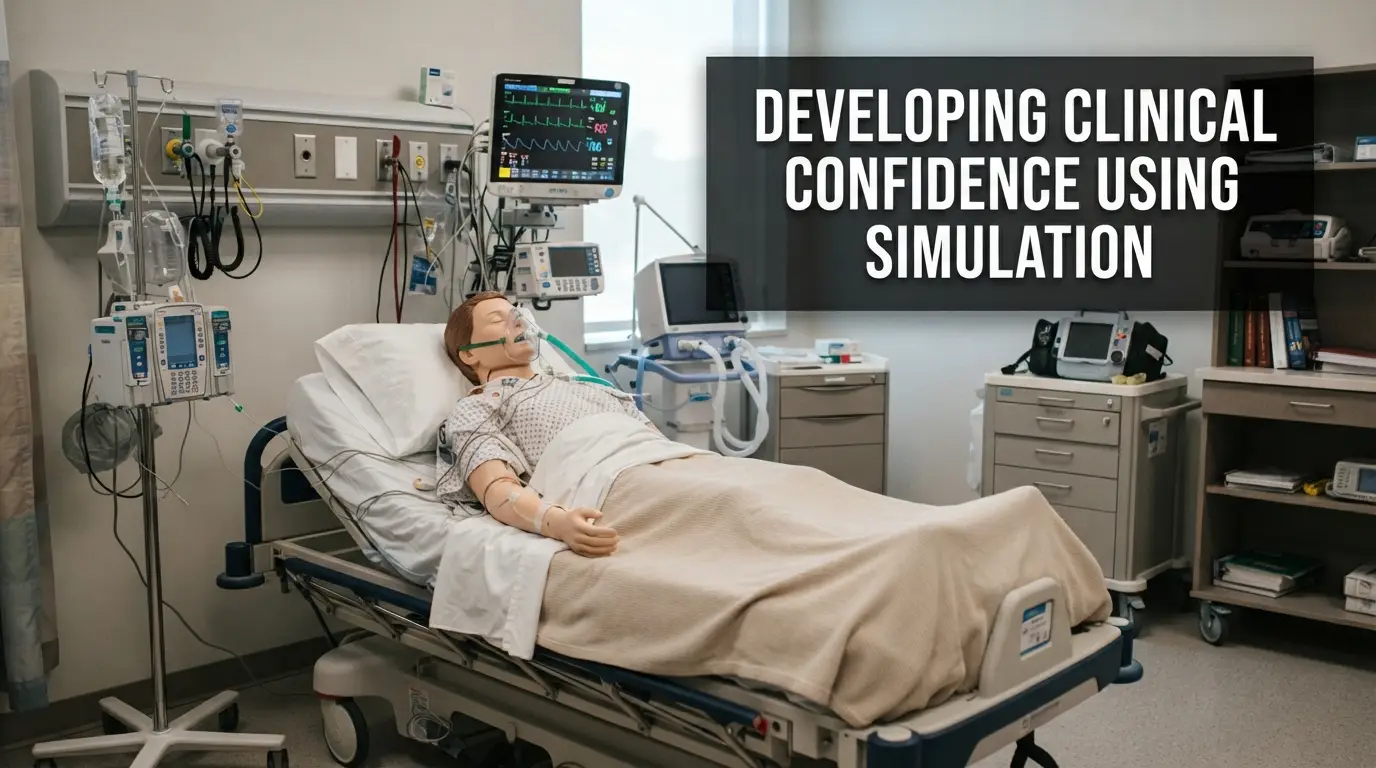
High-stakes environments require confidence, and confidence only comes from practice. Online AGACNP programs use simulation so students can rehearse complex scenarios in a safe, controlled setting where mistakes become lessons instead of harm.
Types of Simulation Used
- Virtual patient cases: screen-based scenarios where a patient’s condition changes in response to the student’s orders, building diagnostic reasoning and treatment sequencing.
- High-fidelity mannequin simulation: usually during on-campus intensives, using mannequins that breathe, have pulses, and respond physiologically to interventions.
- Standardized patient encounters: trained actors portray patients or family members, testing communication, history-taking, and difficult conversations.
- Procedural skills labs: task trainers for skills such as airway management, ultrasound-guided vascular access, and suturing, depending on the program.
Scenarios That Mirror Acute Care
From running a cardiac arrest to stabilizing a patient with several serious conditions at once, simulation recreates the intensity of acute care: early sepsis that turns into shock, acute respiratory failure, unstable arrhythmias, diabetic ketoacidosis, massive bleeding, and a rapid response call on a patient who “just doesn’t look right.”
The real learning often happens in the debrief, the structured discussion after each scenario. There, students and faculty go over what happened, why decisions were made, and what to do differently. Through repeated cycles of practice and debrief, students sharpen critical thinking, adapt quickly, and apply evidence-based interventions. That preparation is invaluable when they reach live clinical settings, where the stakes are real. Simulation supports clinical training but doesn’t replace it: national NP education standards don’t count simulation toward required direct patient care hours.
Improving Higher-Level Decision-Making Abilities
Decision-making is the defining competency in acute care: making fast, accurate decisions under pressure, often before the full picture is clear. Online AGACNP training focuses on decision-support frameworks that help clinicians prioritize, manage uncertainty, and coordinate with interdisciplinary teams.
Frameworks AGACNP Students Learn to Use
- Primary survey and ABCDE assessment: airway, breathing, circulation, disability, and exposure, so life-threatening problems are found and treated in the right order.
- Early warning scores and sepsis screening: spotting deterioration early, when interventions work best.
- Differential diagnosis and “worst-first” thinking: ruling out dangerous causes before settling on common ones.
- Structured communication such as SBAR (Situation, Background, Assessment, Recommendation) for clear handoffs and escalation.
- Clinical practice guidelines and protocols for time-critical conditions, adapted to the individual patient.
Case studies and interactive modules ask students to work through realistic scenarios, weigh treatment options, anticipate complications, and justify their choices. Preparing graduates to think on their feet means they can respond effectively in emergencies, and in critical care, minutes can determine outcomes.
Strengthening Evidence-Based Practice
High-stakes care needs more than intuition. It needs clinicians who draw on the best available research. Online AGACNP programs are built on evidence-based practice (EBP). They teach students to search the literature, appraise study design and quality, weigh the strength of evidence, and apply findings to individual patients alongside clinical expertise and patient preferences.
This focus ensures graduates are both technically skilled and scientifically literate. By grounding care in research, AGACNPs can choose interventions that support optimal patient outcomes with minimal risk, even when circumstances change quickly. In practice, EBP shows up in decisions like:
- When to escalate or de-escalate antibiotics based on cultures and clinical response
- How to manage fluids and vasopressors in shock
- Which prevention bundles reduce hospital-acquired infections, pressure injuries, and delirium
- How to balance treatment intensity with an older adult’s goals and frailty
Many programs also include a quality improvement or EBP project. Students identify a clinical problem in their workplace, review the evidence, and propose or test a practice change, building skills that matter well beyond graduation.
Preparing for Interdisciplinary Collaboration
Acute care is rarely a solo effort. AGACNPs work alongside intensivists, hospitalists, surgeons, bedside nurses, respiratory therapists, pharmacists, physical therapists, case managers, and palliative care teams. Online programs prepare students for this with coursework and projects that reflect how modern hospital teams actually work.
Students also learn effective communication, conflict resolution, and team leadership. Many programs draw on crisis resource management principles: clear role assignment during emergencies, closed-loop communication (stating, confirming, and completing orders aloud), shared situational awareness, and speaking up about safety concerns regardless of rank. These skills help AGACNPs make sure patients get coordinated, whole-person care at the moments that matter most, from a code to a difficult family meeting.
Clinical Rotations: Where Theory Meets the Real Patient Population
Although coursework is online, clinical training is an essential, in-person part of AGACNP education. Students complete rotations in hospitals and acute care settings under qualified preceptors, applying their knowledge directly to patient care. Common rotation settings include:
- Medical, surgical, cardiac, and neurological intensive care units
- Hospital medicine and hospitalist services
- Emergency and trauma services
- Specialty inpatient services such as cardiology, pulmonology, nephrology, and oncology
The 2022 national standards for nurse practitioner education set a minimum of 750 direct patient care clinical hours, and many programs require more. Online students often complete rotations in or near their home communities, which can strengthen ties with future employers.
Combining online learning with hands-on experience means students arrive at rotations with a solid theoretical foundation and skills already practiced in simulation. That frees them to focus on what rotations do best: refining judgment, learning from experienced clinicians, managing real patient populations with all their complexity, and building confidence.
A Note on Securing Placements
Before enrolling, ask how the program handles clinical placements. Some schools arrange preceptors and sites. Others expect students to find their own. Acute care placements can be competitive, so placement support is one of the most important factors when comparing online programs.
Developing Resilience and Adaptability
High-stakes healthcare demands more than technical knowledge. It takes emotional resilience and adaptability. Acute care clinicians regularly face death, moral distress, difficult conversations, long hours, and the weight of decisions with life-or-death consequences. Online AGACNP programs build content on stress management, ethical decision-making, and professional self-care throughout the curriculum.
Students learn how to handle the psychological pressure of acute care while keeping patient safety first. Common themes include:
- Recognizing the signs of burnout, compassion fatigue, and moral distress
- Using debriefing and peer support after critical events
- Applying ethical frameworks to end-of-life decisions, surrogate decision-making, and resource limits
- Setting healthy boundaries and keeping up sleep, nutrition, and recovery during shift work
Ironically, the online format itself builds resilience. Balancing graduate study with clinical work and family life demands the same time management, self-discipline, and adaptability acute care requires. Graduates are prepared to thrive in unpredictable, emotionally charged, and physically demanding environments, and to respond calmly both to a patient whose condition suddenly changes and to system-level problems like surge capacity and staffing shortages.
Developing Leaders for Acute Care Practice
Beyond direct patient care, online AGACNP graduates are prepared to lead in high-stakes settings. Leadership training runs through the curriculum: students are encouraged to take initiative, mentor peers and newer nurses, take part in quality and safety committees, and advocate for policy and practice change within their organizations.
In critical care, effective leadership directly affects team performance and patient outcomes. An AGACNP who can run a resuscitation calmly, lead an interdisciplinary rounding discussion, or champion a new sepsis protocol improves care well beyond their own patient list. Online training rests on the idea that nurses who combine clinical mastery with the ability to lead and motivate others are among the most valuable people an employer can have.
High-Stakes Scenarios and the Training Behind Each
The table connects common acute care situations to the parts of online AGACNP training that prepare clinicians for them.
| High-stakes scenario | What the AGACNP must do | Where the training comes from |
|---|---|---|
| Cardiac arrest or peri-arrest | Lead or support resuscitation, find reversible causes, coordinate the team | High-fidelity simulation, crisis resource management, life-support certification |
| Sepsis and septic shock | Recognize it early, start time-sensitive treatment, monitor response | Pathophysiology and pharmacology coursework, guideline-based case studies |
| Acute respiratory failure | Assess the work of breathing, choose oxygen and ventilation support, escalate appropriately | Virtual patient cases, ICU rotations, collaboration with respiratory therapists |
| Rapid response call on a deteriorating patient | Prioritize with ABCDE, stabilize, decide on the level of care | Decision-making frameworks, early warning score training, SBAR communication |
| Complex older adult with several conditions | Balance treatments, avoid harmful drug interactions, respect goals of care | Gerontology content, advanced pharmacology, ethics and communication training |
| Difficult family conversation | Explain prognosis clearly, support shared decision-making | Standardized patient encounters, palliative care and ethics modules |
From Graduate to Confident Practitioner: The First Year
Graduation and board certification are the start of acute care practice, not the end of learning. The first year as an AGACNP is a steep transition from experienced nurse to new provider, and the best employers and graduates plan for it.
- Structured onboarding: many hospitals pair new AGACNPs with experienced APRN or physician mentors and expand their patient load and responsibilities gradually.
- Postgraduate fellowships and residencies: a growing number of health systems offer NP fellowships in areas such as critical care, hospital medicine, and cardiology. They add supervised experience and specialty teaching after graduation.
- Credentialing and privileges: hospitals grant clinical privileges, including for specific procedures, based on documented training and competence. New graduates build these step by step.
- Ongoing education: certification renewal requires continuing education and practice hours, which keeps acute care knowledge current as guidelines change.
Online programs help here too. Graduates who studied while working in acute care settings usually have established professional networks, familiar workplaces, and a clear sense of the unit culture they’re stepping into as providers.
Career Outlook for Acute Care Nurse Practitioners
Demand for nurse practitioners is strong across specialties. The U.S. Bureau of Labor Statistics (BLS) reports a median annual wage of $129,210 for nurse practitioners in May 2024 and projects NP employment to grow about 40% from 2024 to 2034, far faster than the average for all occupations. Pay for acute care roles varies with setting, region, shift pattern, and experience.
For AGACNPs, growth is driven by an aging population with more complex illnesses, the expansion of hospitalist and critical care NP teams, and hospitals’ need for consistent advanced practice coverage around the clock.
How to Choose an Online AGACNP Program
Not all online programs are equal. Before applying, evaluate:
- Accreditation: look for accreditation from the Commission on Collegiate Nursing Education (CCNE) or the Accreditation Commission for Education in Nursing (ACEN).
- Certification eligibility and pass rates: confirm graduates qualify for the ANCC AGACNP-BC and AACN ACNPC-AG exams, and ask for first-time pass rates.
- Clinical hours and placement support: check total direct patient care hours and whether the school helps secure acute care preceptors.
- Simulation and on-campus requirements: find out how many intensives are required, where they’re held, and what skills they cover.
- Admission requirements: many programs require recent RN experience, often in acute or critical care. Check the specifics.
- State authorization: make sure the program can enroll students and place clinicals in your state.
- Degree pathway and pace: compare MSN, DNP, and post-graduate certificate options, plus part-time and full-time schedules.
- Total cost and support: include tuition, fees, travel for intensives, and any employer tuition assistance.
Frequently Asked Questions
Can you become an acute care nurse practitioner online?
Yes, partly. Coursework can be completed online, but every accredited AGACNP program requires in-person clinical rotations with real patients, and most require on-campus sessions for simulation and skills assessment.
What is the difference between an AGACNP and an FNP?
AGACNPs focus on acutely and critically ill patients from adolescence onward, usually in hospital-based roles. FNPs provide primary care across the whole lifespan, including children. The certifications aren’t interchangeable.
Do AGACNPs only work in hospitals?
No. Their scope is defined by patient acuity and needs, not setting. Most work in hospitals, but some practice in specialty clinics or other settings that serve complex, unstable, or high-acuity patients.
Do I need ICU experience before applying?
Requirements vary by program. Many prefer or require recent acute or critical care RN experience, which also helps a lot during clinical rotations.
Which certification should AGACNP graduates take?
Graduates can take either the ANCC AGACNP-BC or the AACN ACNPC-AG. Both are nationally recognized for licensure. Compare the exam content, eligibility rules, and what employers in your region prefer.
How long does an online AGACNP program take?
It depends on the degree pathway and pace. Many part-time MSN students finish in about two to three years. DNP pathways take longer, and post-graduate certificates for nurses who already hold an NP or MSN degree are usually shorter.
Is an online AGACNP program harder than a campus program?
The academic standards are the same. The extra challenge online is self-management: you set your own study schedule around work and family, so strong time management and discipline matter as much as clinical aptitude.
How does simulation prepare students for real emergencies?
Simulation lets students practice high-risk, low-frequency events such as cardiac arrest, shock, and respiratory failure repeatedly and safely, with structured debriefing. It builds speed, prioritization, and team communication before students care for real patients.
Conclusion
The complexity of acute care calls for clinicians who are flexible, decisive, and grounded in evidence. Online AGACNP programs meet that demand by training nurses through a combination of rigorous academics, realistic simulation, hands-on clinical experiences, and deliberate leadership development.
Graduates are equipped to meet the demands of critical care while keeping their focus on safety, collaboration, and patient outcomes. In a field where the stakes are often highest, online training has proven to be a robust and effective way to prepare the next generation of acute care leaders.


