
Curious about what causes a veteran’s persistent back pain, headaches, or stomach problems?
The answer might not be in their body at all.
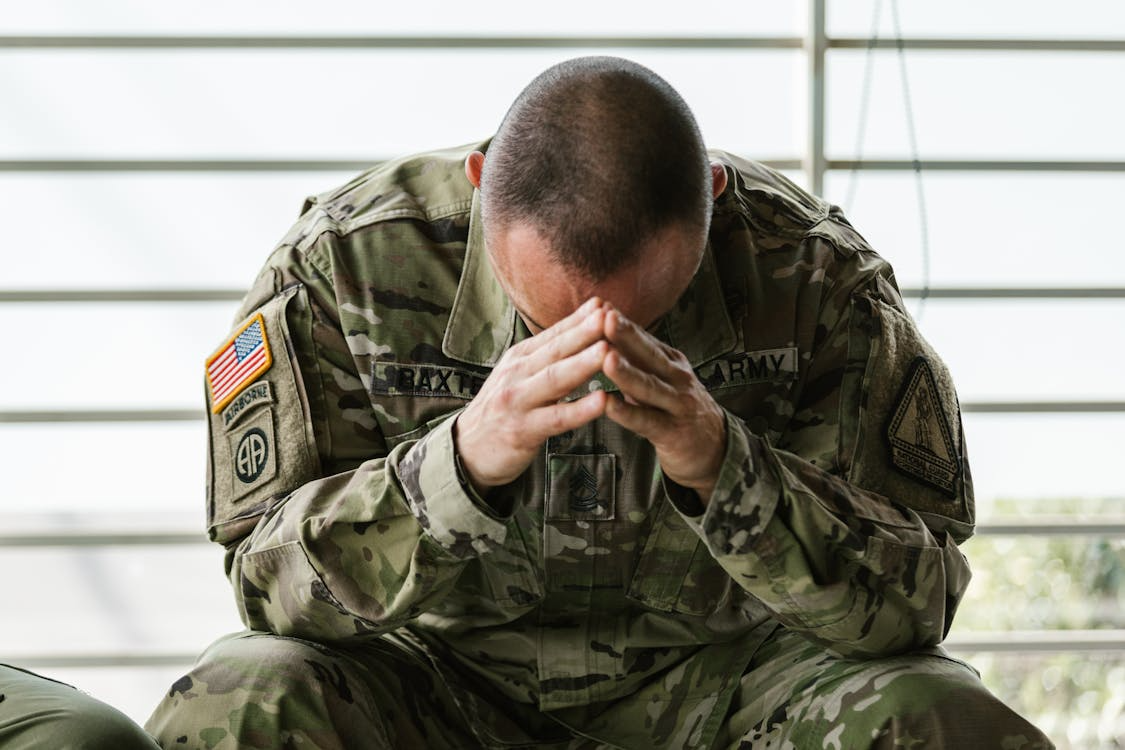
Physical pain is often a manifestation of unresolved trauma. This is especially the case with veterans, who are much more likely than civilians to develop pain conditions as the result of traumatic experiences. Pain conditions can be a physical reminder that the body continues to hold on to trauma long after the uniform has been removed, and many conditions connected to service are in some way a result of trauma.
Here’s the thing:
Most veterans are not aware that their physical ailments are a result of their time in the service.
What you’ll uncover:
- The Link Between Trauma And Physical Pain
- The Most Common Physical Symptoms In Veterans
- Why Trauma Gets “Stuck” In The Body
- How To Get Help (And What Veterans Can Do Today)
The Link Between Trauma And Physical Pain
Trauma doesn’t just live in the mind. It lives in the body too.
When a veteran experiences a trauma — combat, a bad accident, military sexual trauma or the sudden loss of a battle buddy — the nervous system goes into overdrive. The problem is that it often stays there long after the event is over.
Remaining in this “fight or flight” state all the time, takes a toll on the body. This then eventually manifests as actual, quantifiable physical symptoms.
It’s easy to see from these statistics why. Approximately 35% of chronic pain patients also qualify for a PTSD diagnosis. That’s a large percentage of people in pain with an underlying trauma element that is not being targeted.
The first thing any veteran dealing with these issues should do is document any service-related conditions. Veterans can rely on trustworthy websites such as claimclimbers.com to help them through the claims process. The reason being, that if the traumatic event occurred during military service, then the physical effects that resulted are virtually always eligible for service connection benefits as well.
Most veterans never make this connection.
The Most Common Physical Symptoms In Veterans
So what does unresolved trauma actually look like in the body?
It’s not always apparent. That’s one reason it’s undiagnosed for so long. Veterans often believe they just have “bad luck” with their health.
Here are the physical symptoms that show up most often:
- Chronic pain — especially in the back, neck, and joints
- Frequent headaches and migraines — often daily and severe
- Digestive issues — IBS, acid reflux, stomach ulcers
- Sleep problems — insomnia, nightmares, constant fatigue
- High blood pressure — linked to long-term stress response
- Unexplained fatigue — that rest doesn’t fix
- Autoimmune flare-ups — the body attacking itself
The link is clear. PTSD rates are as much as 15x higher in Veterans than in civilians and symptoms include flashbacks, nightmares, avoidance, and physical symptoms.
And it only gets worse with time. Many vets go decades putting two and two together, specialist to specialist… But no one ever explains why the pain persists.
That’s because you can’t fix a trauma problem with a physical-only approach.
Why Trauma Gets “Stuck” In The Body
Here’s where it gets really interesting…
If the brain cannot process the trauma completely, the nervous system holds it. Picture your computer with too many windows open…sluggish.
The body’s response to this “stuck” trauma is to remain in a state of tension. Muscles remain contracted. Heart rate remains high. Sleep is disturbed.
The result of all this is that you have physical symptoms that mimic ordinary medical conditions but are really responses to trauma.
Why does this happen to veterans more than civilians?
Military service can subject a person to prolonged, extreme stress. For example, even if a veteran was never in combat, training, deployments, and military culture can cause the body to develop a chronic stress response.
And for the 20% who served in combat… The potential consequences are even greater. According to a nationwide study, 29% of veterans of the Iraq and Afghanistan wars will experience PTSD in their lifetime.
Throw in military sexual trauma, moral injury, and re-entry to civilian life. It’s a perfect storm for trauma to get locked into the body.
How To Get Help (And What Veterans Can Do Today)
The good news is that untreated trauma can be treated. And when the trauma is treated, the physical symptoms often improve dramatically.
Step 1 — Recognise The Connection
It starts with just getting the message that their headaches, back pain, or tummy ache could be more than just a minor inconvenience. When veterans connect the dots, the world transforms.
Step 2 — Get A Proper Diagnosis
Talk to a VA mental health provider or a private therapist who specialises in trauma. Many use evidence-based treatments like:
- Cognitive Processing Therapy (CPT)
- Prolonged Exposure Therapy (PE)
- EMDR (Eye Movement Desensitization and Reprocessing)
- Somatic experiencing (body-based trauma work)
These therapies don’t just process the trauma talk — they discharge it from the body.
Step 3 — File For Service-Connected Conditions
This is the step most veterans skip. And it’s a costly mistake.
Physical symptoms that are related to trauma experienced during military service can potentially be considered service-connected conditions. In other words, veterans can qualify for disability benefits for them — both the mental health condition AND the physical symptoms it causes.
The statistics are staggering. Less than half of returning veterans who need mental health care are receiving any treatment, and among those veterans who are receiving treatment for PTSD and major depression, less than a third are receiving evidence-based care.
Step 4 — Build A Support System
Trauma recovery is a team sport. Seek out veteran peer support groups, understanding family members, and fellow veterans who have been there.
It is the sharing of the burden that seems to enable faster healing.
Final Thoughts
Unresolved trauma is not just a “mental” problem. It is a body-wide problem. And for veterans, it often manifests in physical symptoms that no one links to their service.
Chronic pain, headaches, digestive issues, fatigue — all of these can be indications that trauma is still residing in the body. The longer it remains unprocessed, the more difficult it is to heal.
To quickly recap:
- Trauma doesn’t stay in the mind — it shows up in the body
- Veterans experience way higher rates of trauma-related physical symptoms than civilians
- Physical symptoms like chronic pain often have a trauma root cause
- Both the trauma AND the physical symptoms can qualify as service-connected conditions
- Getting help early leads to better outcomes
The most crucial step for veterans is to cease in their denial. The body is speaking — and when they pay attention, recovery becomes possible.